The Situation
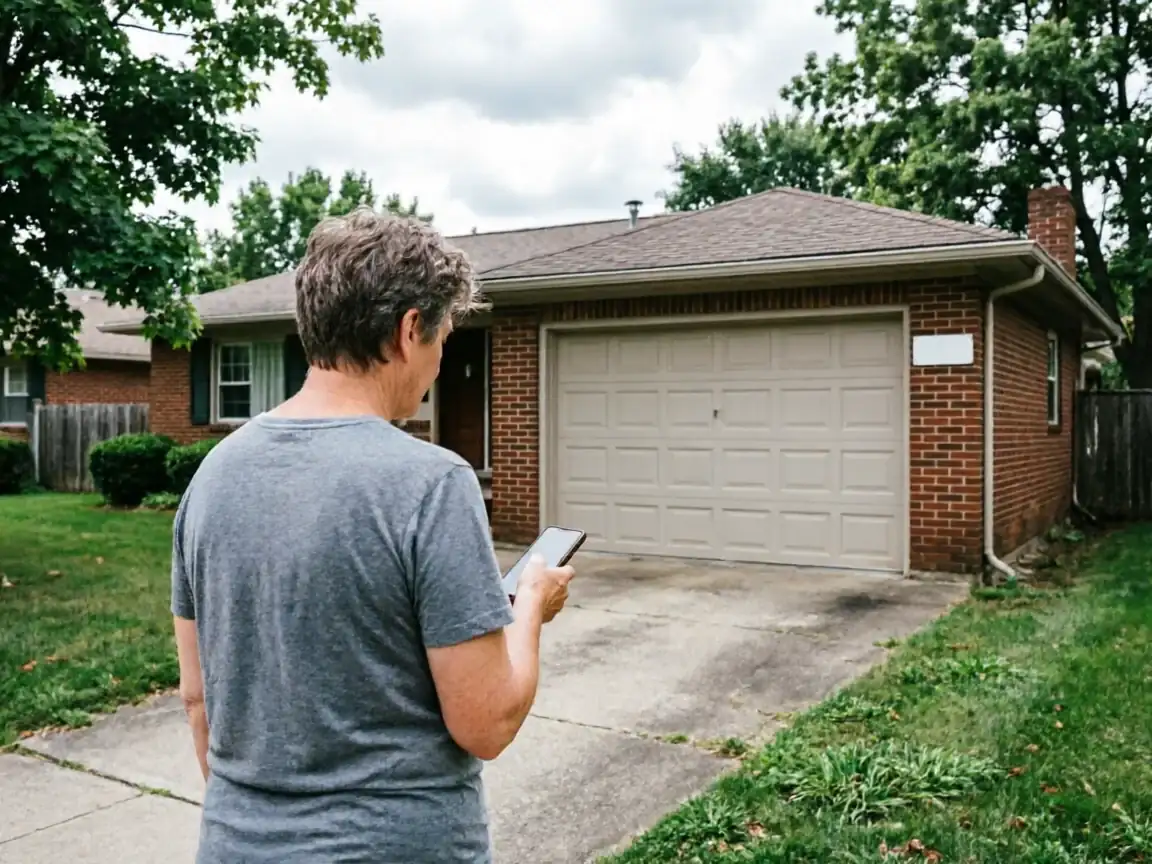
Most houses on this side of mid-Michigan went up between 1945 and 1994
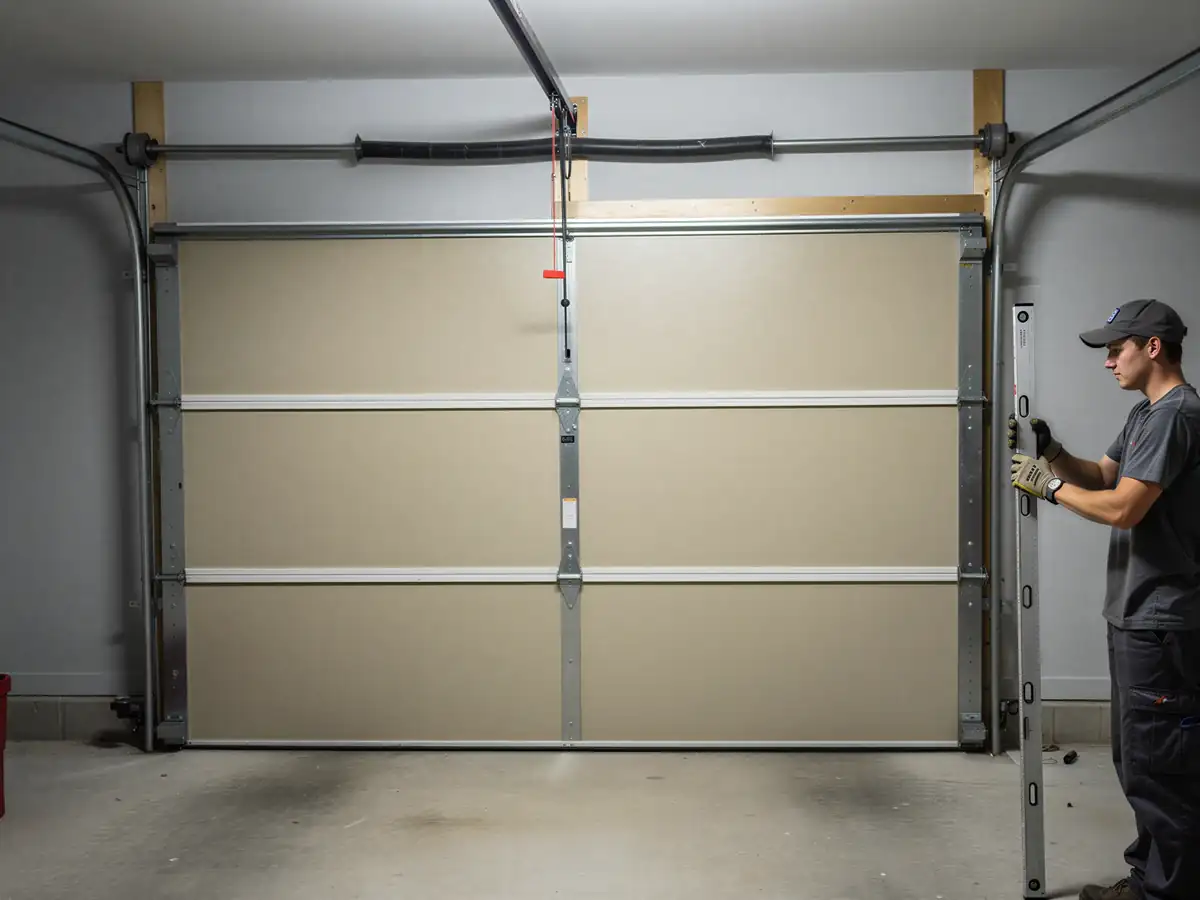
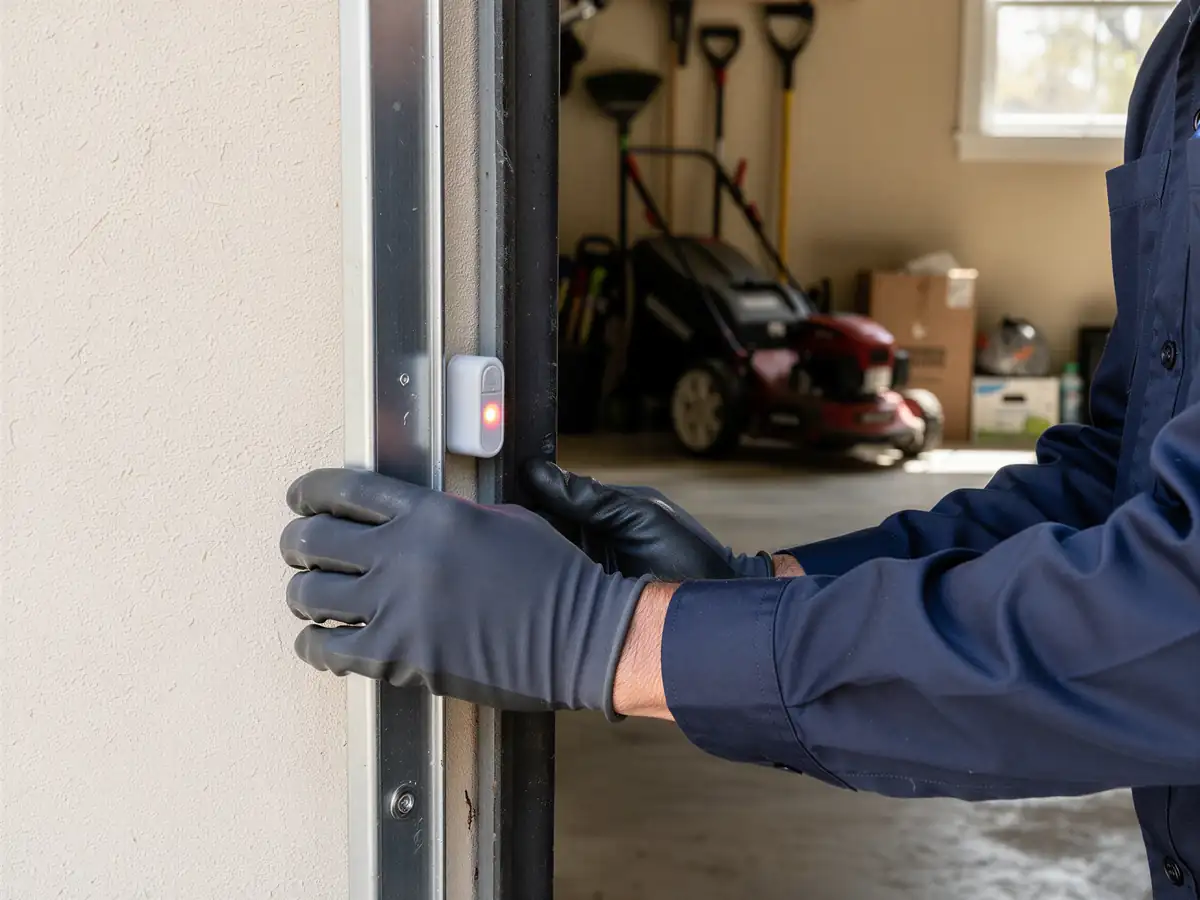
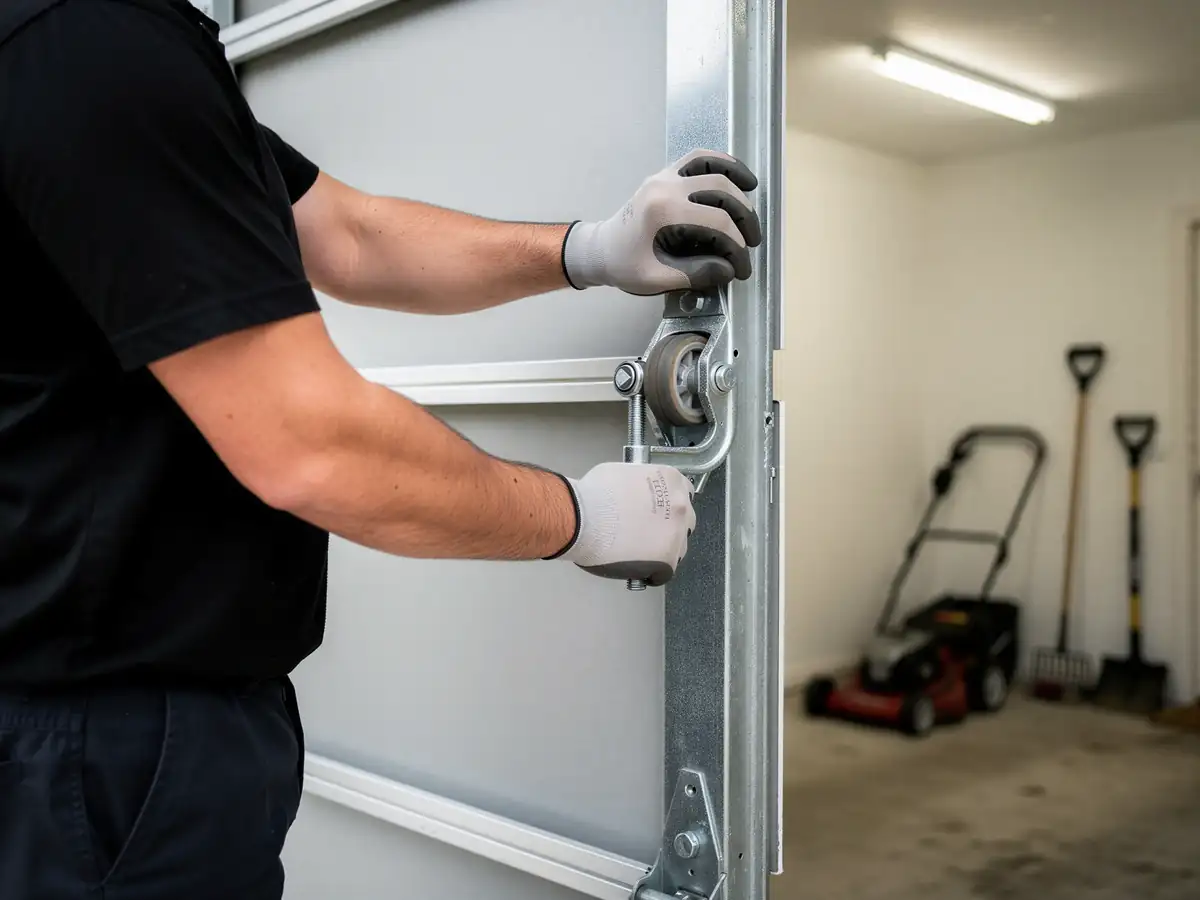
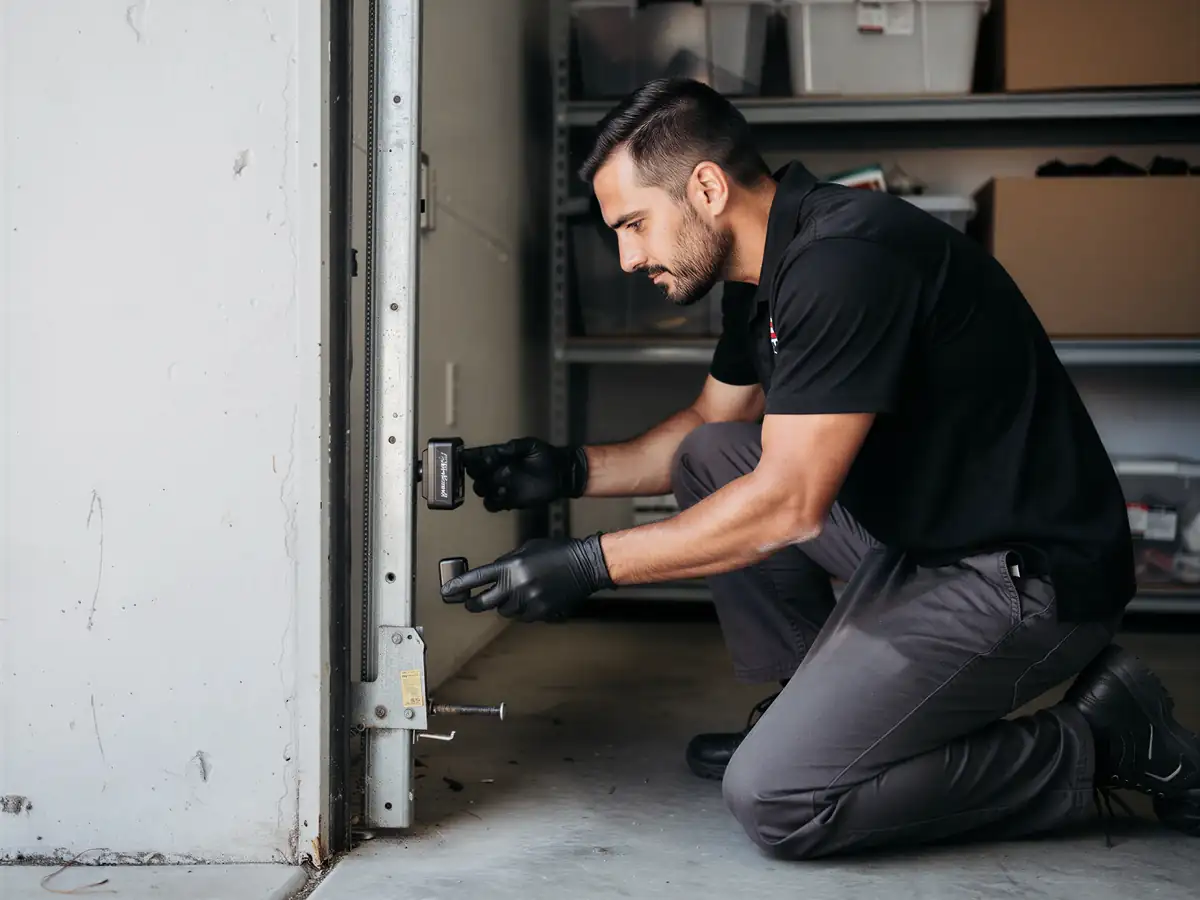
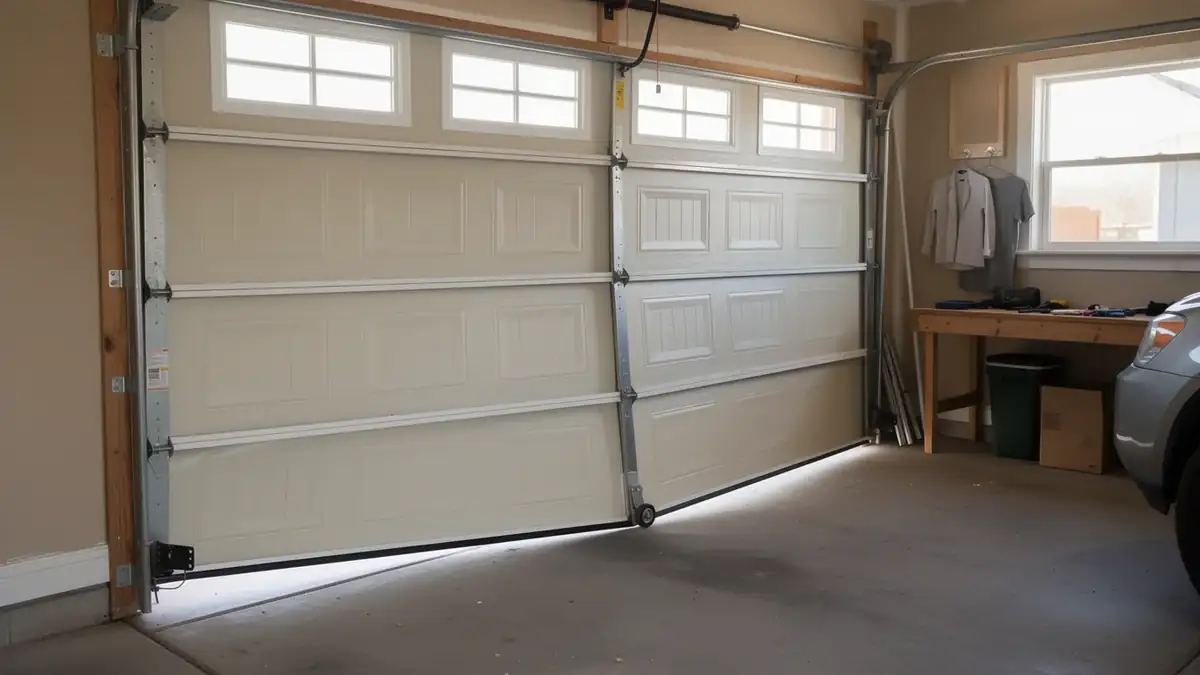
With the typical build year landing around 1976. That means a lot of garages still running the track hardware that came with the house, or a replacement from decades back that was never re-leveled when the slab shifted. Track brackets are lag-bolted into the framing, and after forty-plus years of seasonal movement, those bolts loosen a fraction of a turn at a time. You don't notice until the door starts walking sideways on one side, scraping the weatherstrip, or the rollers ride up out of the channel on the way down.
Across the 22 named areas this covers, the pattern repeats
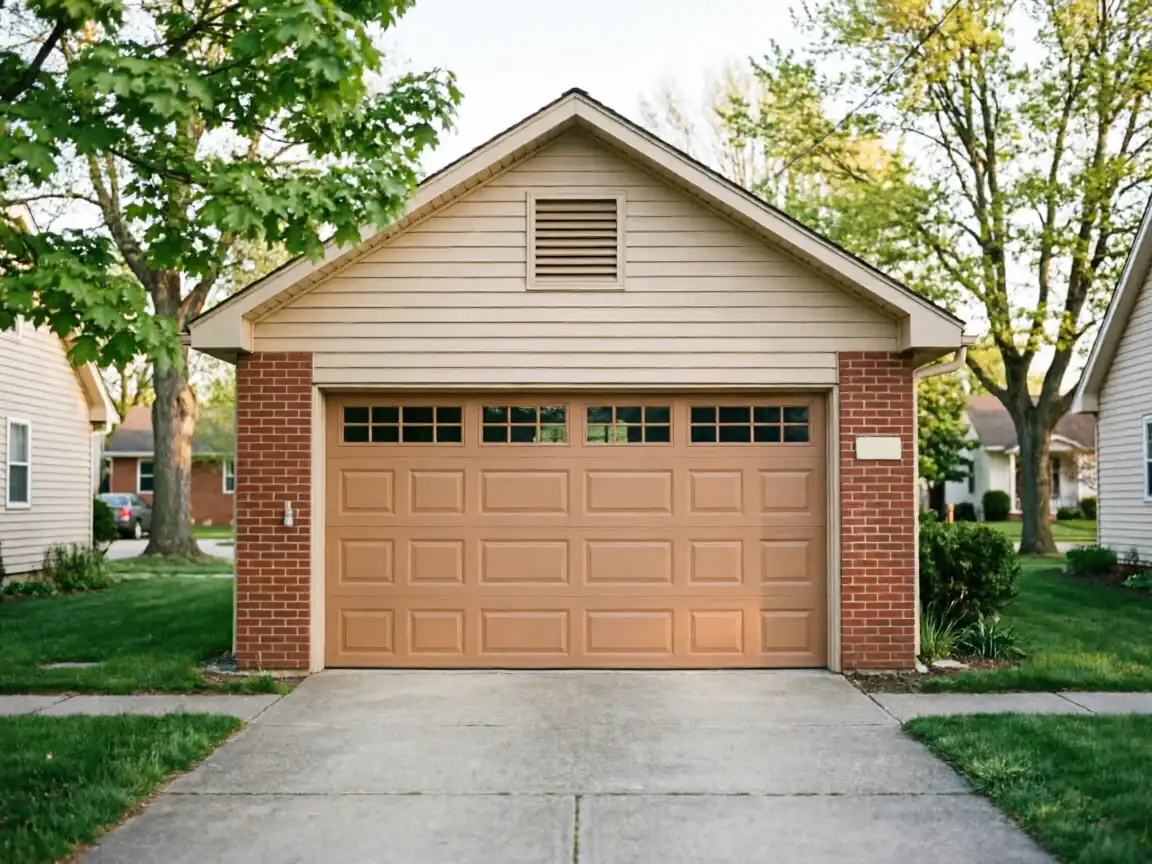
1960s and 70s split-levels and ranches with single-car or two-car garages built to the standards of that era, not this one. The track spacing, the drum size, the gauge of the rail itself - all of it reflects a build date you can usually guess within a decade just by looking at the hardware. An off-track door in a house like this is rarely a one-time accident. It's usually the hardware finally giving up on tolerances it's held for fifty years.
What Most People Get Wrong
The first assumption is almost always a bent track, and sometimes that's right - a car bumper or a snowblower will do it. But in houses from this build era, the more common cause is wear nobody can see from the driveway: rollers that have gone from steel-and-ball-bearing to a chewed-up stub, or a cable that's stretched just enough to throw the door's travel off balance on one side.
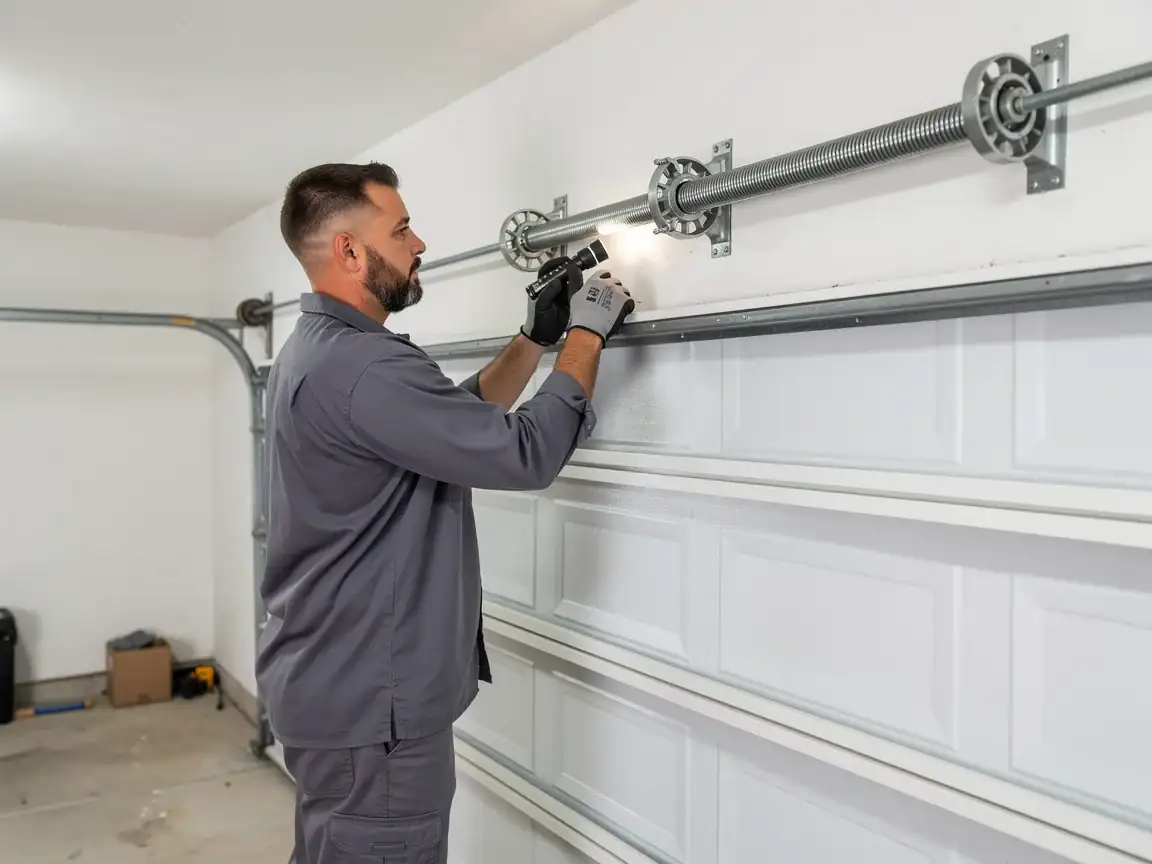
People also assume a torsion spring problem and a track problem are separate issues. They're not, usually. A spring that's lost tension makes the opener do more lifting work on one side than the other, and an unevenly lifted door puts lateral pressure on the rollers exactly where the track is already loosest - at those forty-year-old lag bolts. Tighten the brackets without addressing the spring, and the door goes off track again in a season. Fix the spring without checking the track alignment, and you've spent money on half the problem.
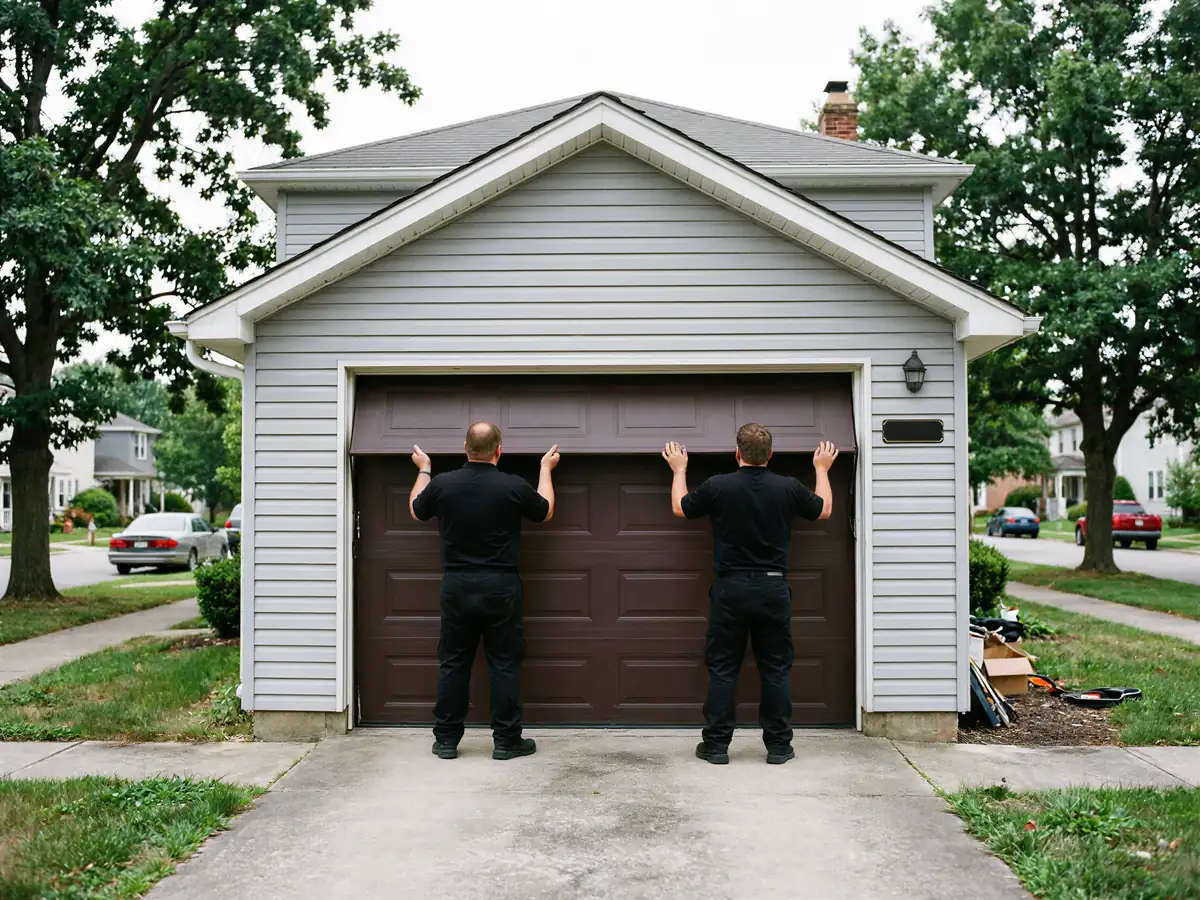
The other mistake: forcing the door by hand once it's hung up in the track. That's how a roller snaps clean off, or how a cable under tension lets go. At that point it's not a tune-up, it's a parts job.
How Local Conditions Play In
This is a cold-climate service area, and winter severity does specific damage to track alignment that milder regions don't see. Metal track contracts in deep cold, which changes the clearance between roller and rail by a hair - enough, on hardware that's already loose at the brackets, to let a roller jump the channel on a cold start. Add ice that forms in the bottom few inches of track from melt-and-refreeze off a car's undercarriage, and the door has to force its way past an obstruction every single cycle until someone chips it out.
Freeze-thaw also works on the slab and the framing around the garage opening over the years, which is part of why houses built in the 1976 range are now showing track brackets that have drifted out of the plumb line they started with. It's slow, it's cumulative, and it's not something a single summer tune-up undoes - it's why track alignment tends to need rechecking more often here than it would in a climate that doesn't freeze hard every winter.
When to Get Help
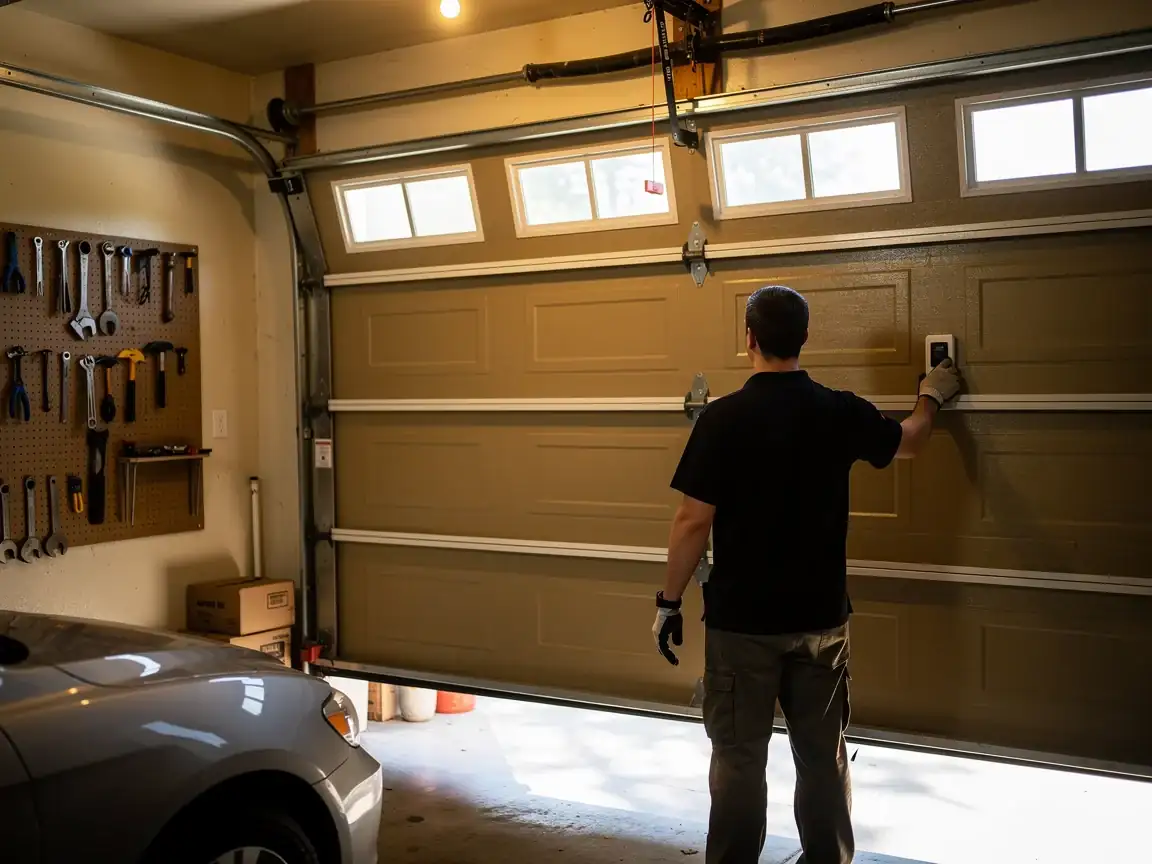
If the door is audibly scraping, visibly leaning to one side as it travels
Or the rollers are riding outside the track rather than inside it, stop running the opener. Running a door off-track repeatedly is how a track bends badly enough to need full replacement instead of a bracket adjustment.
One honest limit: if the track itself is bent rather than just loose, straightening it rarely holds
It's cheaper and more reliable in the long run to replace that section than to keep fighting a kinked rail. We'll tell you which one you're looking at before any work starts.
This covers East Lansing and the surrounding communities
Okemos, Haslett, Williamston, Dimondale, Waverly, Holt, DeWitt, Grand Ledge, Mason, Eaton Rapids, St. Johns, and the rest of the area out to about 18 miles.
- 18 miles