Garage door repair in East Lansing, MI for homes built 1945-1994. Cold-climate spring failures, track issues, and honest advice on repair versus replacement.
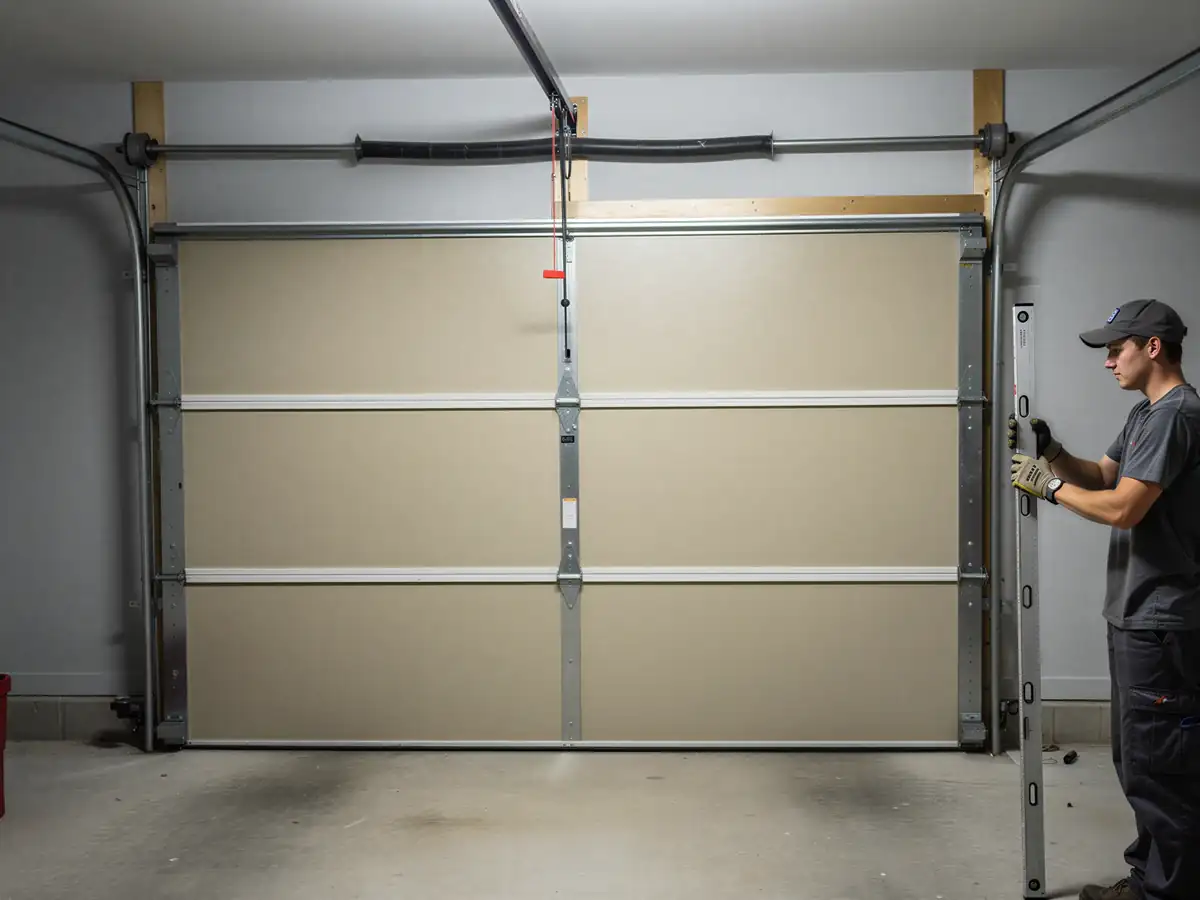
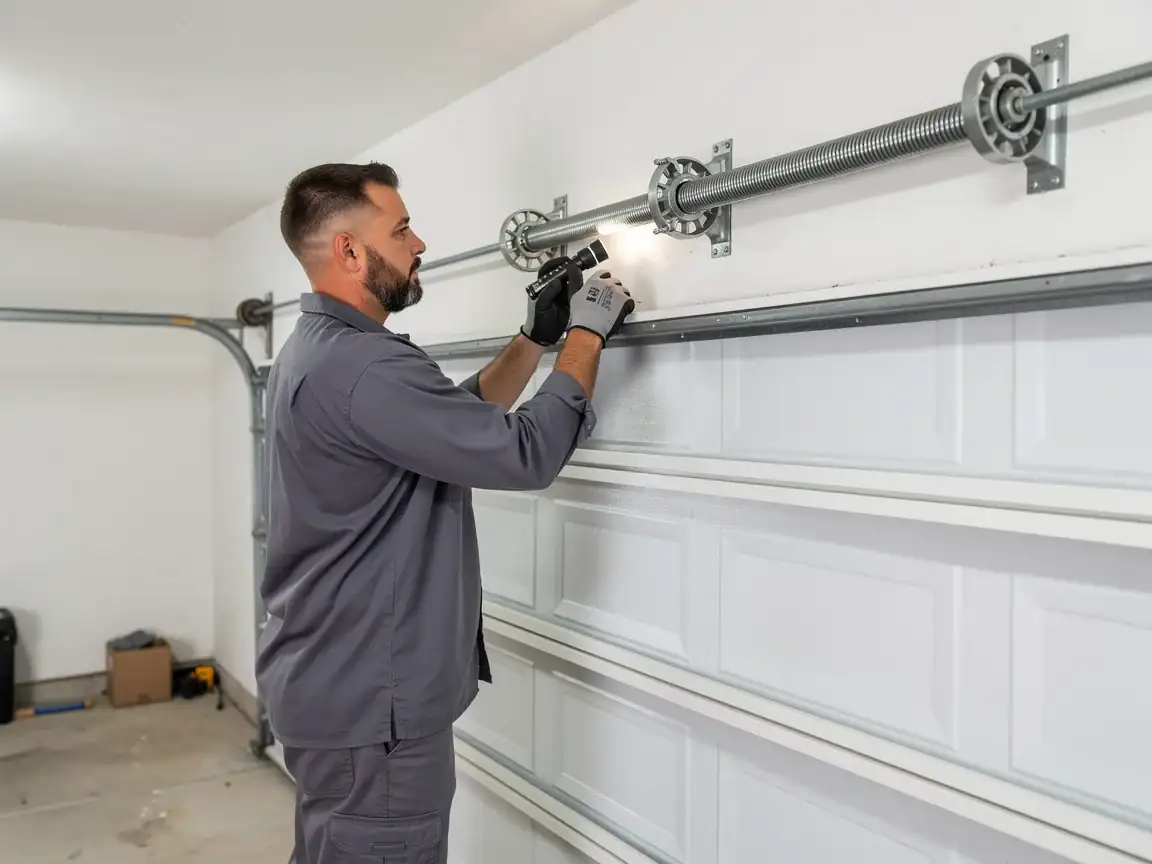
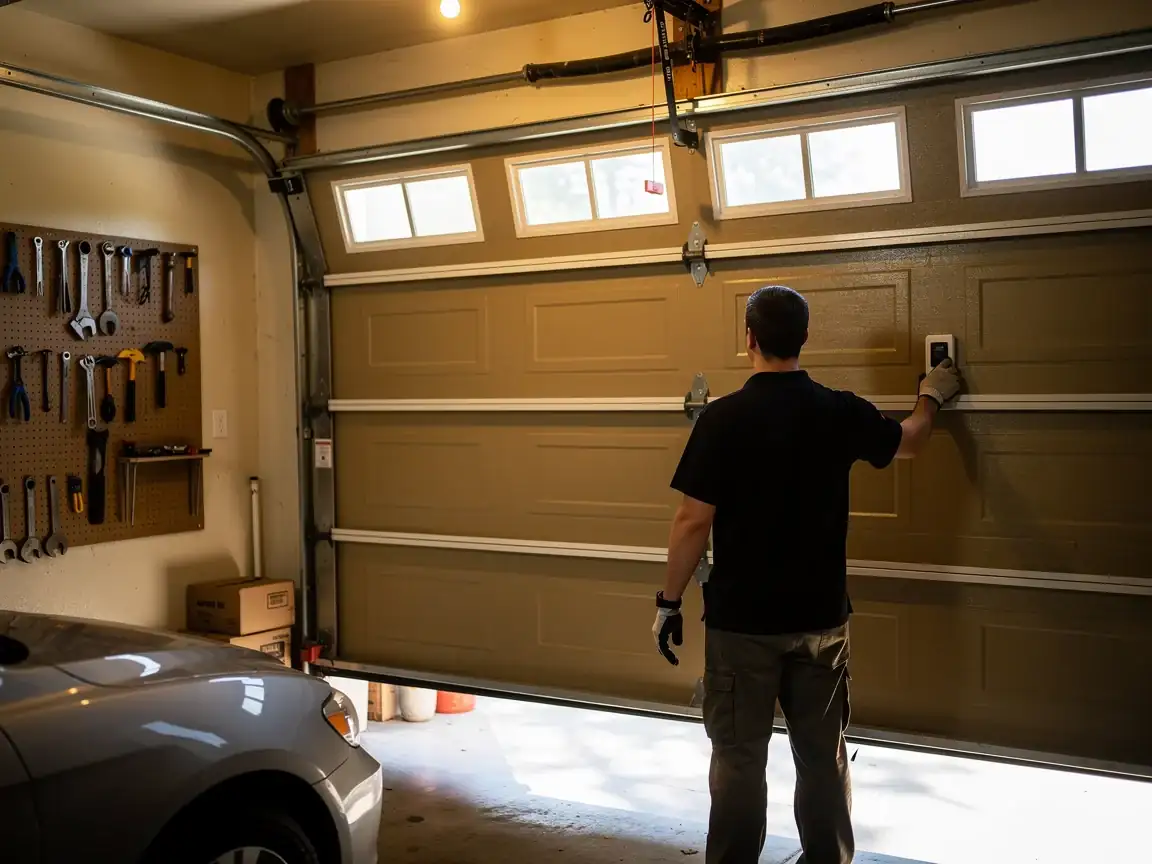
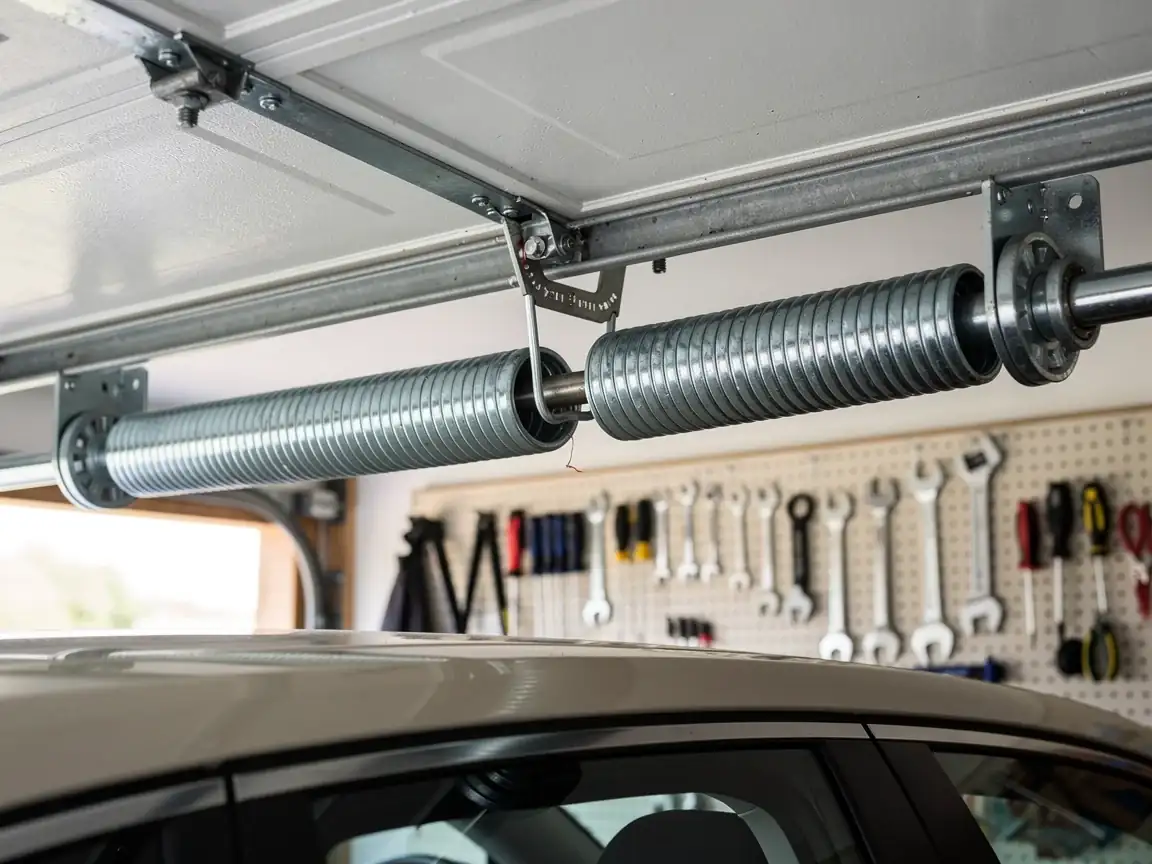
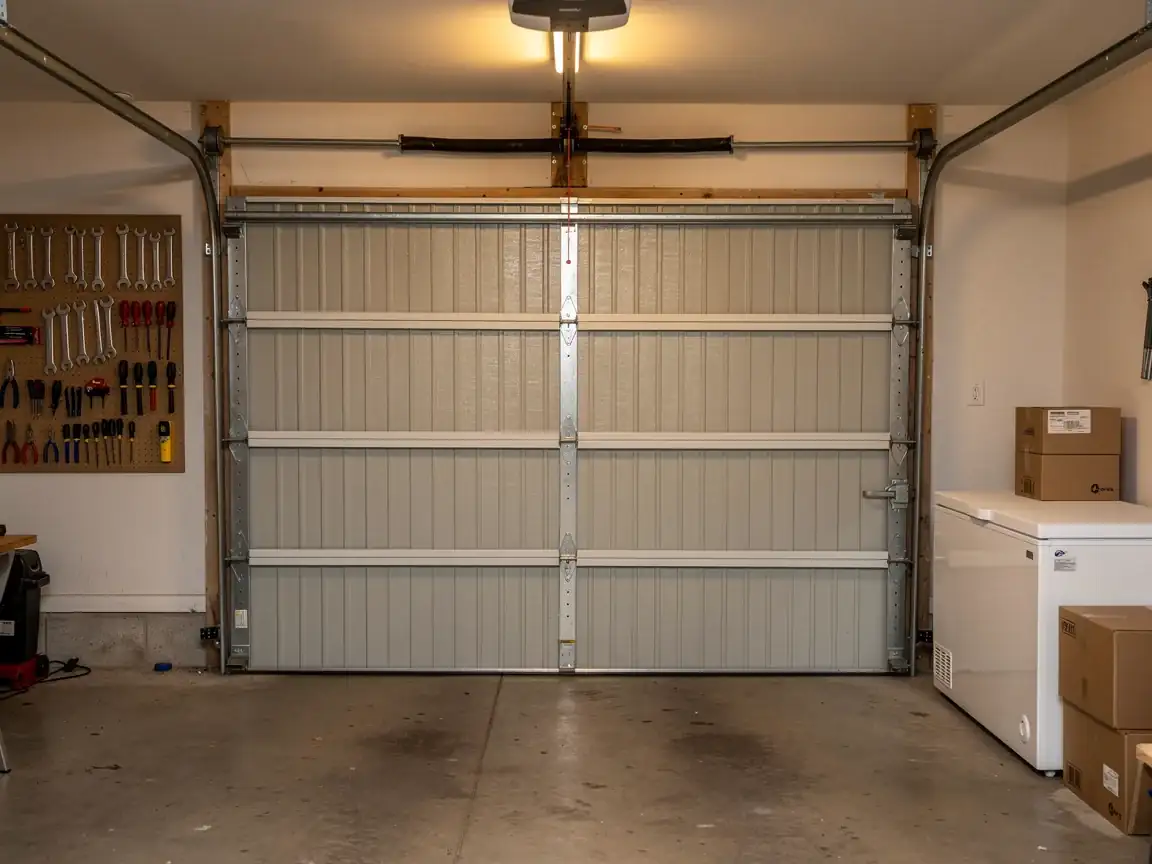
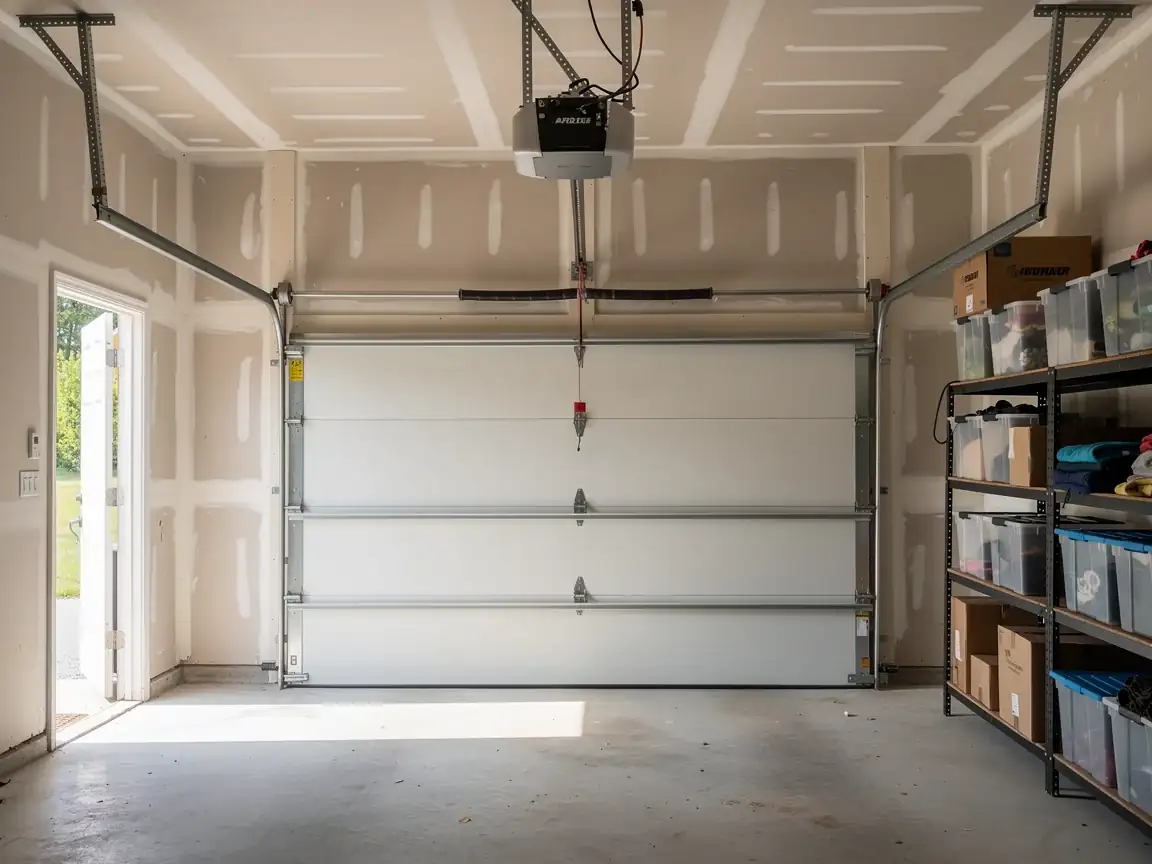
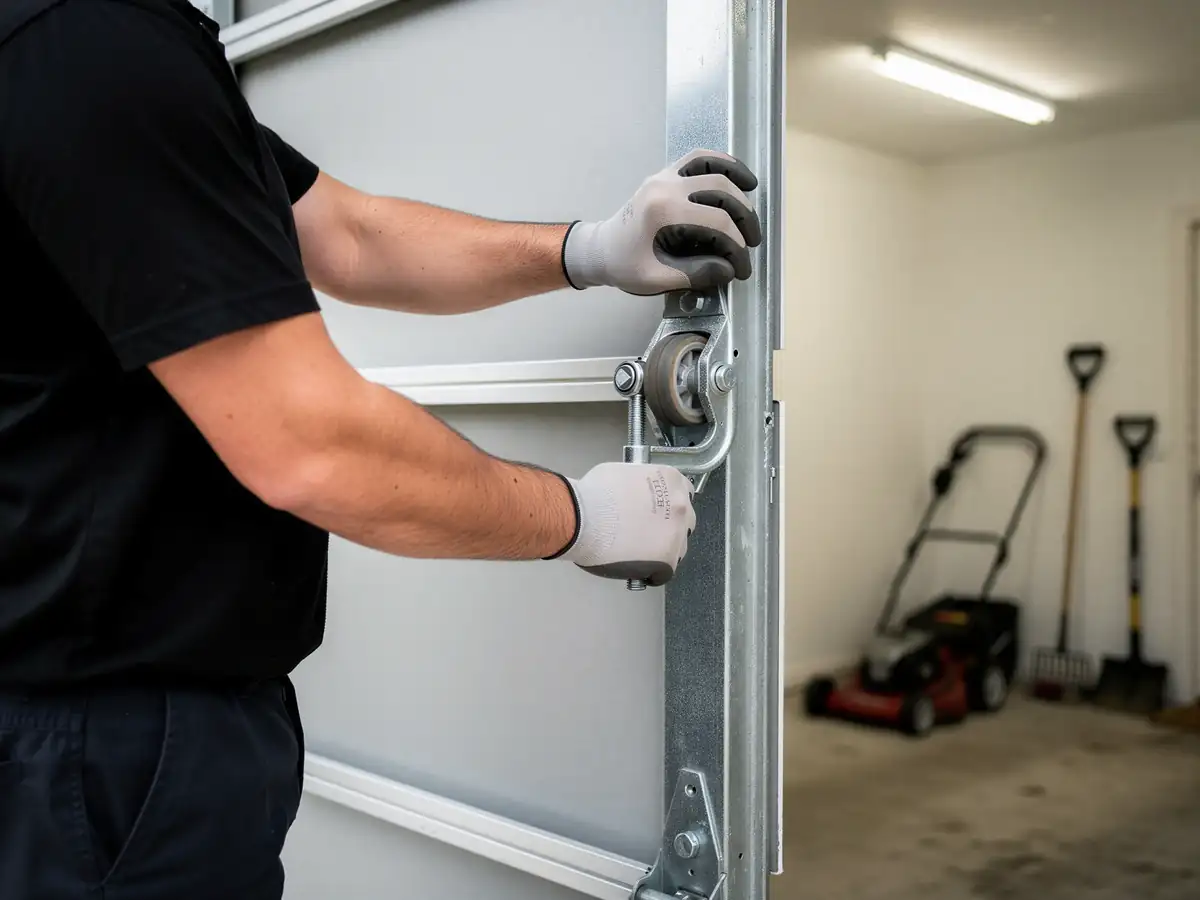
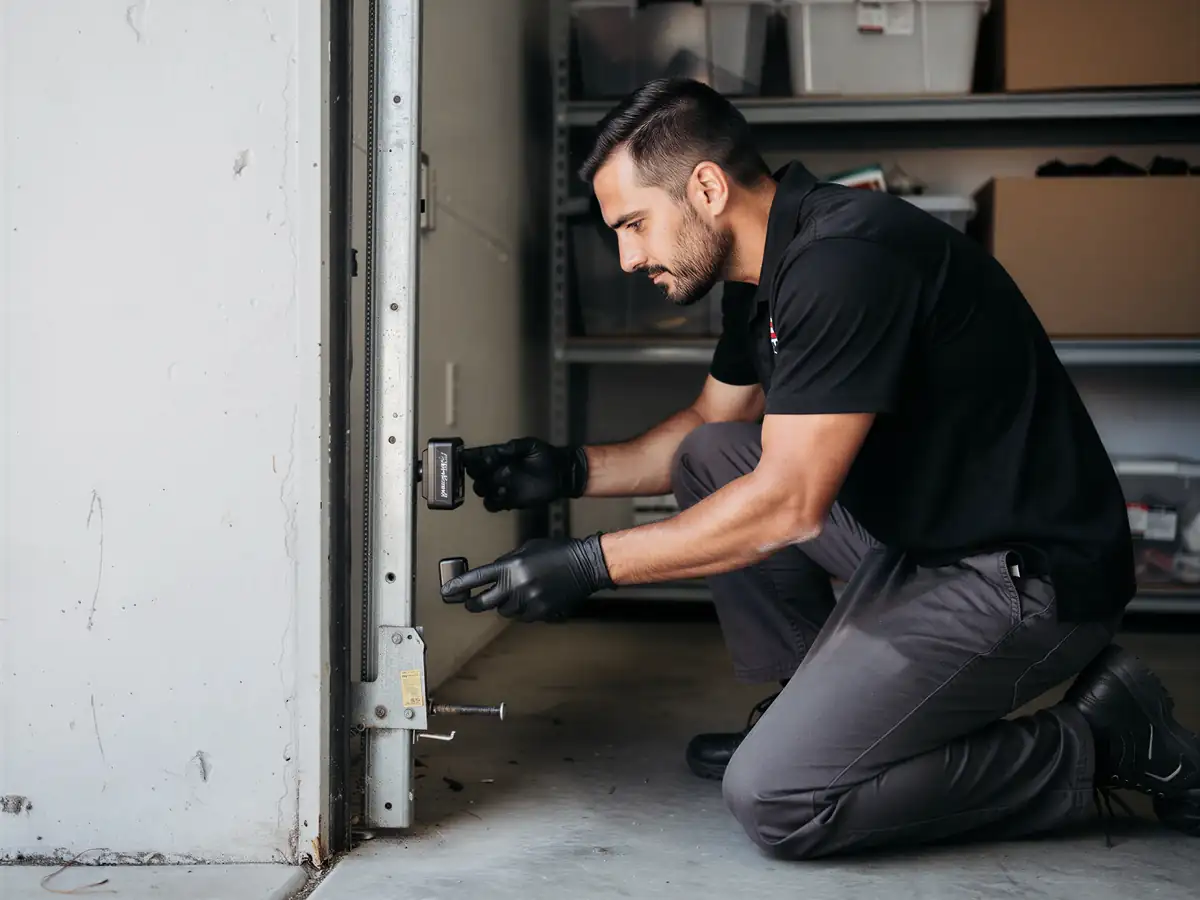
A repair call here usually starts with the hardware, not the door. Most of what we find on a torsion shaft or an old extension spring tells you more about the house than the homeowner does. Houses in this part of the state were mostly put up between 1945 and 1994, with the median build year landing around 1976 - which means a big share of the springs, cables, and rollers still in service are original or close to it. That changes how a job goes. On a door from that era, you're not just swapping a part, you're checking whether the drum, the end bearing plate, and the track brackets have held up the same number of decades. Sometimes they have. Sometimes the spring let go and took a cable or a roller bracket with it, and the job grows on the spot. We size springs to the door's actual weight and cycle count rather than guessing off a sticker from 1978, because that sticker is often wrong by now. A straightforward spring swap is a different length of job than one where the track has been pulling loose for years and nobody noticed until the door stopped tracking straight.
How It Shows Up
Most calls start with one of three things: a loud bang from the garage followed by a door that won't budge, a door that opens partway and stalls, or an opener that strains and groans but doesn't lift the door. The bang is almost always a torsion spring letting go - it's a sudden failure, not a slow one, and it tends to happen on a cold morning when the metal is stiffest and the lift load is highest. The stalling door is often a spring that's lost tension gradually, so the opener is doing work it was never built to do alone, which shortens the opener's life along with the spring's. Grinding or scraping along the tracks shows up more in winter, when old grease thickens and rollers bind instead of rolling. None of these are cosmetic. A door that's fighting its springs will eventually take the opener, the top panel, or a finger with it. If you hear a bang, don't run the opener again to see what happens - that's how a cable comes off the drum.
What Causes It Around Here
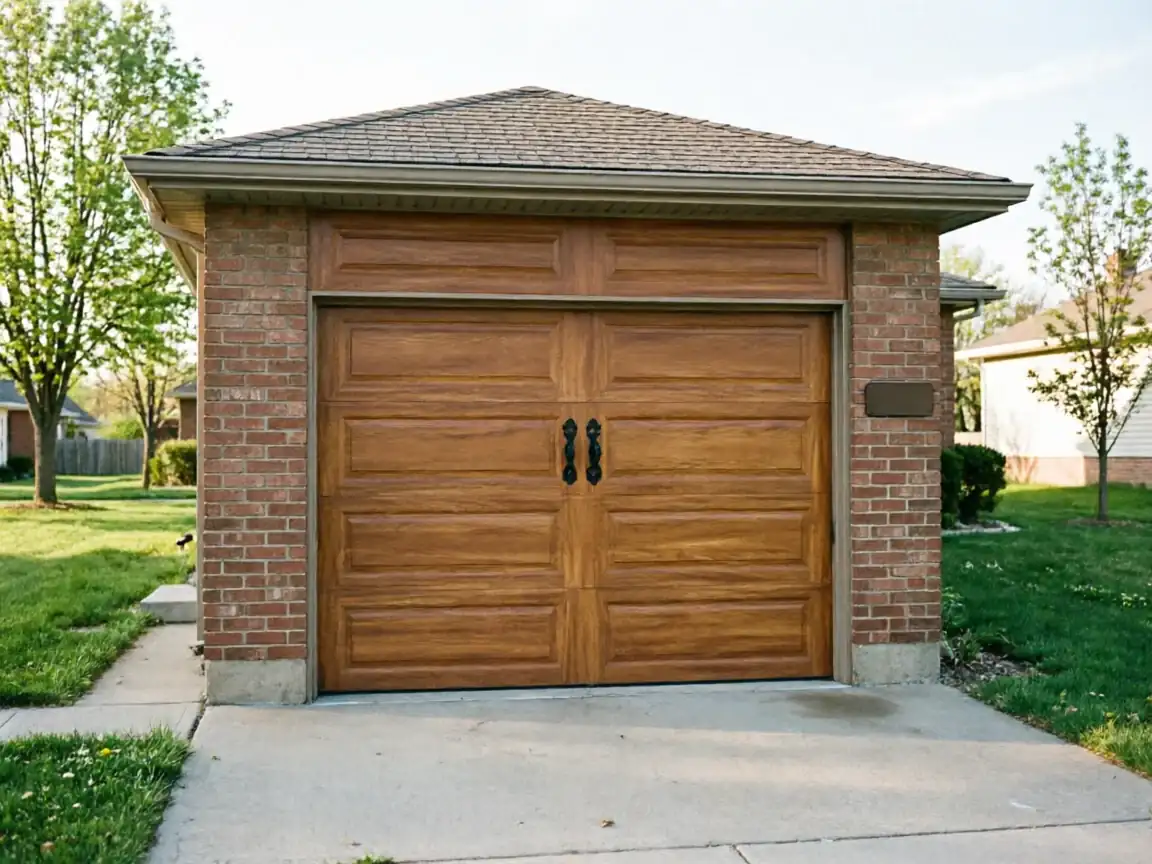
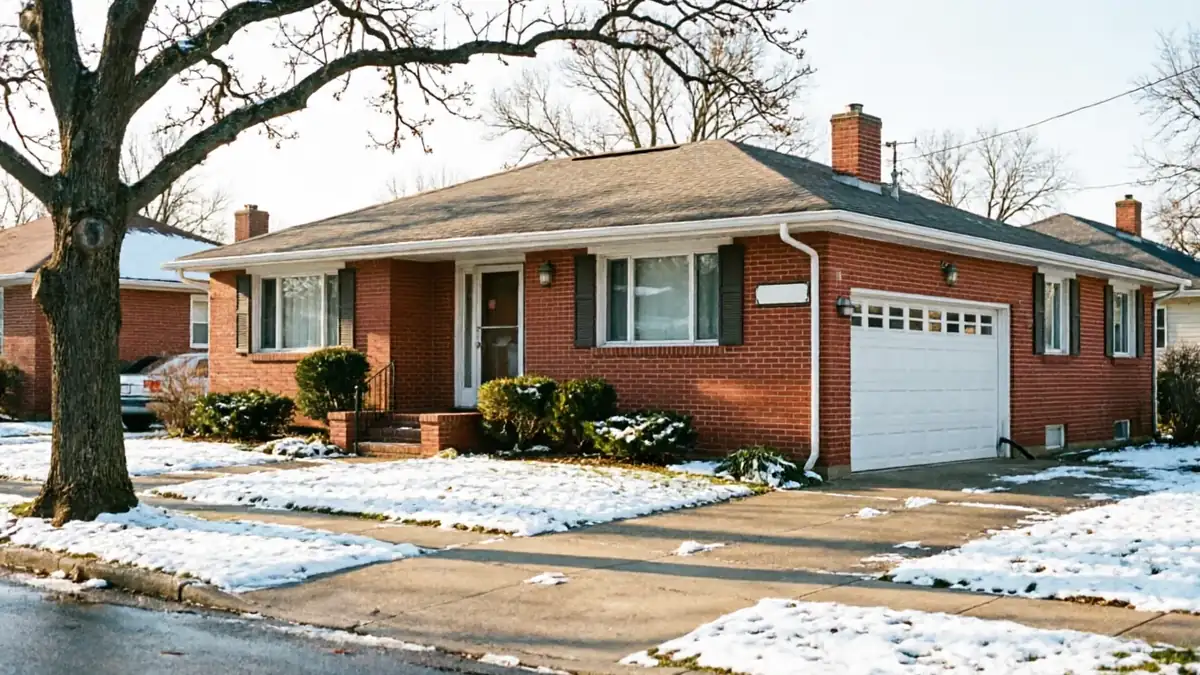
Two things stack on top of each other in this area: the age of the housing stock and the climate. With a median build year around 1976 and most homes dating from 1945 to 1994, a large share of garage doors are running hardware that's 30 to 50 years old - well past the rated cycle life of a torsion spring, which fatigues with use whether or not anyone notices. Add a COLD severe climate band on top of that, and steel contracts, lubricant stiffens, and the extra load from a half-frozen track pushes an already-tired spring past its limit. This isn't a one-house problem. Across the roughly 22 neighborhoods built in that same 1960s-70s wave - and in nearby Okemos, about three miles southeast, and Haslett, about four miles east, which share the same build era - the same springs are hitting the same age wall at close to the same time. With around 27,559 owner-occupied houses out of 66,121 households in this service area built mostly in that window, a lot of garages are carrying the same risk on the same schedule, even if it doesn't feel that way until it's your door.
The DIY Question
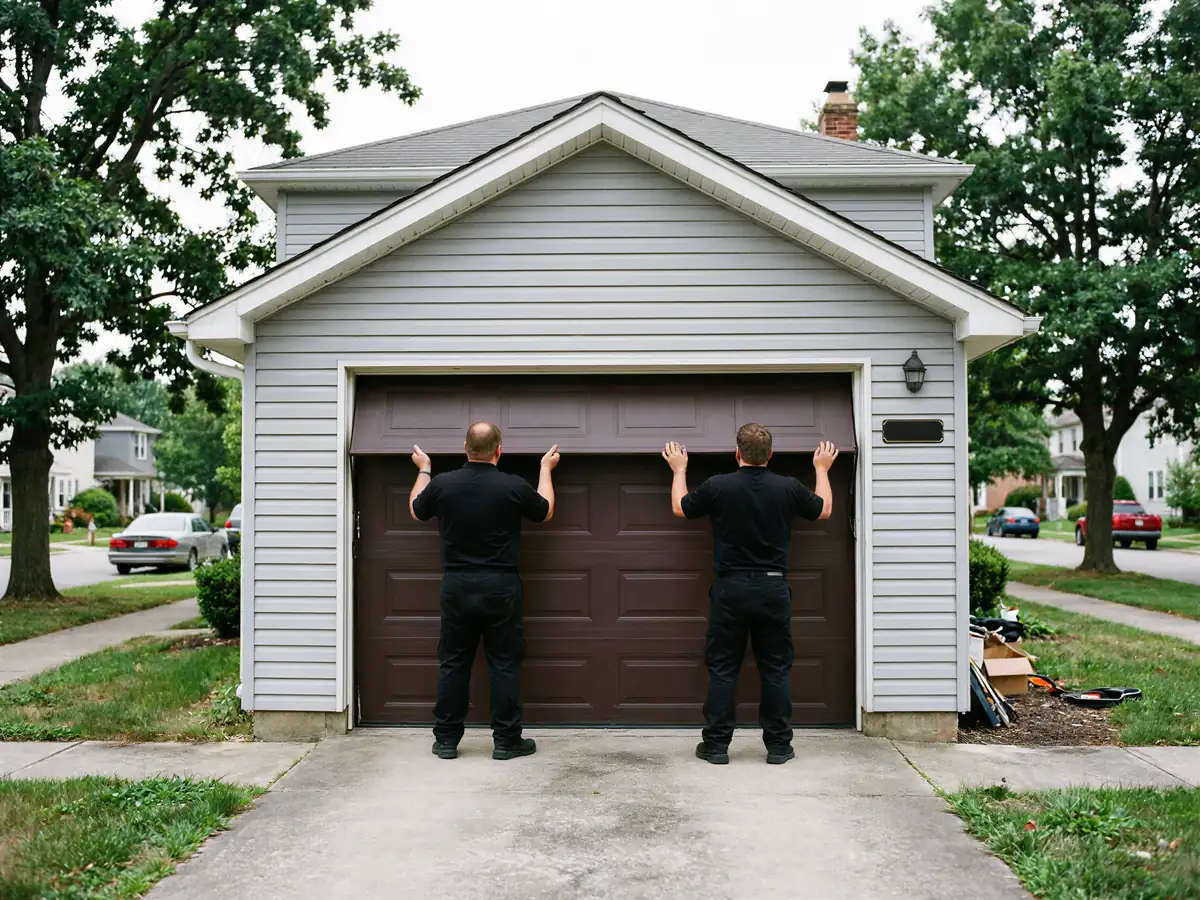
A torsion spring holds enough stored energy to break a wrist or worse, and that doesn't change because a video made it look simple. We don't recommend DIY spring or cable work, full stop - that's not a sales pitch, it's the one job on a garage door where a mistake is not a do-over. Lubricating hinges, tightening visible bolts, or clearing debris from the track is reasonable homeowner maintenance. Replacing a spring, re-tensioning a cable, or pulling a bent track back into line is not. The other honest call is repair versus replacement. If the door itself is sound - panels straight, no rust-through, track true - a spring or roller repair is almost always the cheaper and faster path, and with a median household income around $75,707 in this area, that's usually the math that makes sense for most homeowners. But if the door has been patched more than once, or the track has been reset repeatedly because the opening itself has shifted, you're often better off putting the money into a new door instead of chasing the same failure a third time.
How it works
From “it’s stuck” to “it’s fixed”
01
Tell us what’s wrong
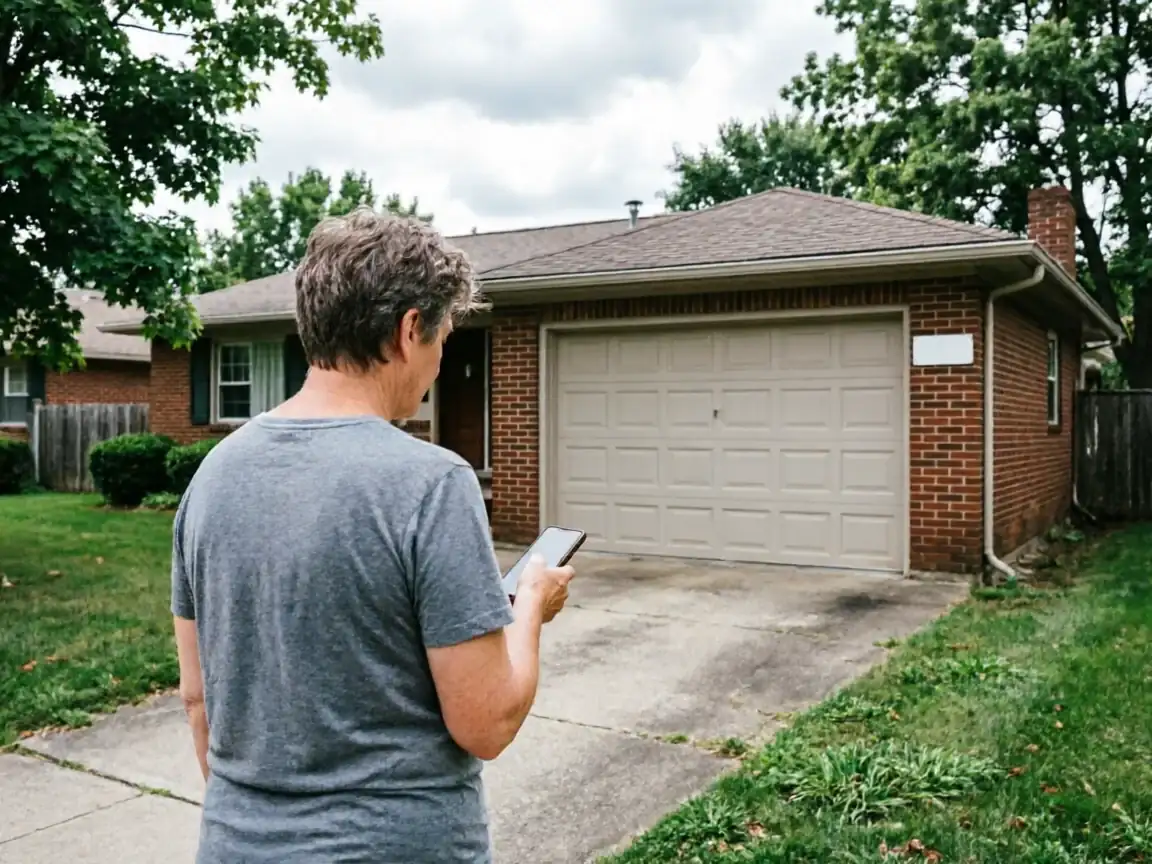
Describe the symptom - won’t open, loud bang, opener runs but the door won’t move.
02
On-site diagnosis
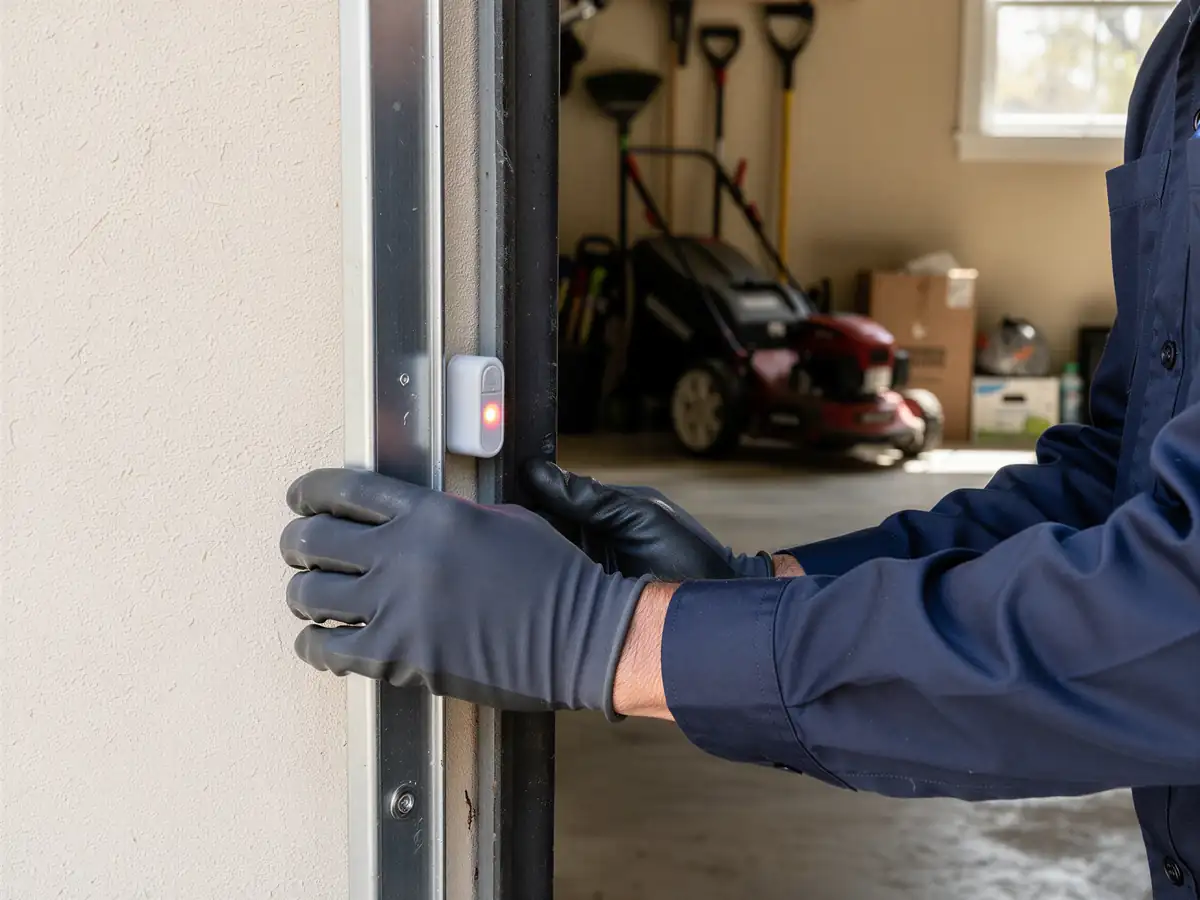
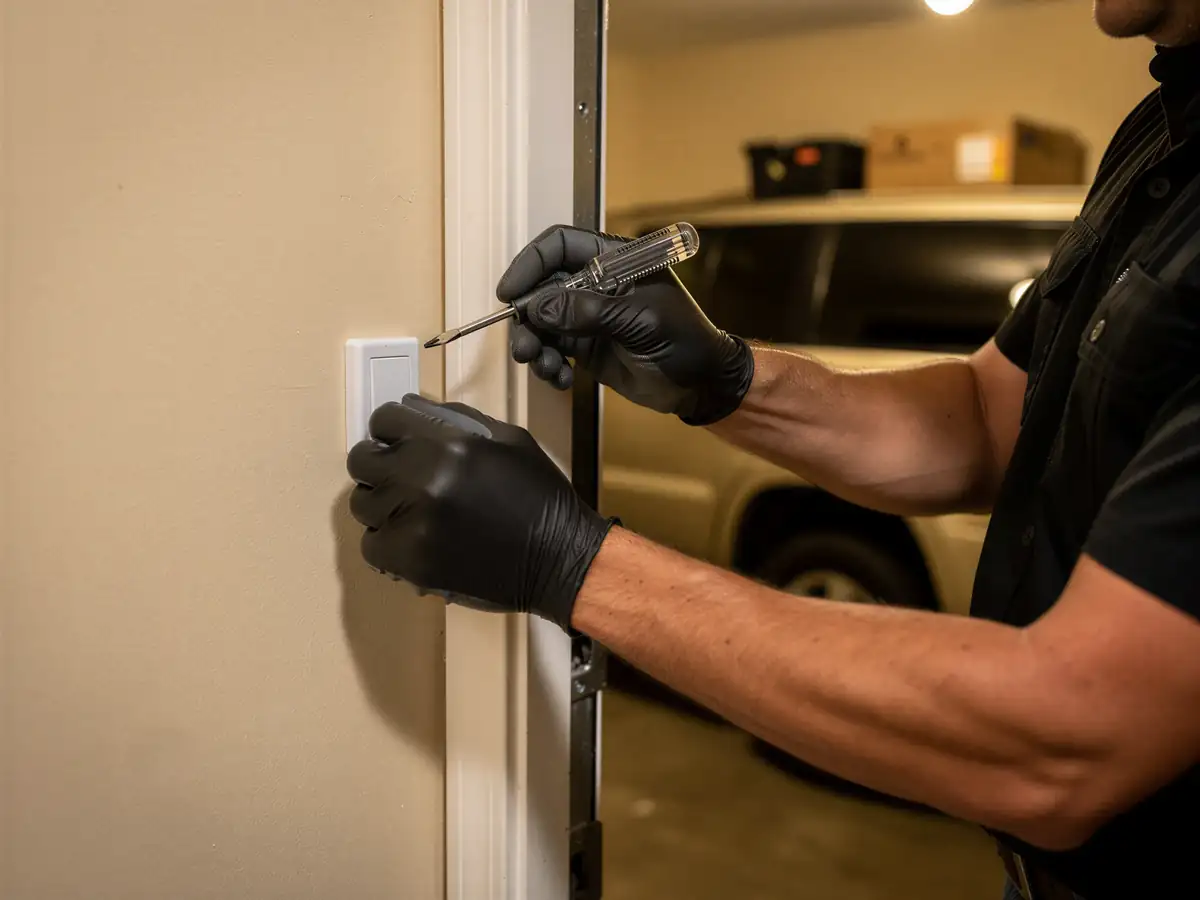
A technician tests the door under power and by hand and finds what actually failed.
03
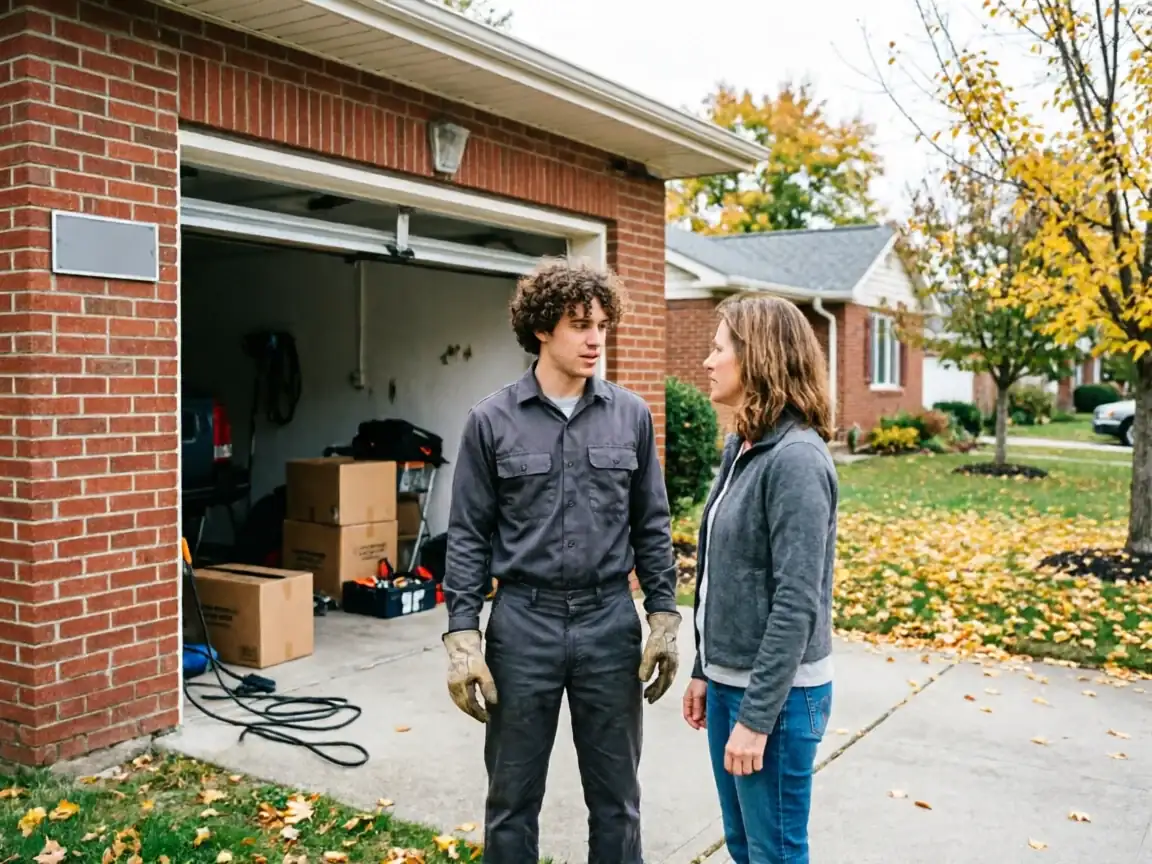
Clear, up-front plan
You get the fix that’s needed and what drives the cost - before any work starts.
04
Repaired & tested
The repair is done, the door is set true and tested, and the work area left clean.
Not sure which repair your door needs in East Lansing, MI? Describe what it’s doing - every job starts with a diagnosis.
Cold makes steel stiffer and less forgiving, and it thickens the grease on rollers and tracks, which raises the load a spring has to lift. In a COLD severe climate like this one, that extra strain on a spring that's already near the end of its cycle life is often what finally snaps it, even if the door worked fine the night before.
Is my garage door old enough that this is expected?
If your house was built in the main local wave - 1945 to 1994, with a lot of homes around the 1976 median - your original hardware may be 30 to 50 years old. Springs don't last forever regardless of use pattern, so age alone, not misuse, is often the real cause.
Should I replace the whole door or just repair it?
If the panels and track are straight and the problem is a worn spring, cable, or roller, repair almost always makes more sense and costs less. Replacement makes more sense once the door itself is failing - bent panels, repeated track resets, or rust that's eating the steel.
Can I replace a torsion spring myself?
We don't recommend it. A torsion spring under tension can cause serious injury if it releases unexpectedly, and there's no safe shortcut around that risk. Lubrication and basic hardware checks are fine for a homeowner; spring and cable work isn't.
Ready to get your garage door sorted?
Tell us what it’s doing and where you are in East Lansing - we’ll take it from there.