Time on the Job
An install day starts with the opening, not the door
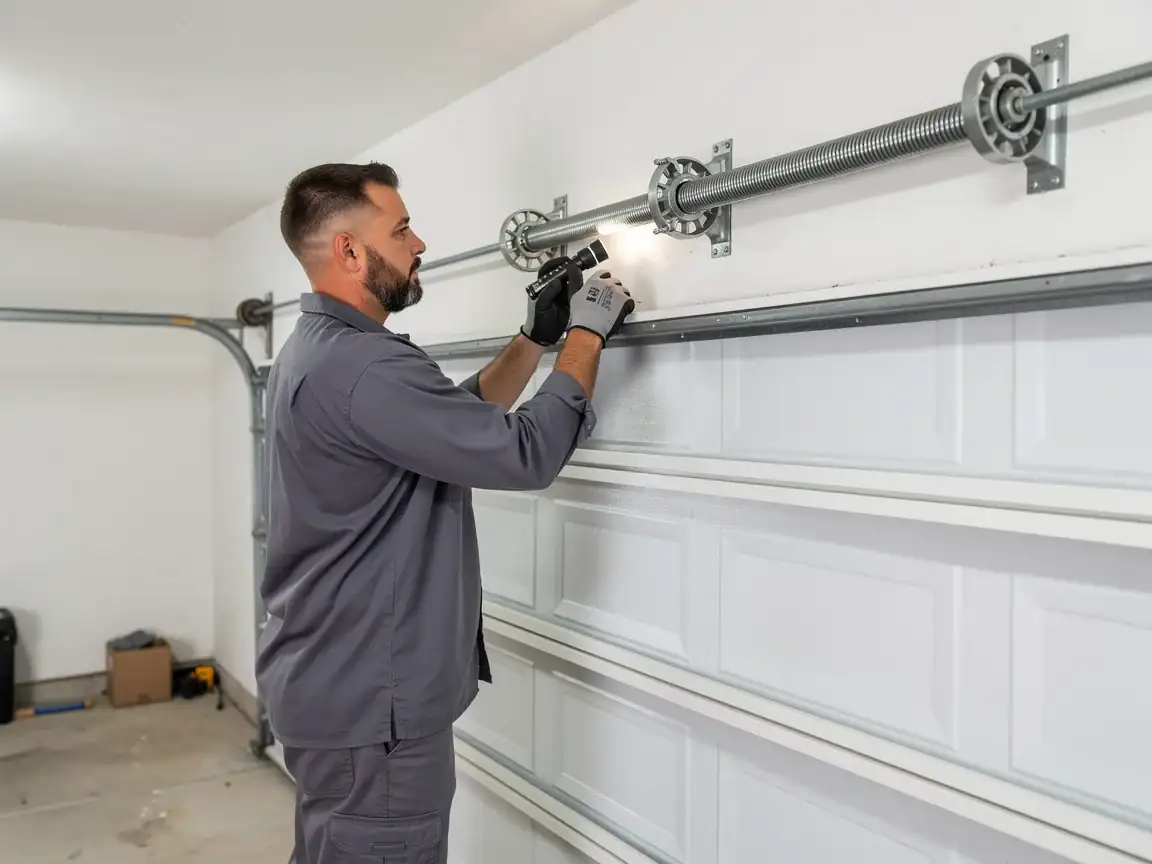
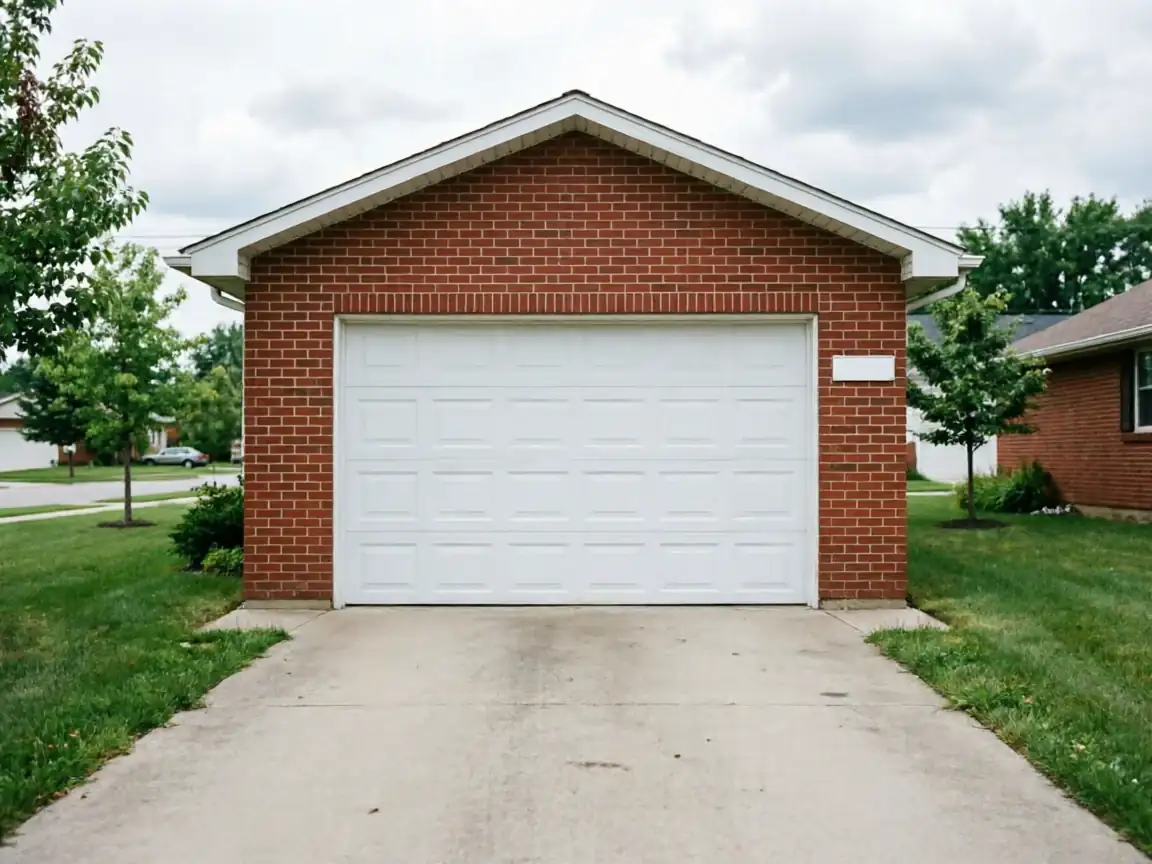
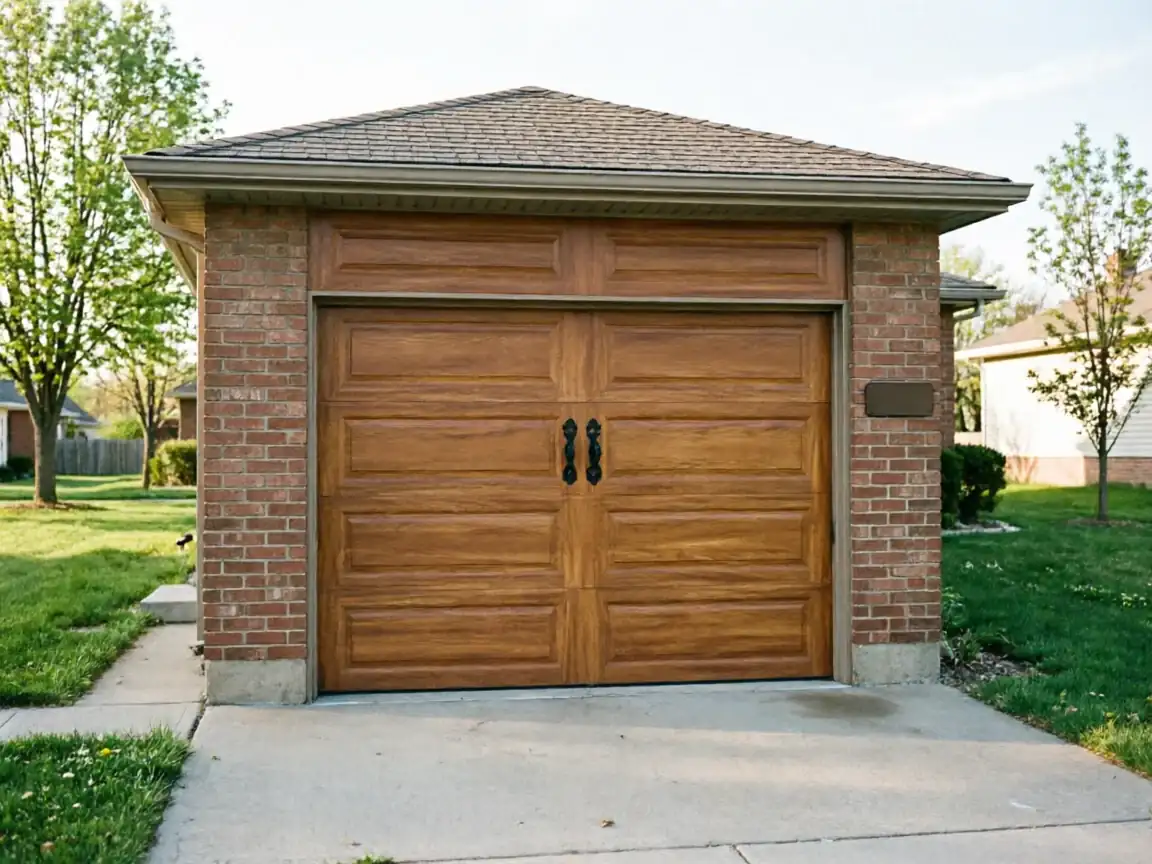
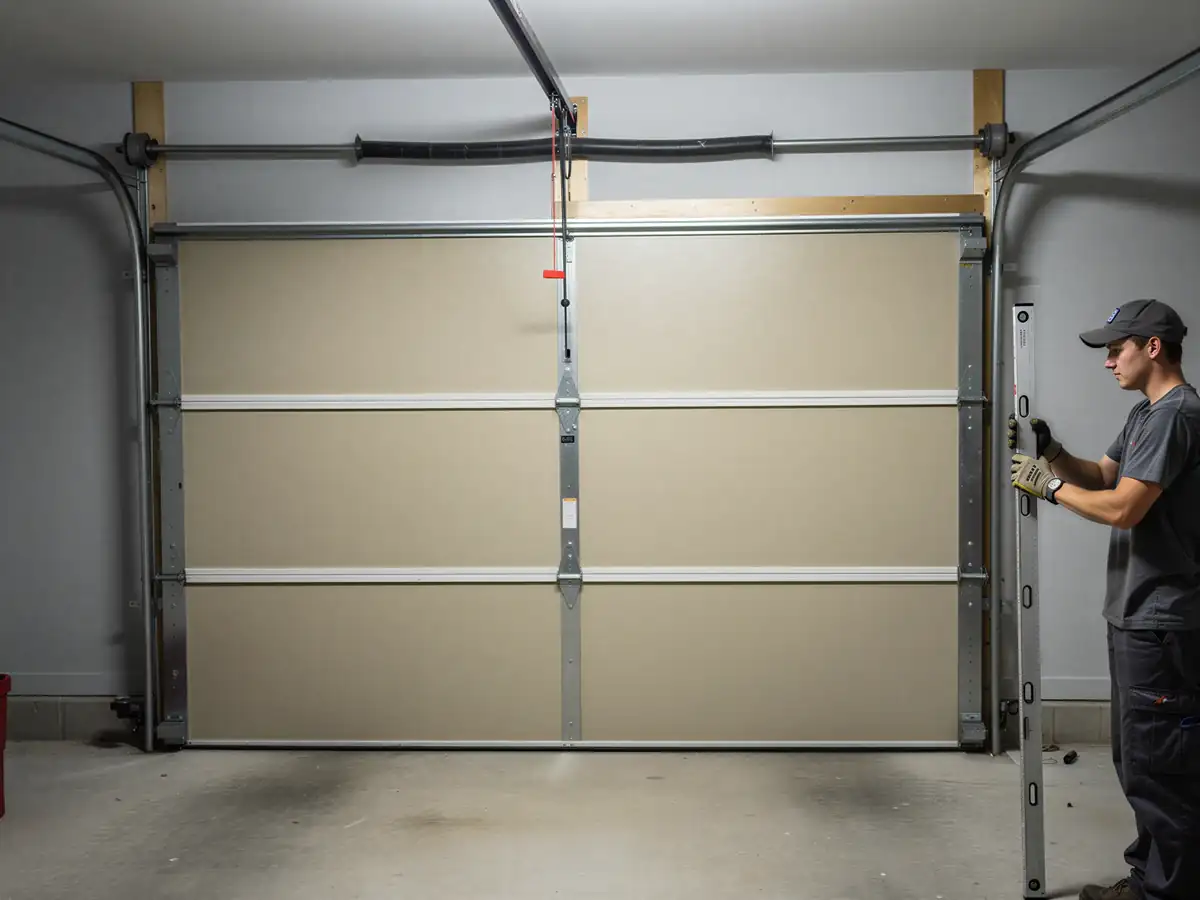
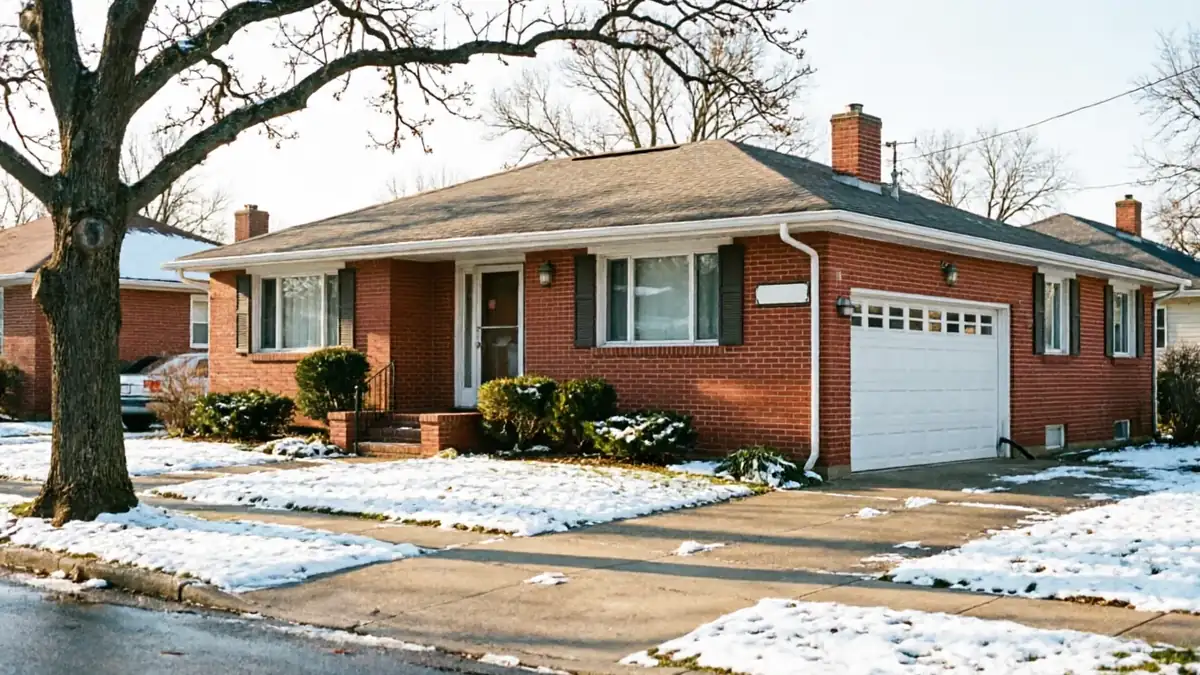
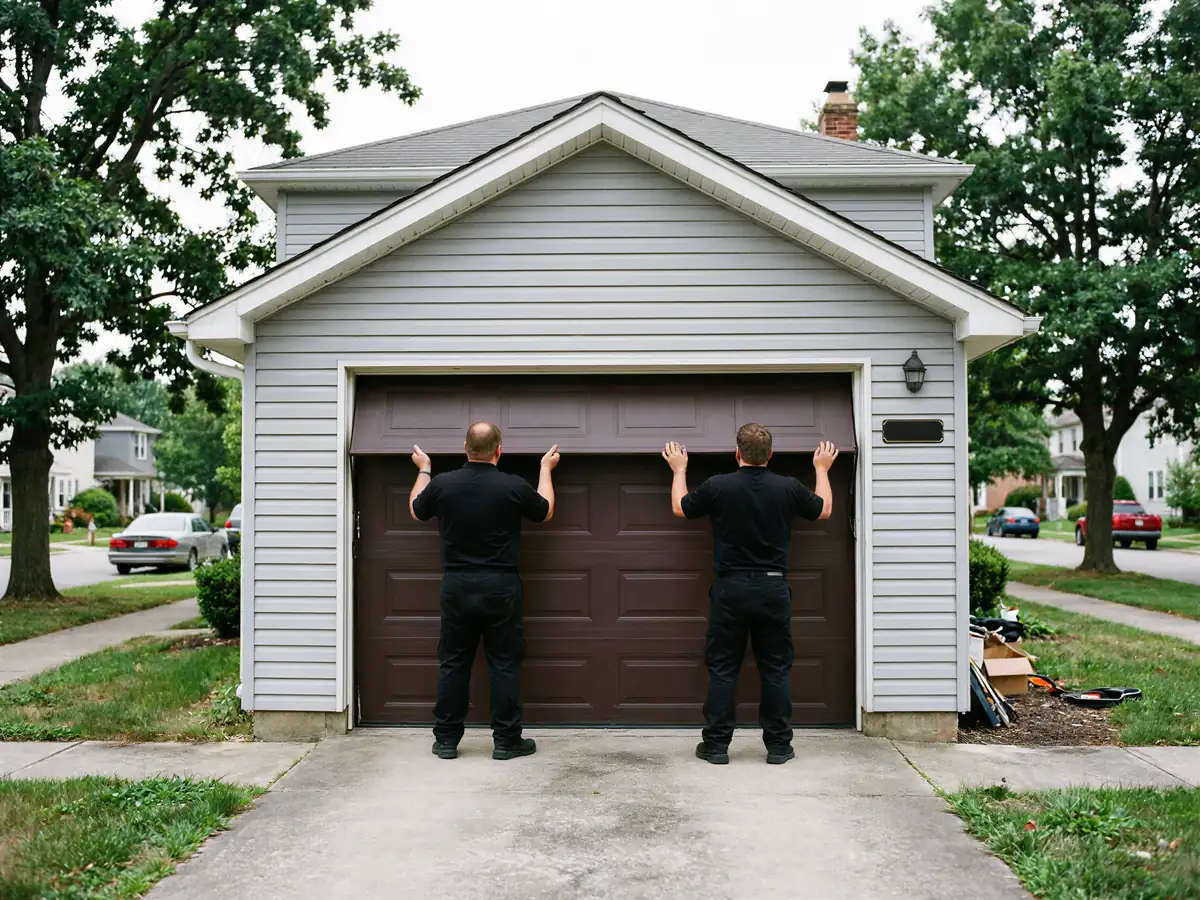
Most of the houses we measure in this area date to the 1945-1994 run, with the bulk of the stock going up in the 1960s and '70s across the 22 named neighborhoods we work in. That means jamb widths, header heights, and track clearances that don't always match what a big-box door comes boxed for. We pull the actual opening dimensions, check the header for the backing a torsion spring system needs, and confirm the slab has enough slope for drainage before any door goes up.
On a lot of these older openings, the existing jambs are sound but the track spacing was set for a door style nobody sells anymore
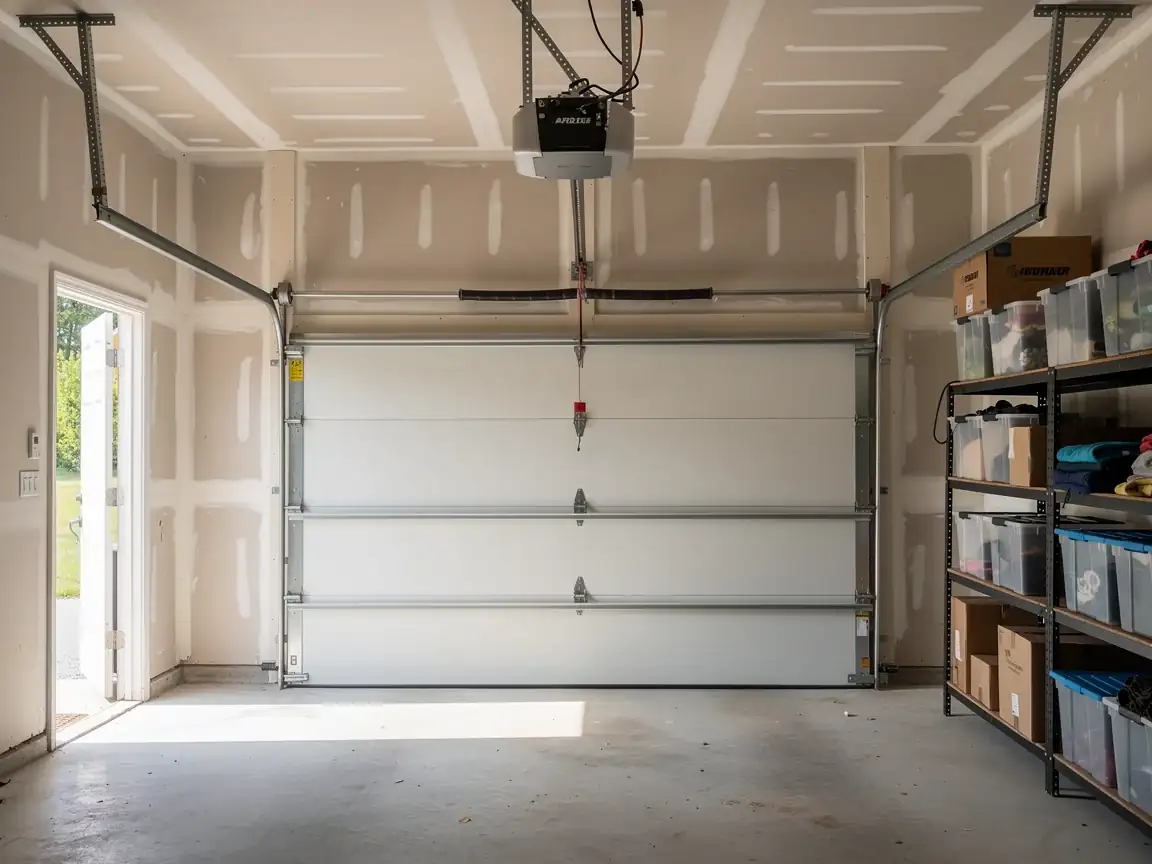
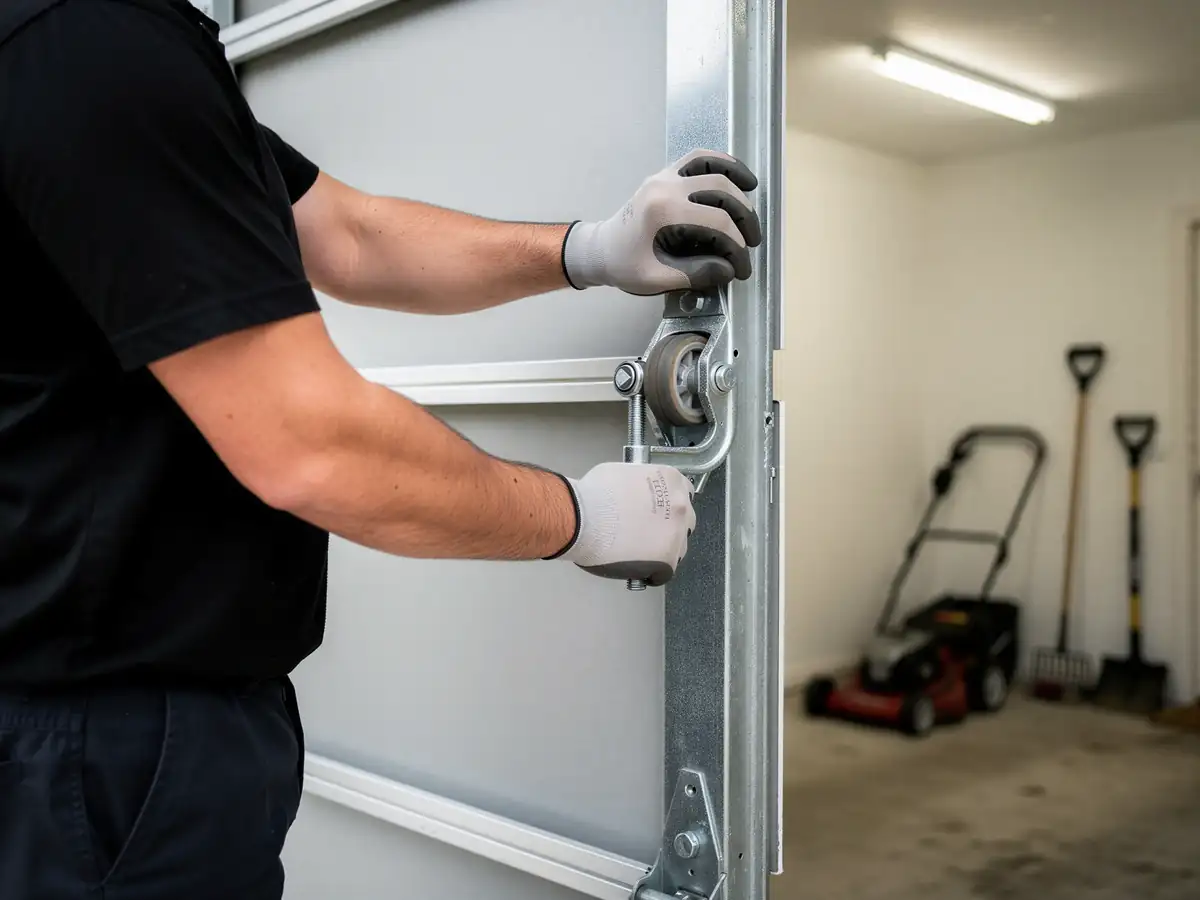
That changes how we mount the horizontal track and where the springs land, not how long it takes to pour a new slab, because we're not pouring one. We size the new door and hardware to the opening you already have whenever the framing allows it, which keeps the job a door swap instead of a construction project.
We don't give a blanket hours-to-complete number here because a single door on sound framing and a double door on a header that needs reinforcing aren't the same job
How It Shows Up
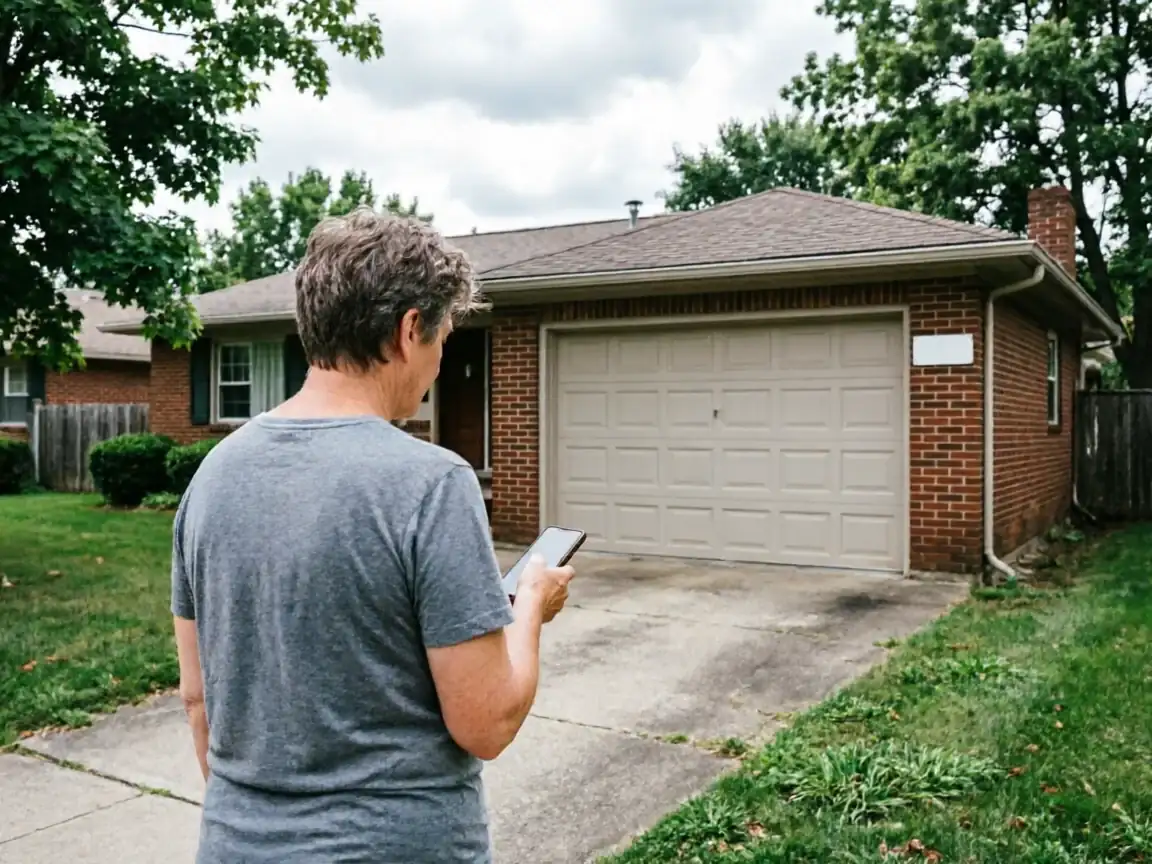
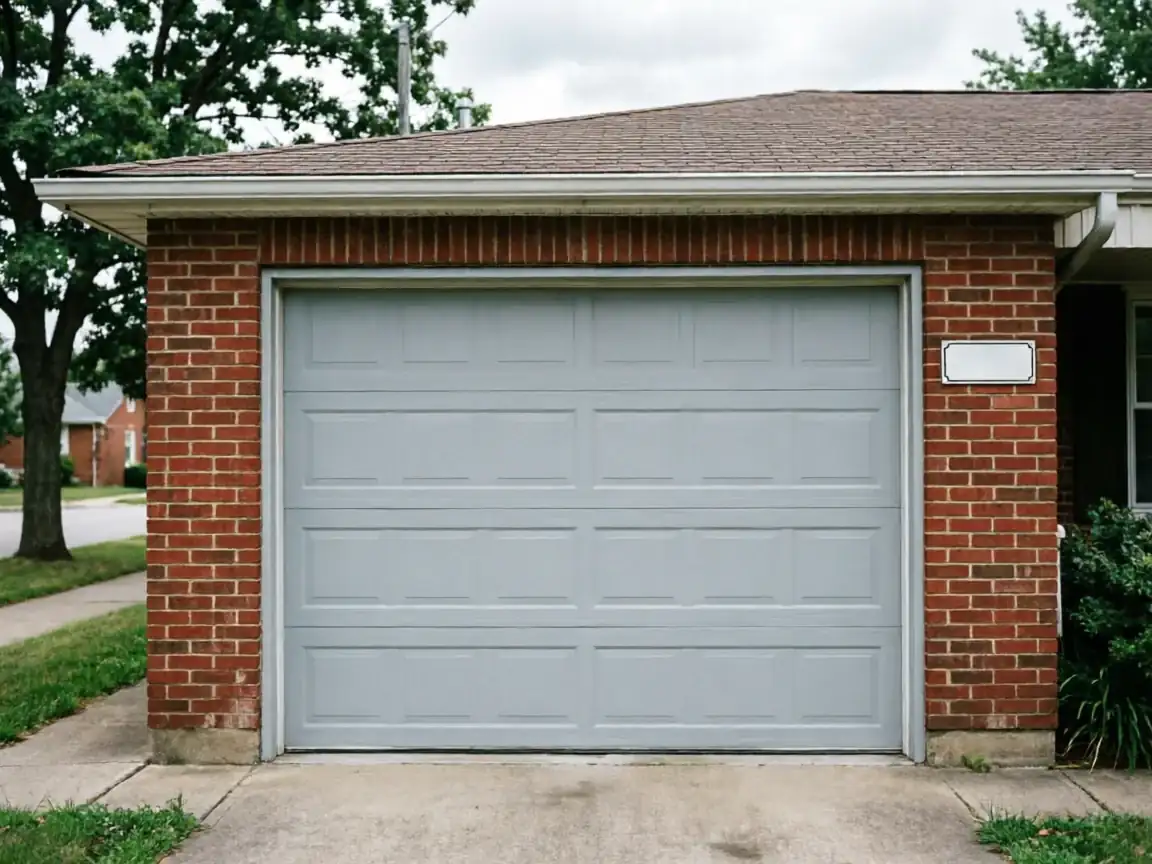
The call usually starts the same way: the door looks fine parked but won't sit flush anymore, or one corner drags on the track. On houses built in the 1945-1994 window, the steel on the original or first-replacement door has usually gone soft at the bottom panel from decades of condensation cycling in an unheated garage. You'll see rust blooming along the bottom seal track before you see it anywhere else.
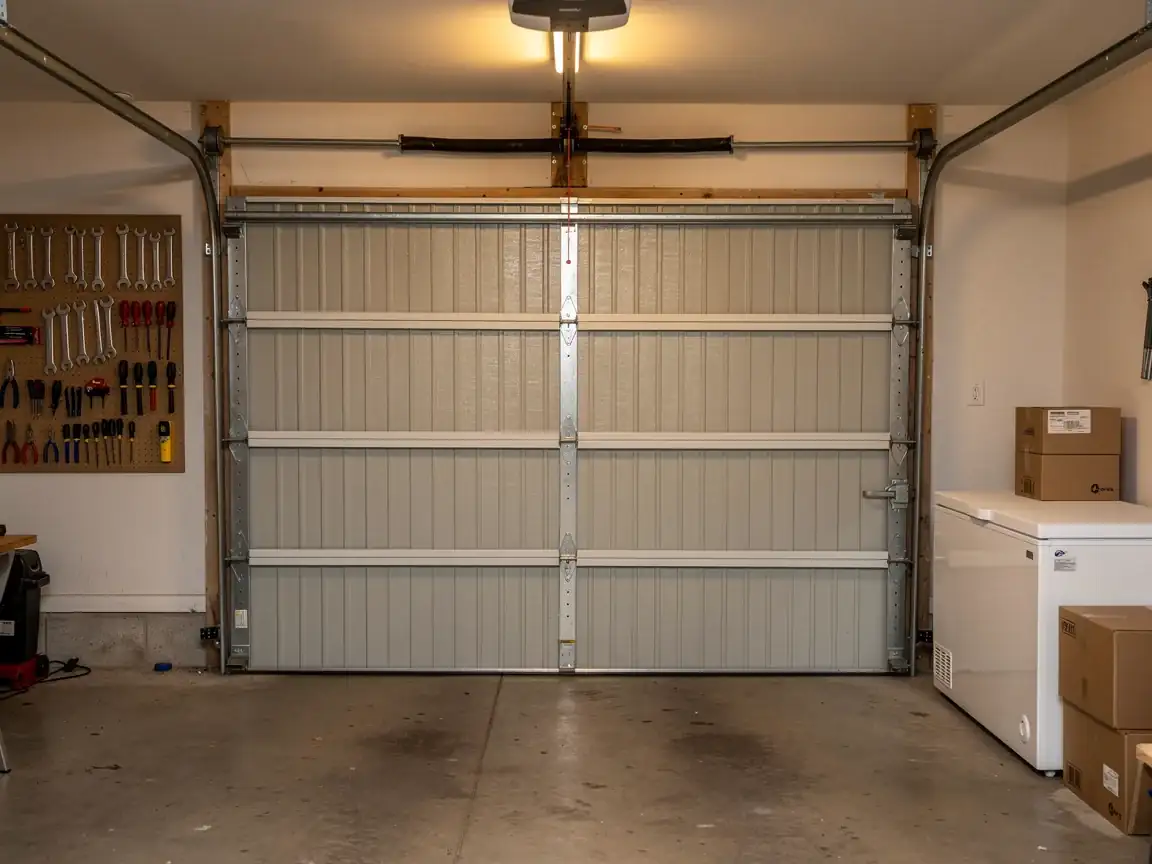
On the 1960s and '70s builds specifically, we also see sections that were never insulated, which shows up as frost forming on the inside of the panels in deep cold rather than any visible damage. The owner thinks the door is fine because it still opens. It's fine until the cold band we're in - F3's severe designation isn't decorative - starts working steel fatigue at the rollers and the whole panel starts to bow under its own weight on the coldest mornings.
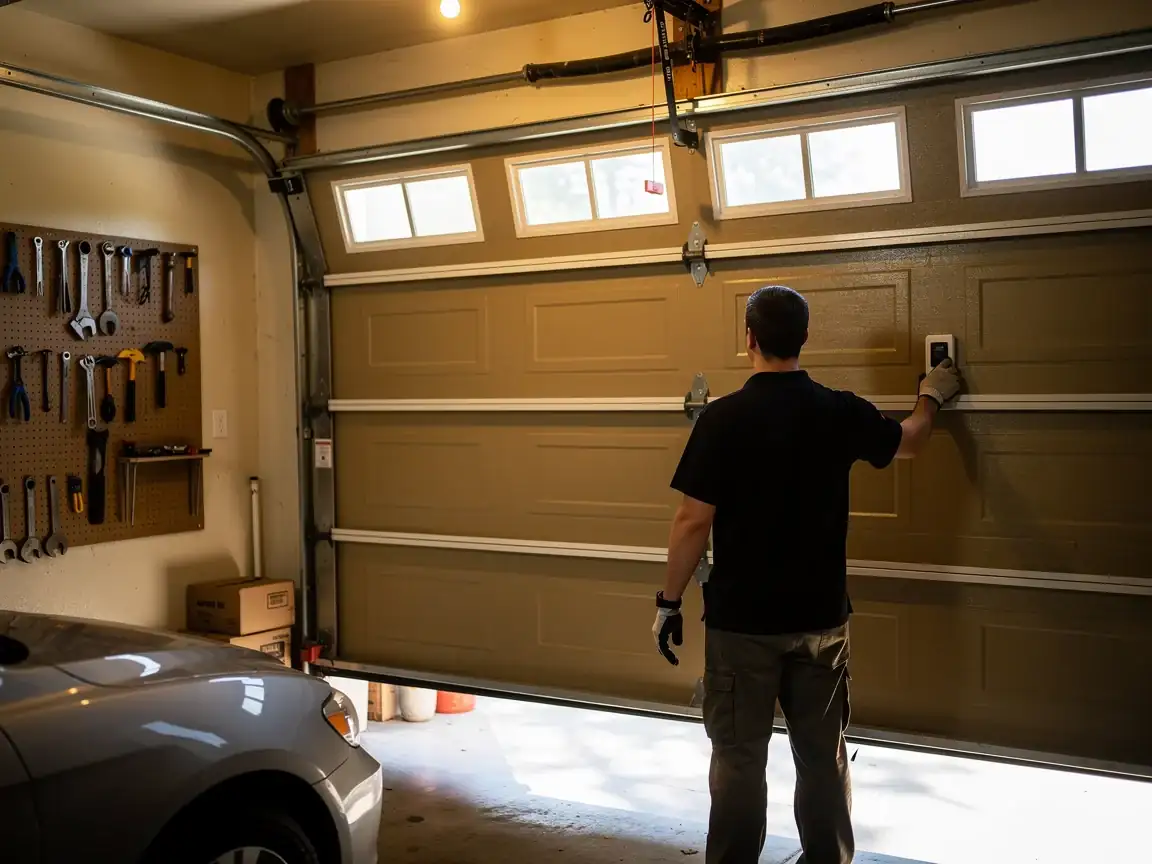
A third pattern: openers original to a 1970s door straining against a heavier replacement panel installed at some point without updating the spring weight. The opener sounds strained, not the door, and owners call about the wrong part first.
What Causes It Around Here
Two things stack on each other in this service area. First, the age curve - a median build year of 1976 means a large share of the owner-occupied houses here, out of the roughly 27,559 counted across the wider service area, are carrying garage doors and hardware that are at minimum a second or third replacement generation. Steel, springs, and track all have a service life, and that life runs out roughly on schedule across a neighborhood built in the same five-year window.
Second, the climate band. This is a severe-cold zone, and an uninsulated or thinly insulated door built for a 1970s standard does a poor job holding a thermal break against that. Repeated freeze-thaw at the bottom seal works moisture into the panel seams, and that moisture is what turns into the rust and the soft steel we see on service calls. It's not a defect in any one door - it's forty-plus years of a cold climate working on hardware that was never spec'd for today's insulation expectations.
Houses in Okemos and Haslett, both a few miles out, show the same pattern because they went up in the same building era under the same winters.
The DIY Question
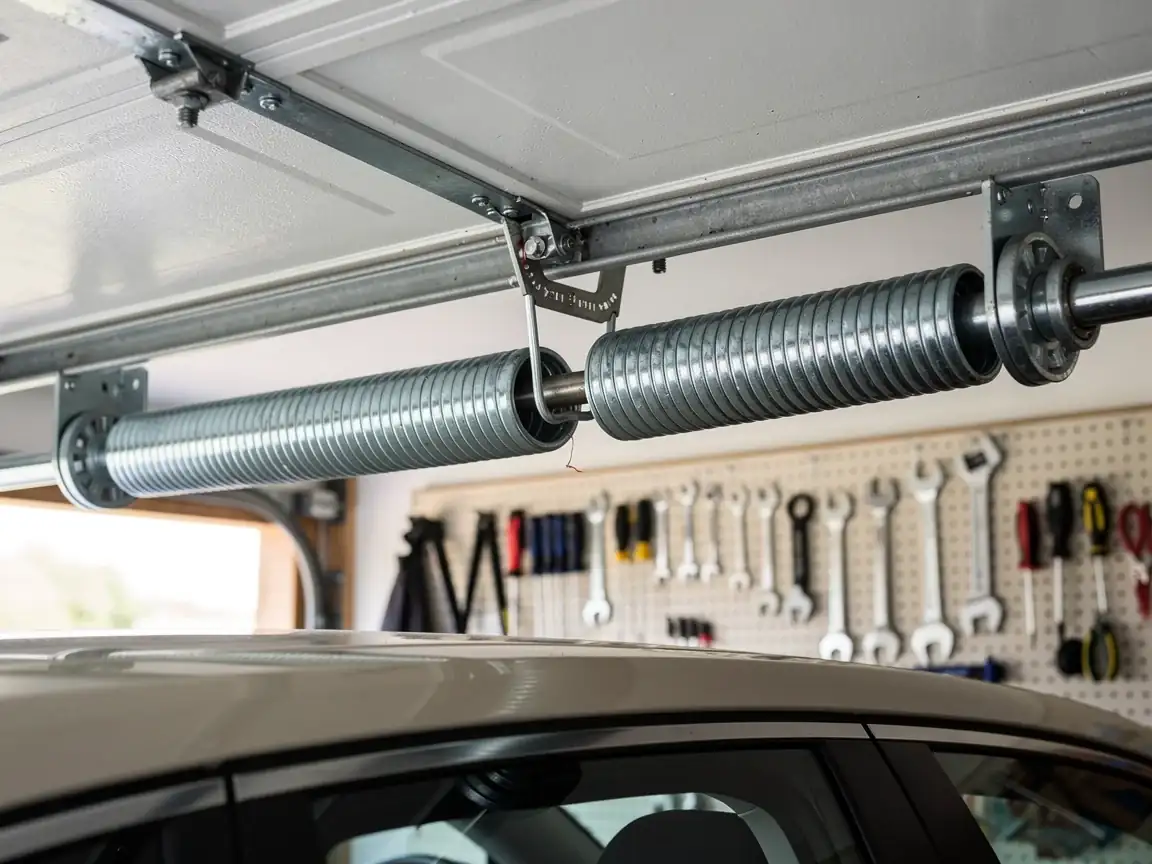
A torsion spring under load can break a hand or worse
And that's true whether the door is new or forty years old. We won't talk anyone through doing that part themselves, full stop. If you're comparing a new door against patching the old one, that's a fair DIY-adjacent question and the honest answer depends on the frame, not the brand of door.
If your opening is one of the many in this area built to 1960s-70s dimensions and the jambs are square and solid
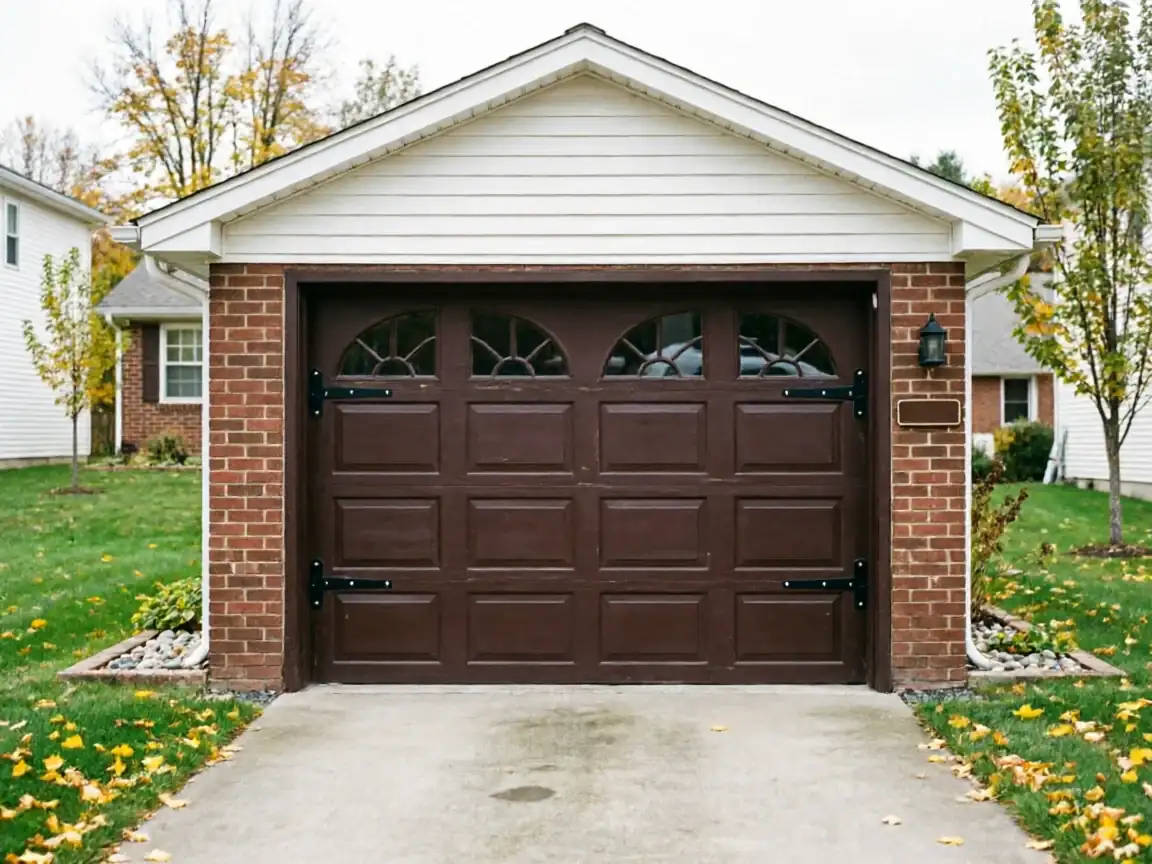
Swapping panels and hardware on the existing frame is usually the right call and the cheaper one. If the wood around the opening has gone soft from decades of moisture, or the track spacing was set for a door that no longer exists on the market, no amount of careful shopping fixes that - the frame has to be addressed first, and that's a bigger job than a door swap.
One limitation worth saying plainly: we don't do the framing carpentry ourselves
If an opening needs structural repair before a new door can go in, that's a separate trade, and we'll tell you that up front instead of forcing a door onto a bad frame.