How It Shows Up
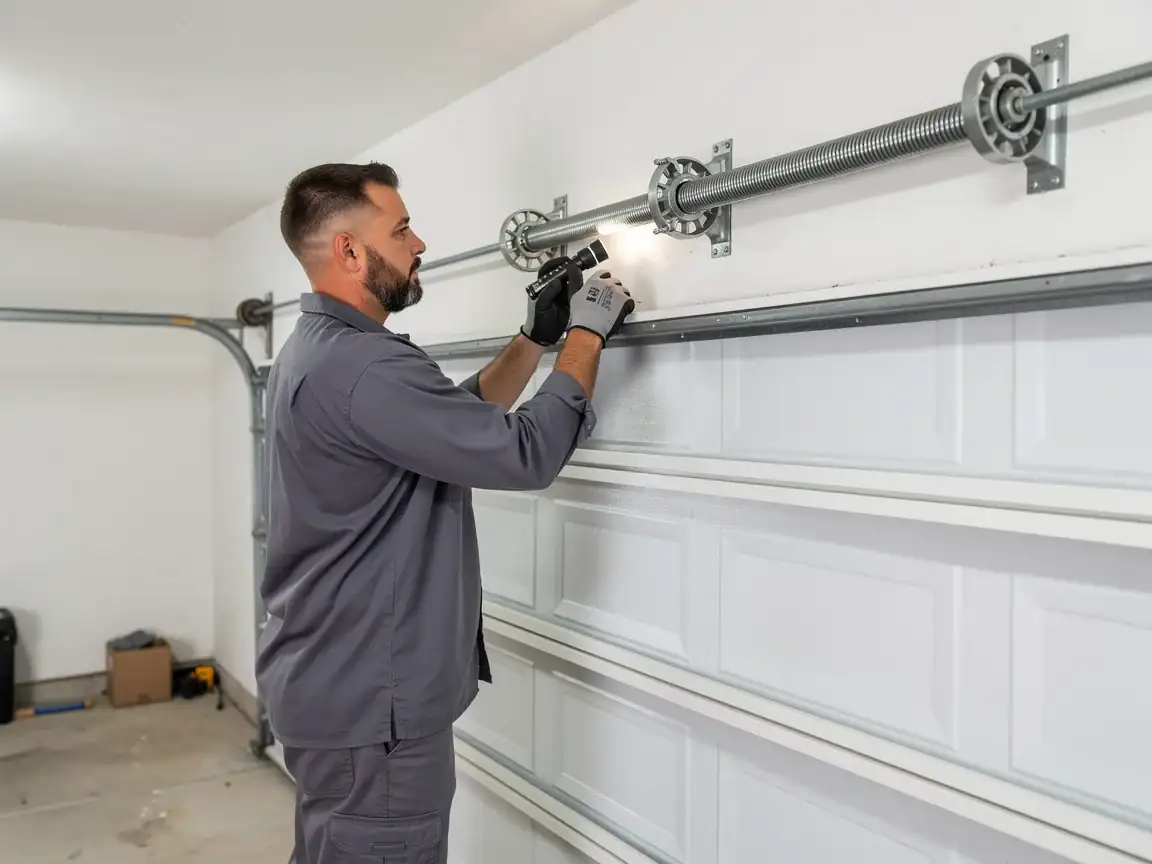
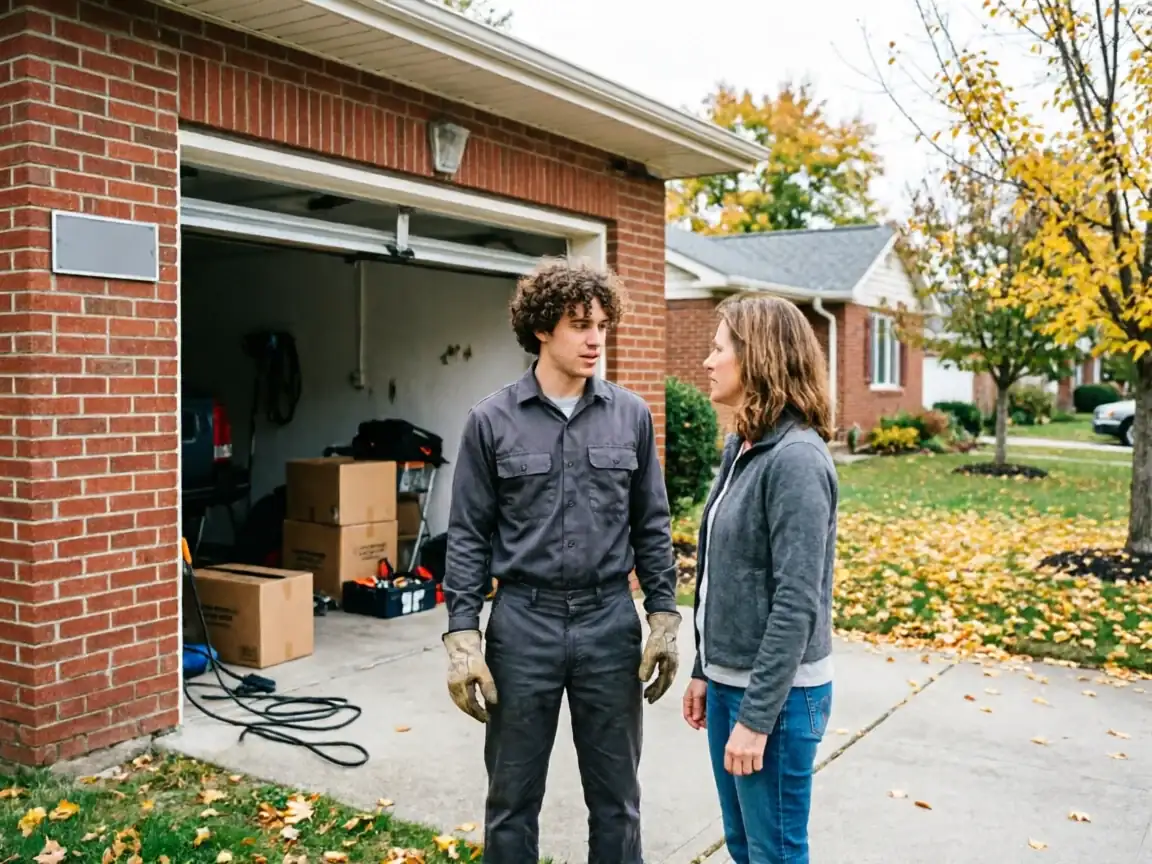
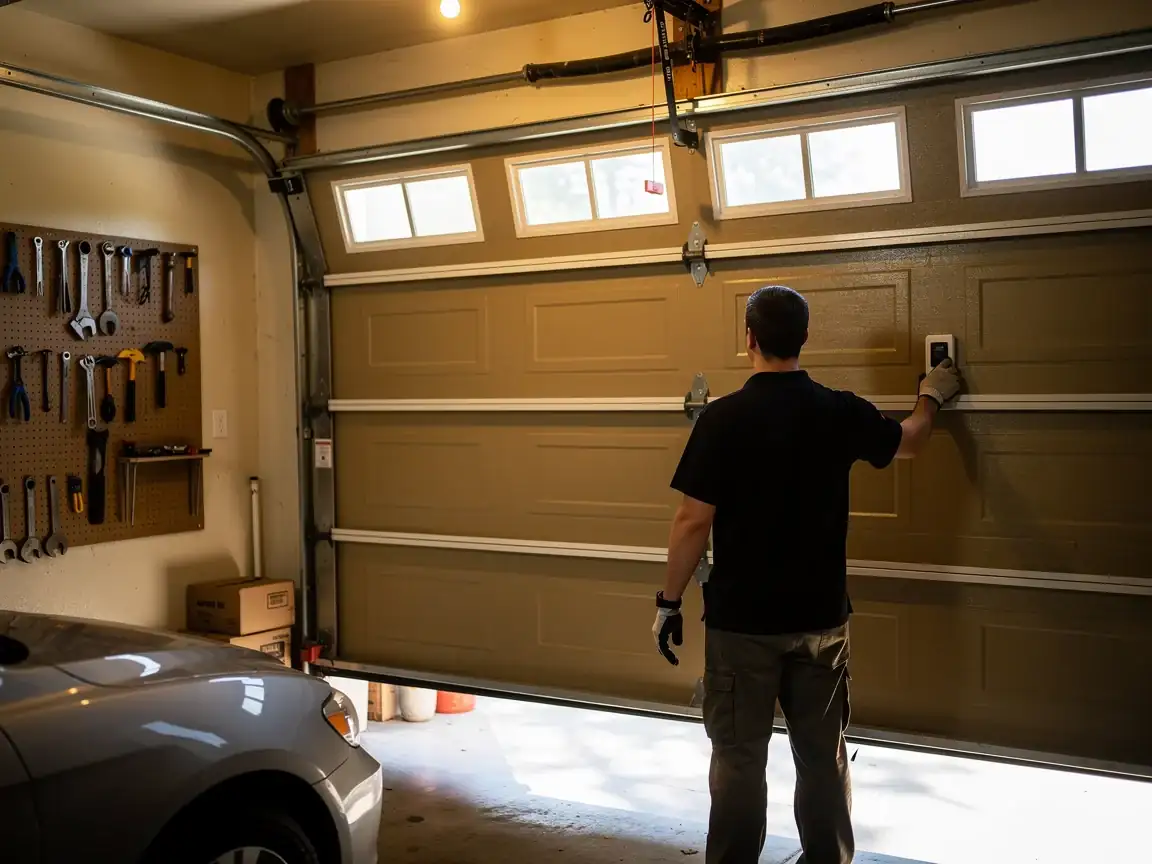
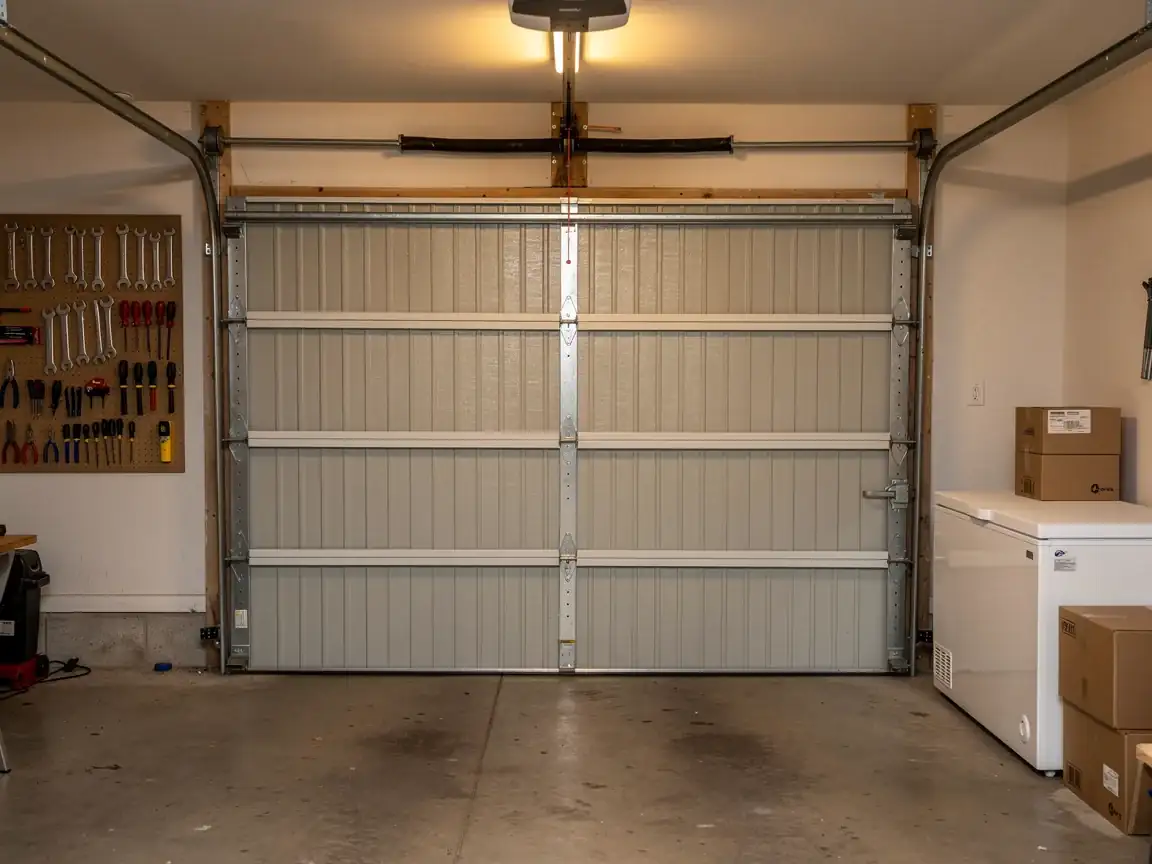
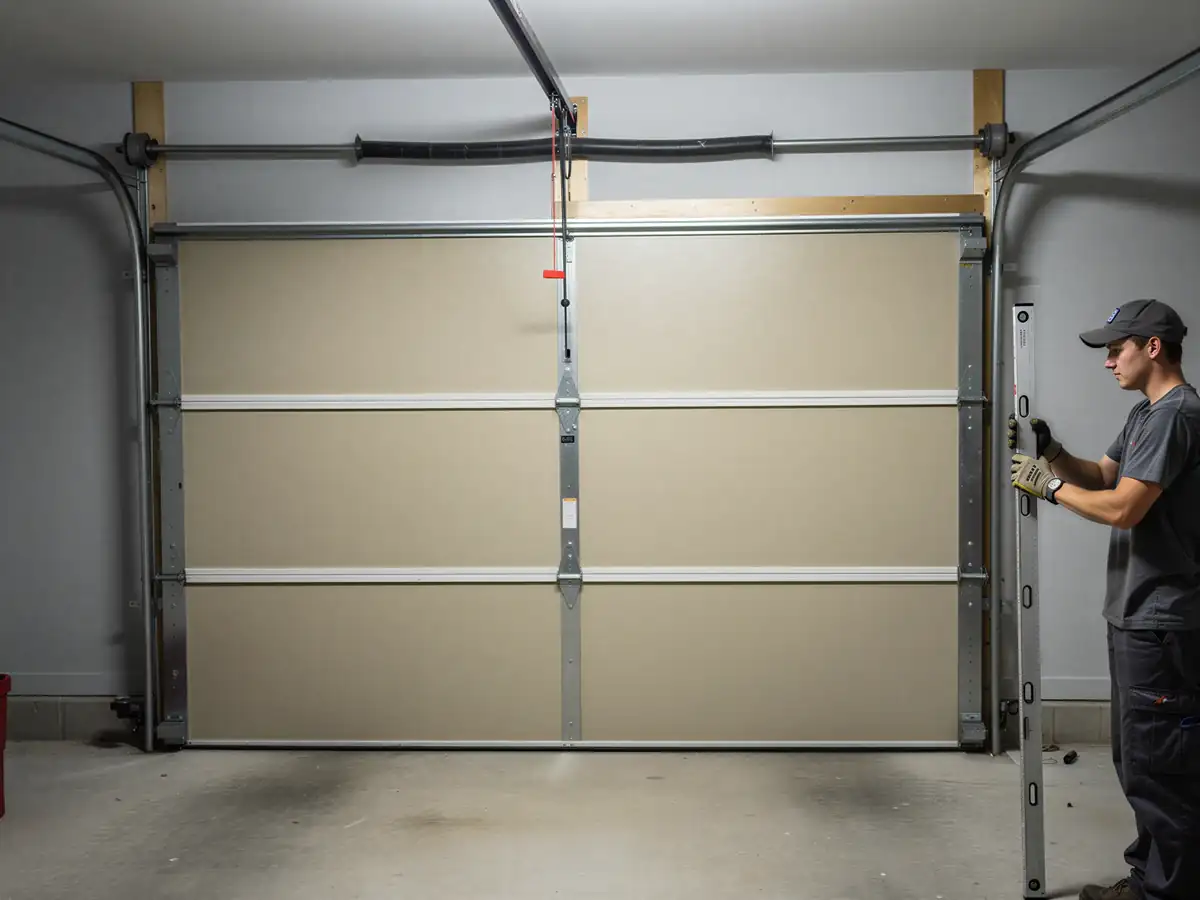
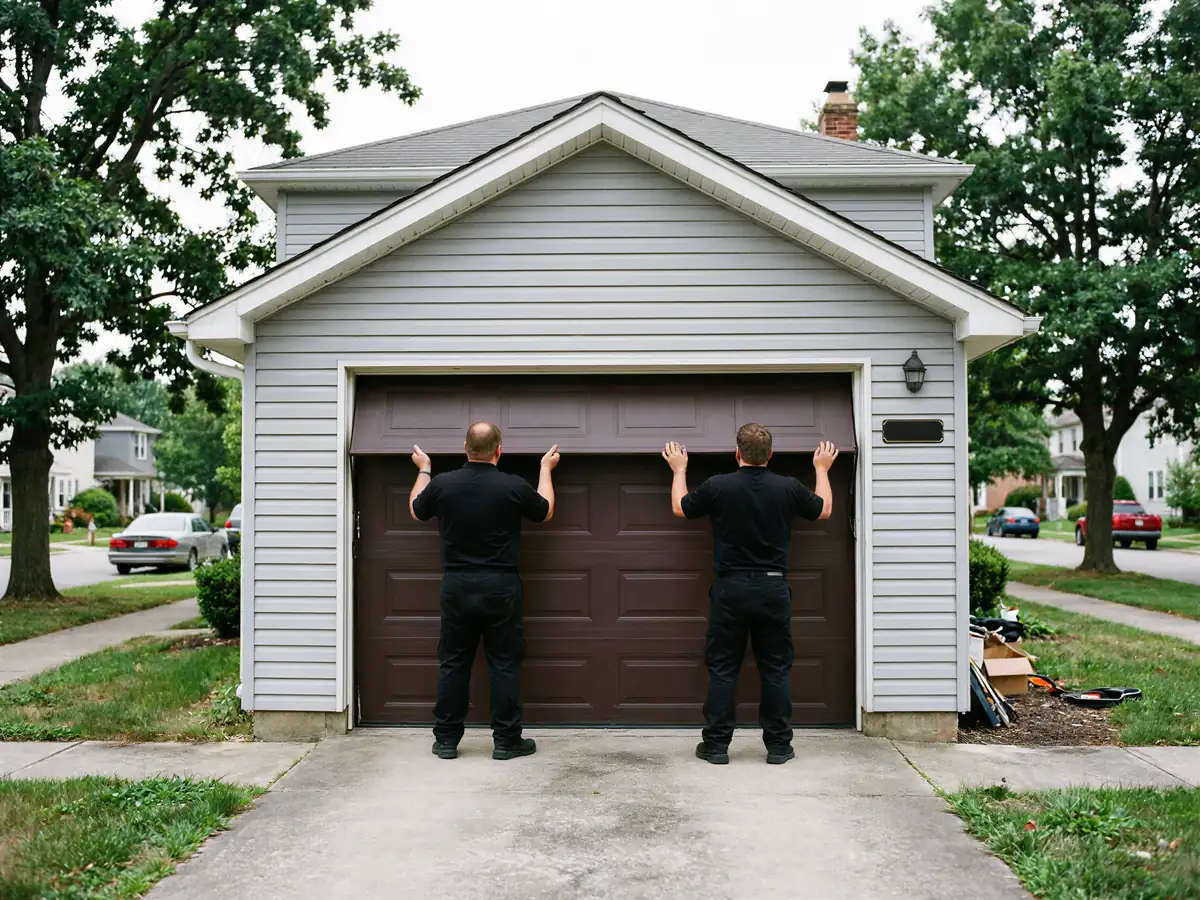
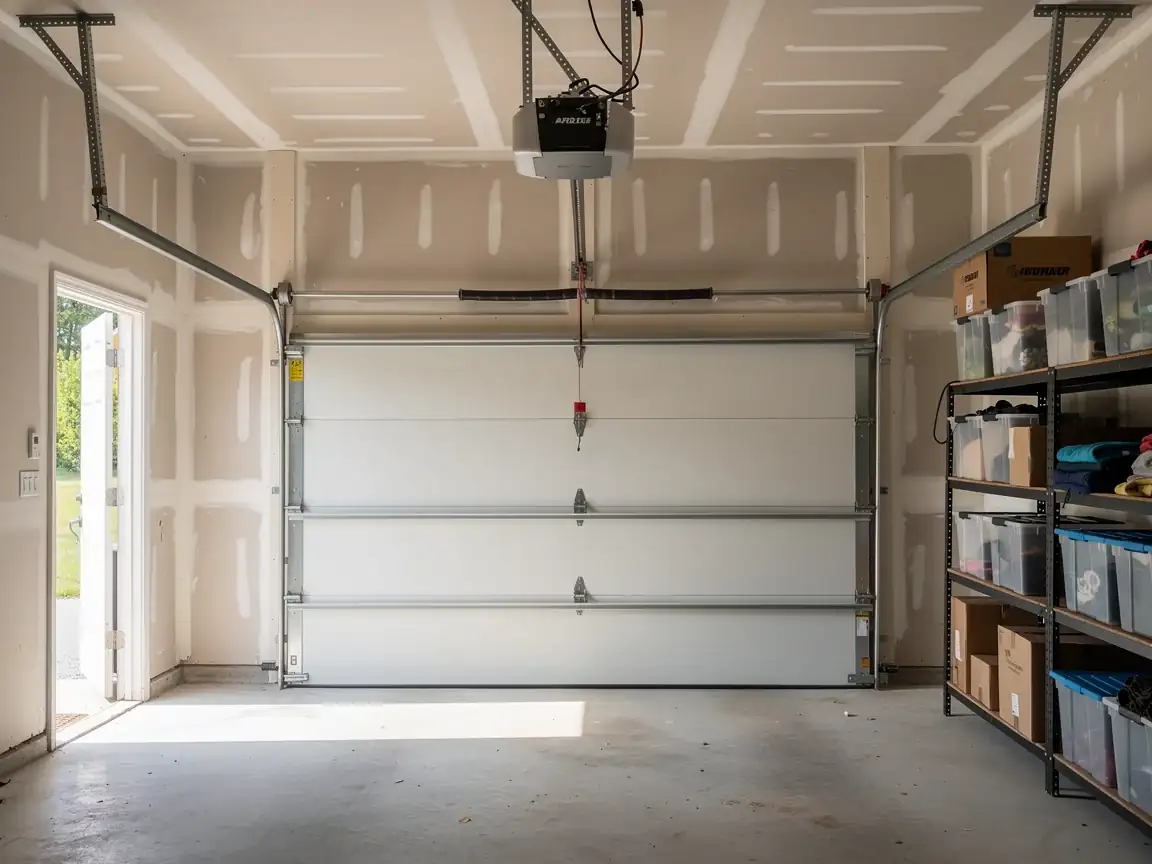
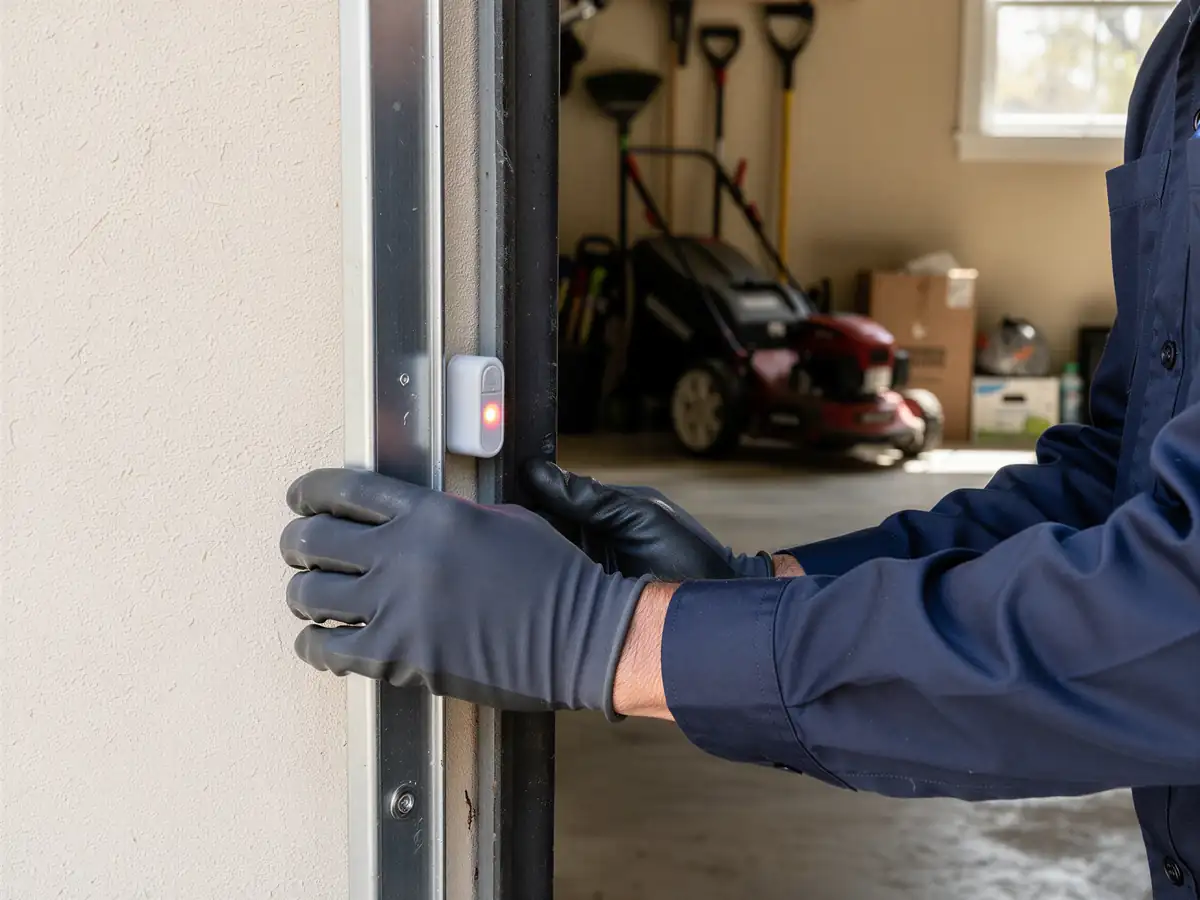
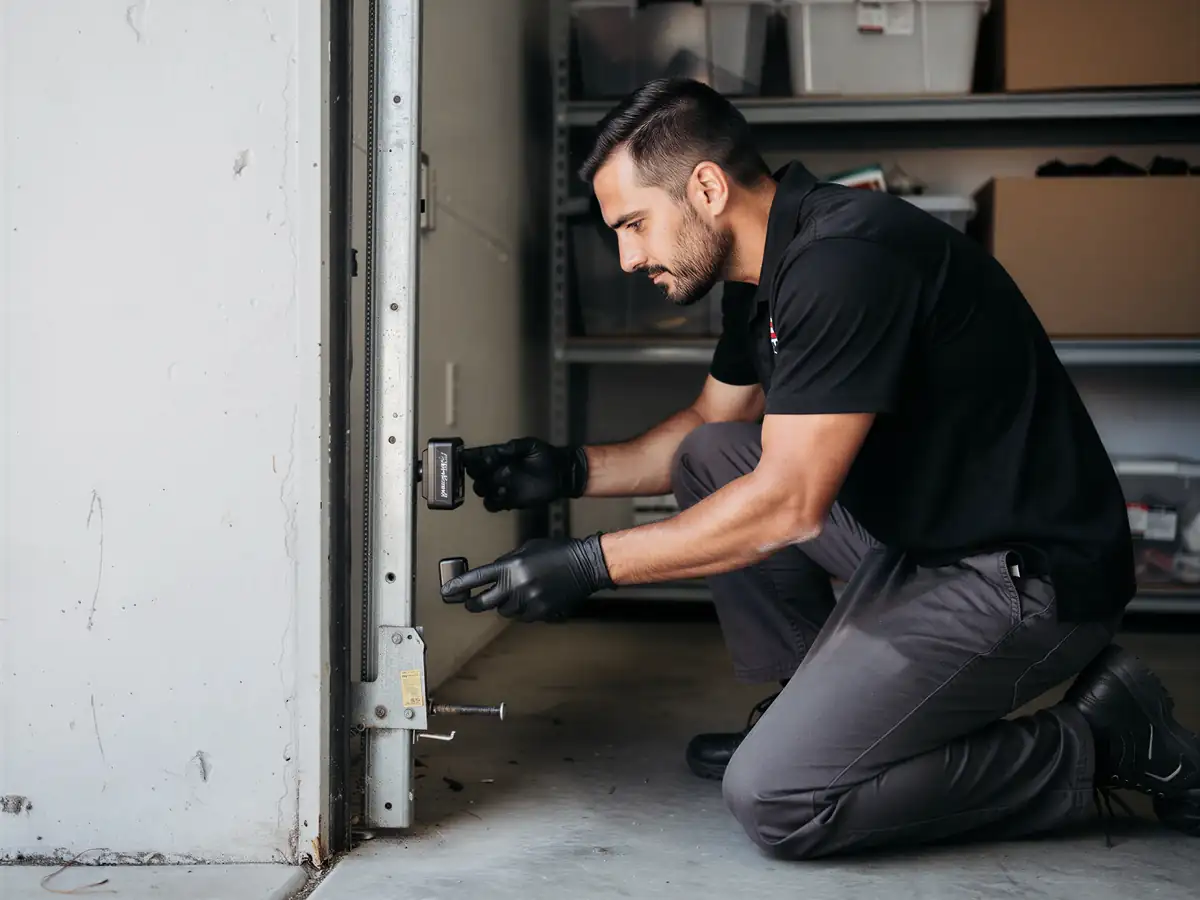
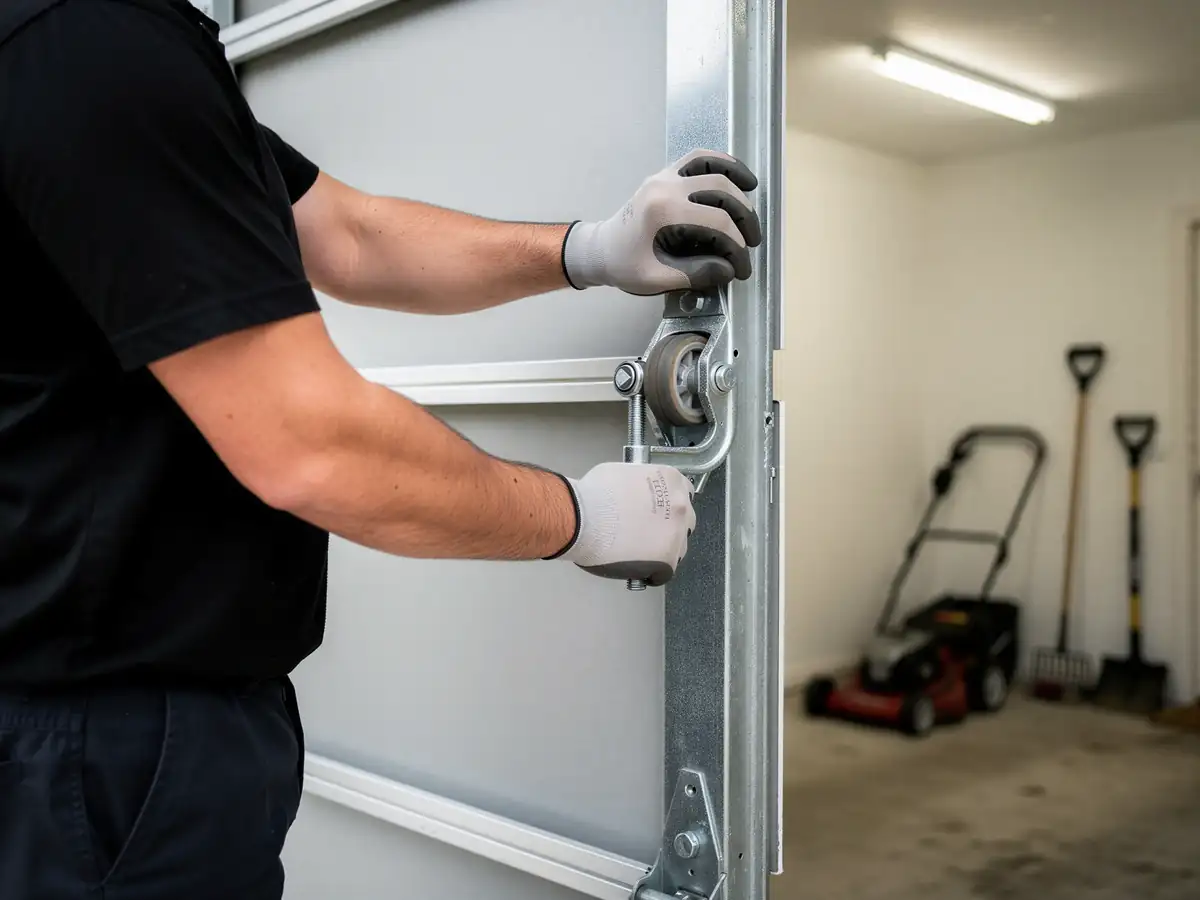
Most homeowners notice it one of two ways. Either the door stops halfway and won't go up or down, hanging at an angle with a visible gap between the roller and the track on one side, or it comes off a roller quietly and you only catch it because the door scrapes or grinds when the opener tries to move it. Sometimes there's a loud bang first - that's usually a cable or a bracket letting go, not the track itself failing. You'll also see it in smaller ways before a full derailment: a door that shudders partway through its travel, a roller that's visibly out of its channel on one side while the other side looks fine, or a track that's pulled away from the wall bracket by a half inch or more. If the door is still partway on the track, don't keep running the opener - every cycle grinds the roller wheel and chews up the track edge, which turns a bracket fix into a track replacement.
What Causes It Around Here
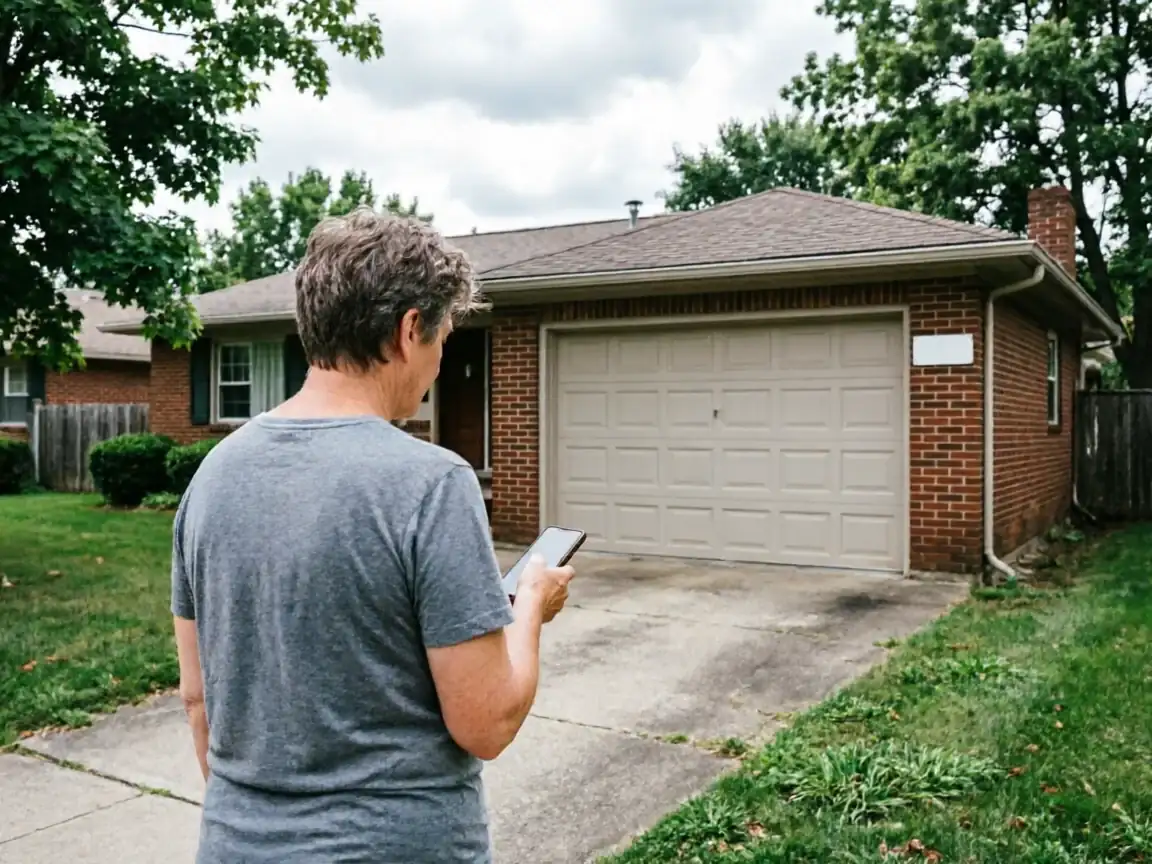
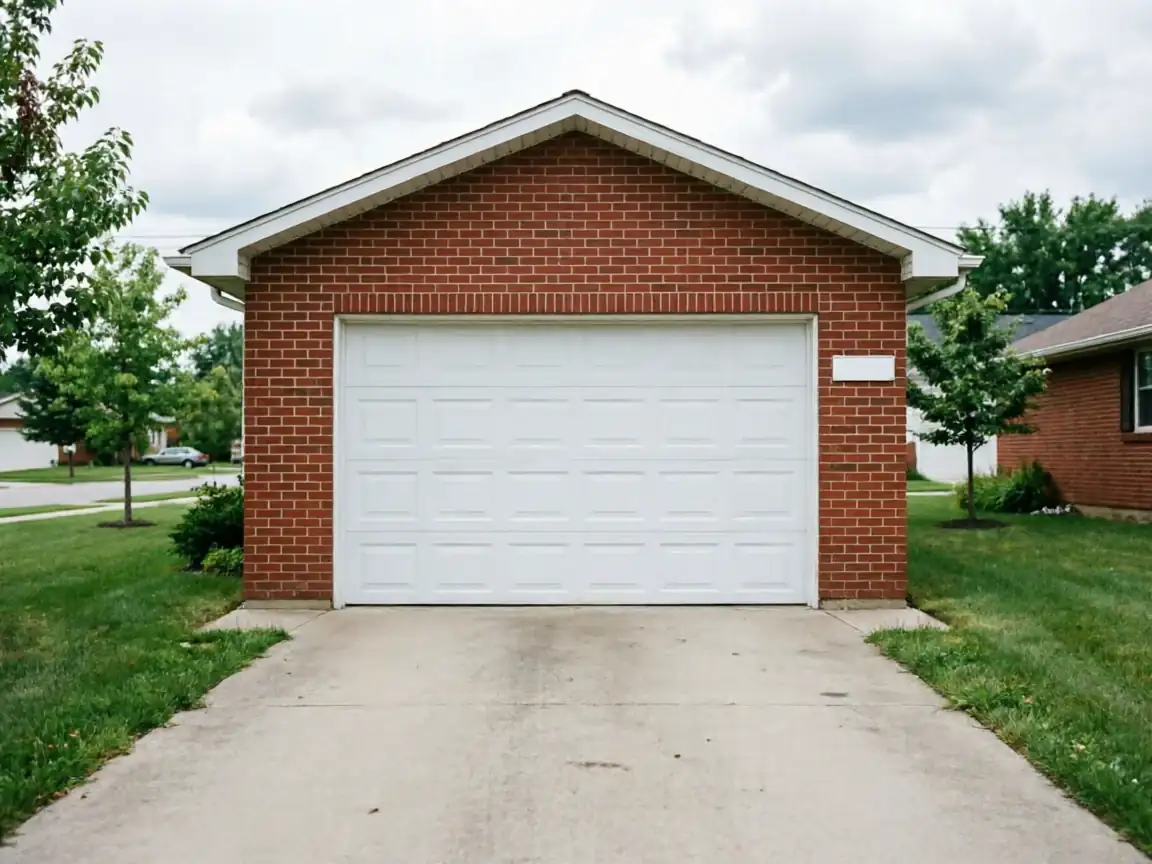
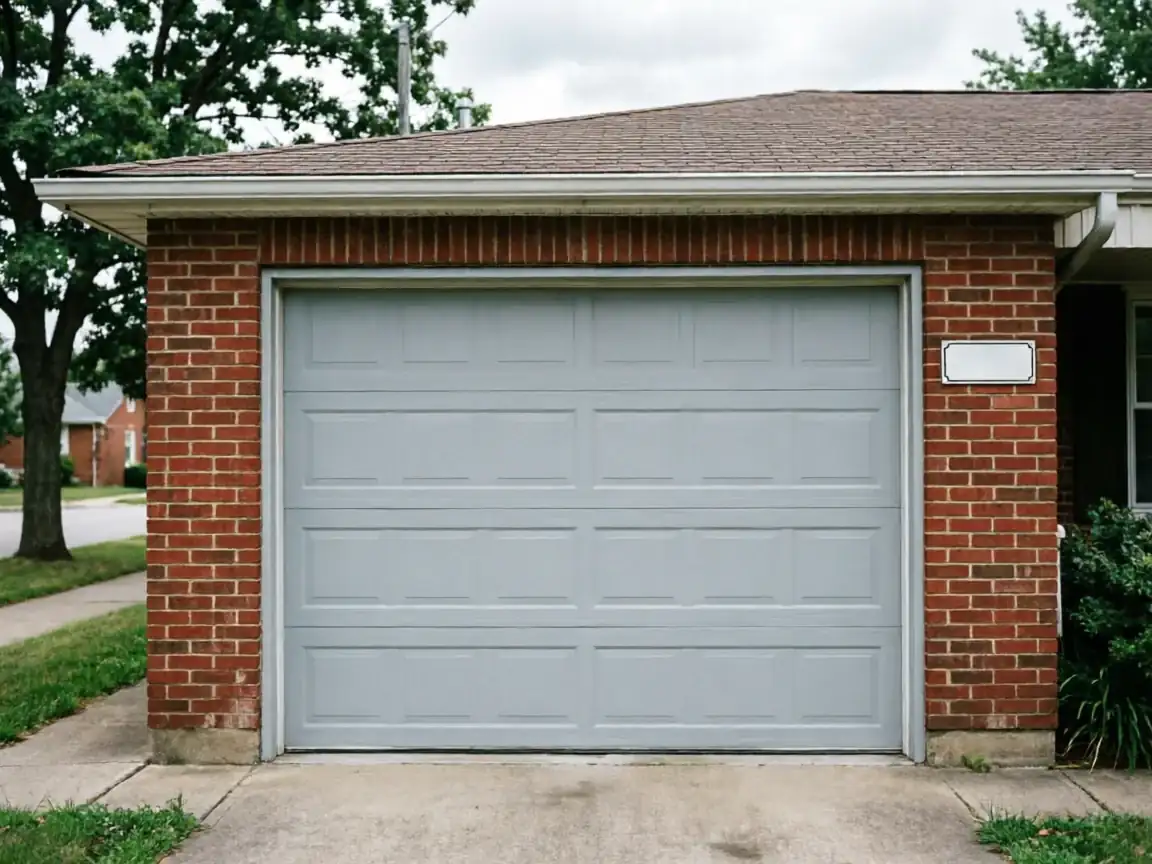
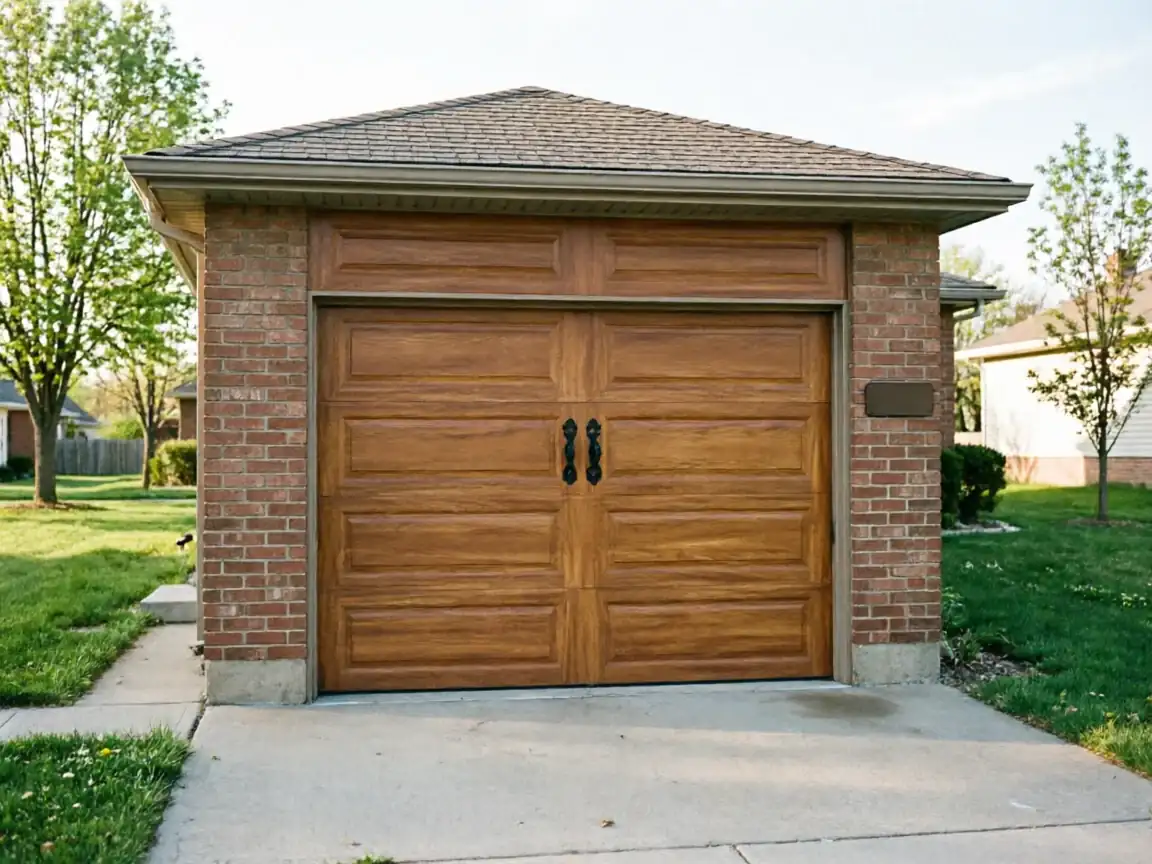
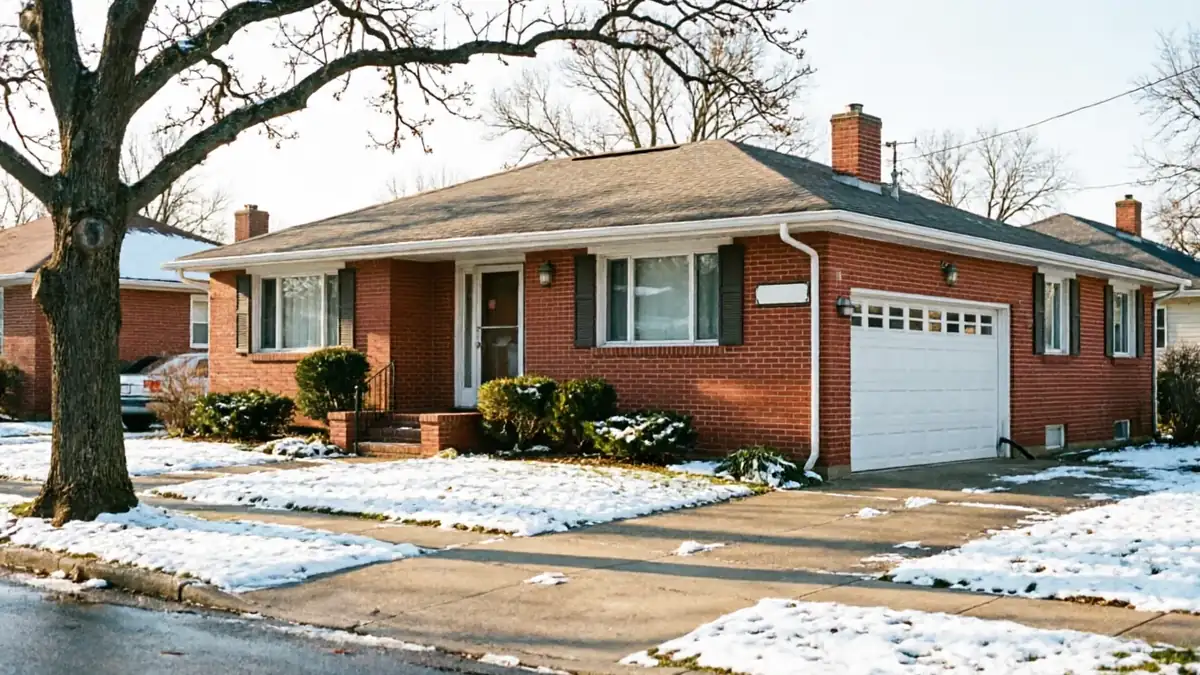
East Lansing's housing stock mostly went up between 1945 and 1994, with the typical house here dating to around 1976, and a lot of that stock - across the 22 named areas in this part of the county - is original 1960s and 70s construction. That matters for this specific failure. Those garages were built with track and bracket hardware sized for lighter doors than what's often hung on them now, and decades of expansion and contraction have let the lag screws that hold the track to the jamb work loose. Add in this region's cold-climate band, where hard winter freezes followed by spring thaw cycles move wood framing and concrete slabs, and you get jambs that shift slightly year over year. A track bolted tight in 1976 isn't necessarily still tight in a jamb that's moved an eighth of an inch since. Across the wider service area, 27,559 of 66,121 households own their home, and a good share of those are living with the original garage hardware that came with the house - nobody's replaced it because nothing's broken yet, until the day a roller finally walks off the rail.