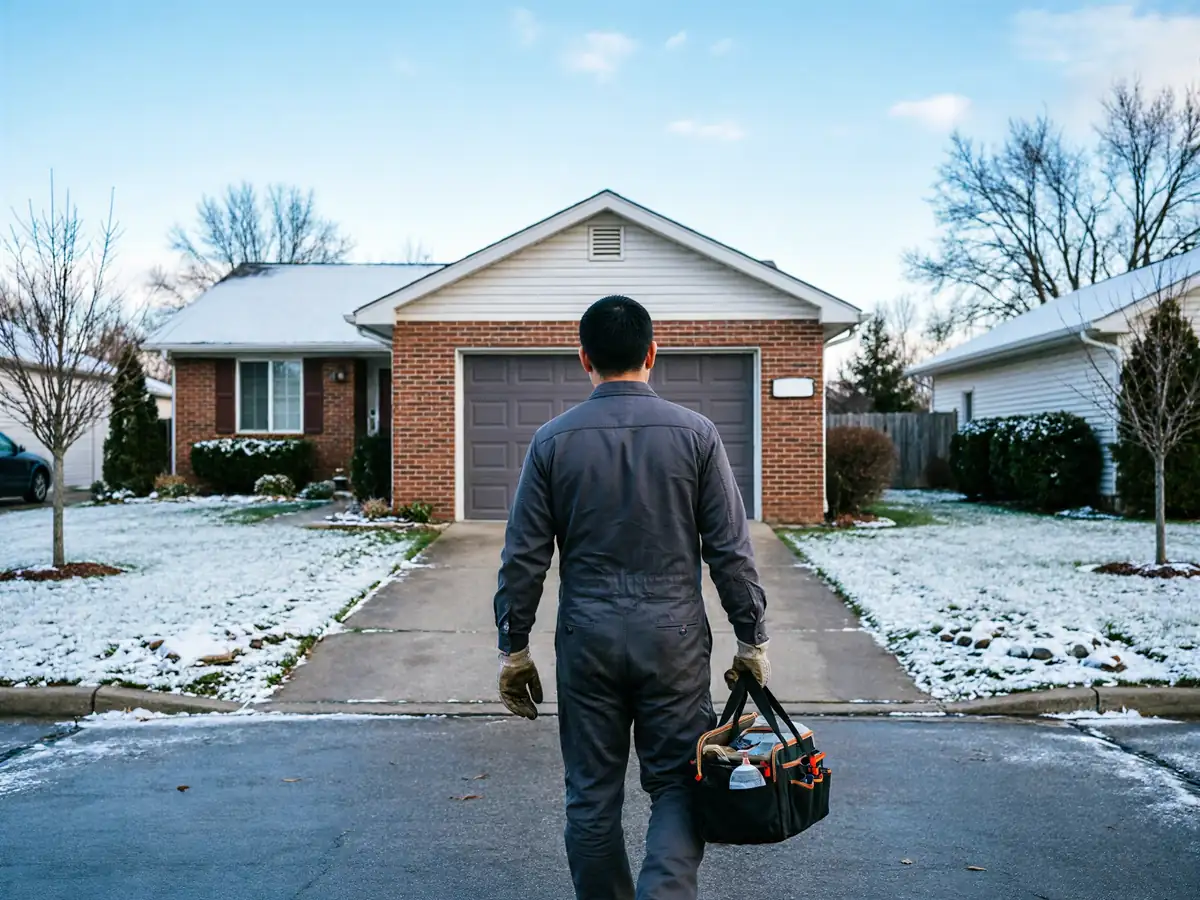
Booking a Visit
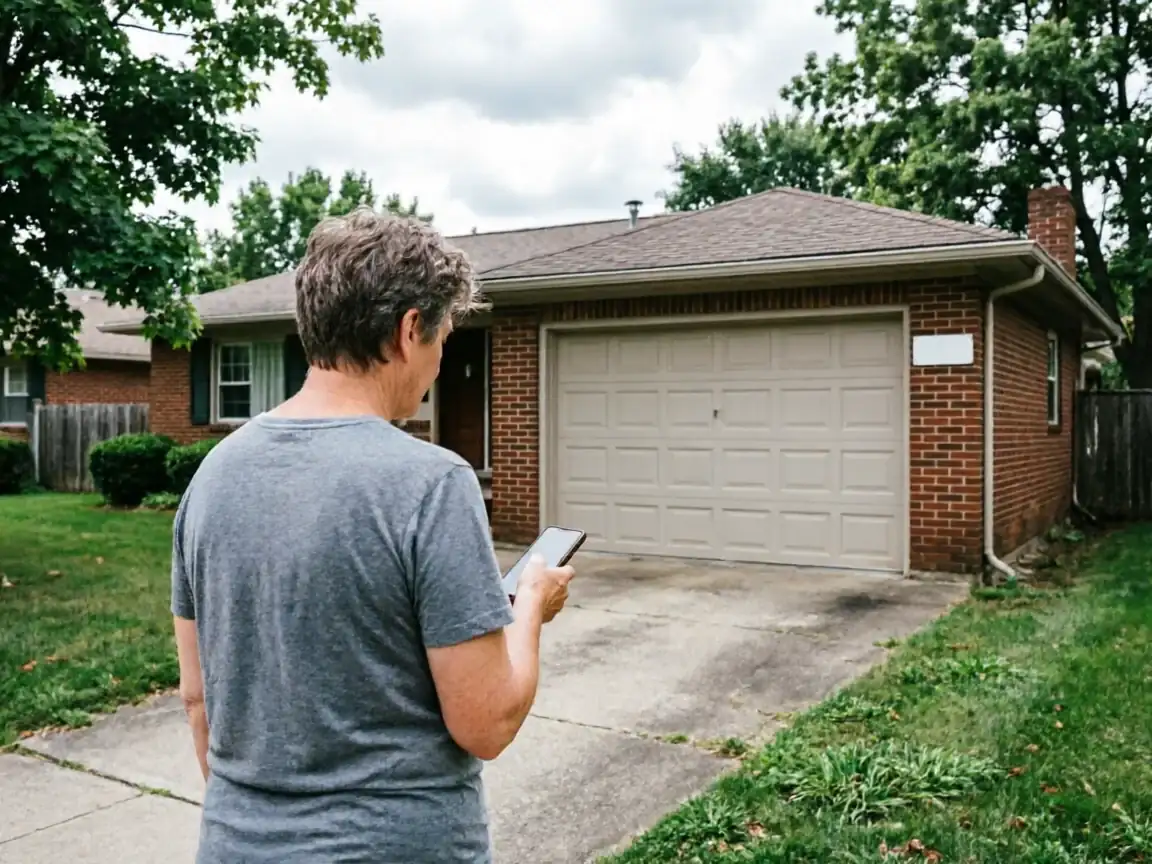
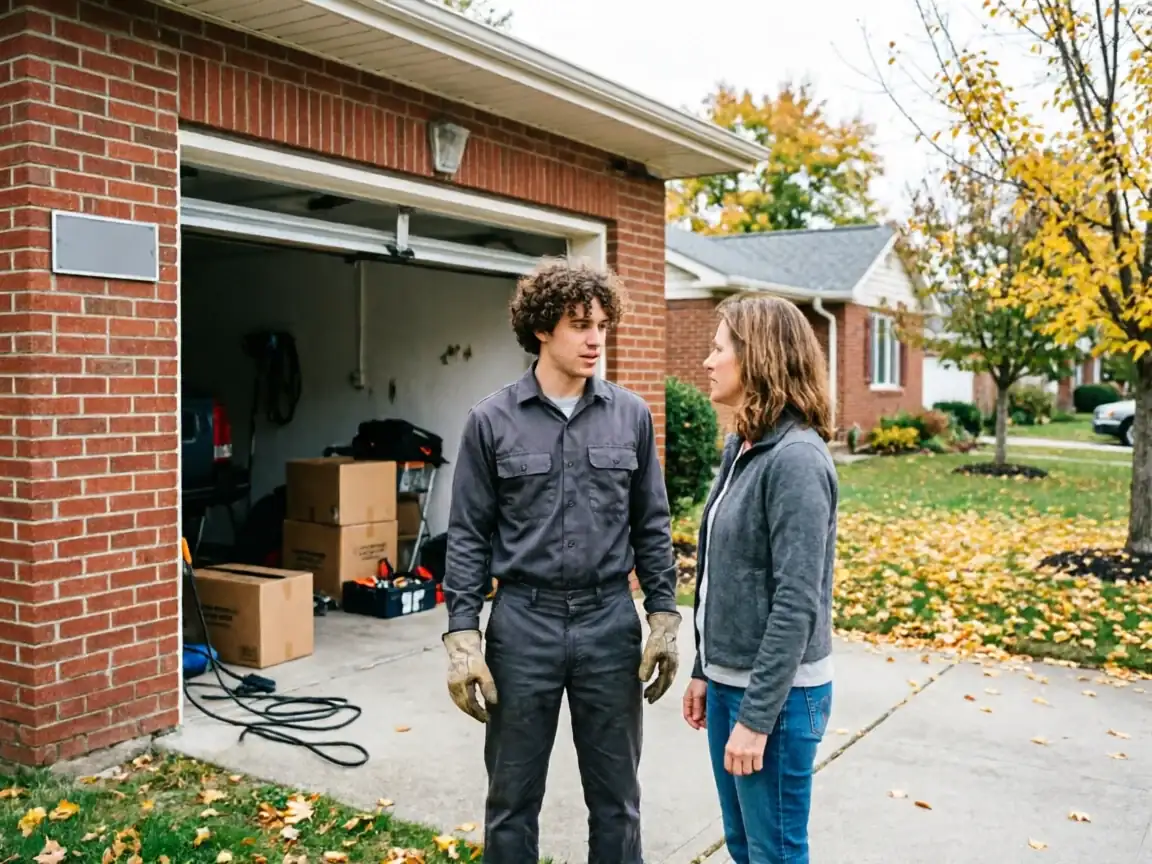
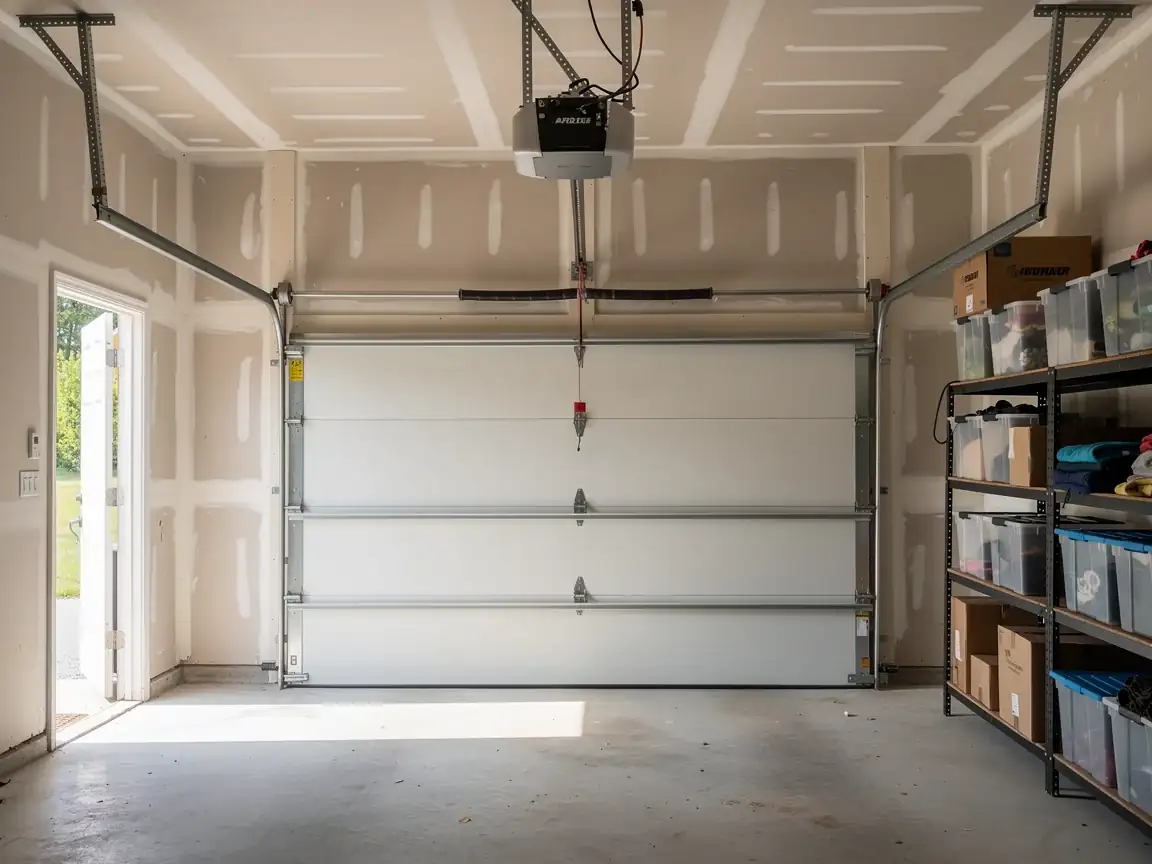
We cover Mason from East Lansing, about 12 miles out, so a call here means a planned trip, not a walk-up visit from a local depot - we don't have one in town and won't pretend otherwise. When you call, tell us the door size, whether it's a single or double, and what you're seeing: a door that won't move, a spring that's visibly separated, a cable off the drum, or an opener that's running but the door isn't lifting. That tells us what's likely on the truck before we leave. With roughly 3,436 households in Mason, the town doesn't generate the daily call volume that denser parts of the service area do, so we're not rolling through constantly - which is exactly why giving us accurate details up front matters. The more precise you are about what broke and when, the less time we spend diagnosing once we're there and the sooner the door is back down and locked.
The Complications
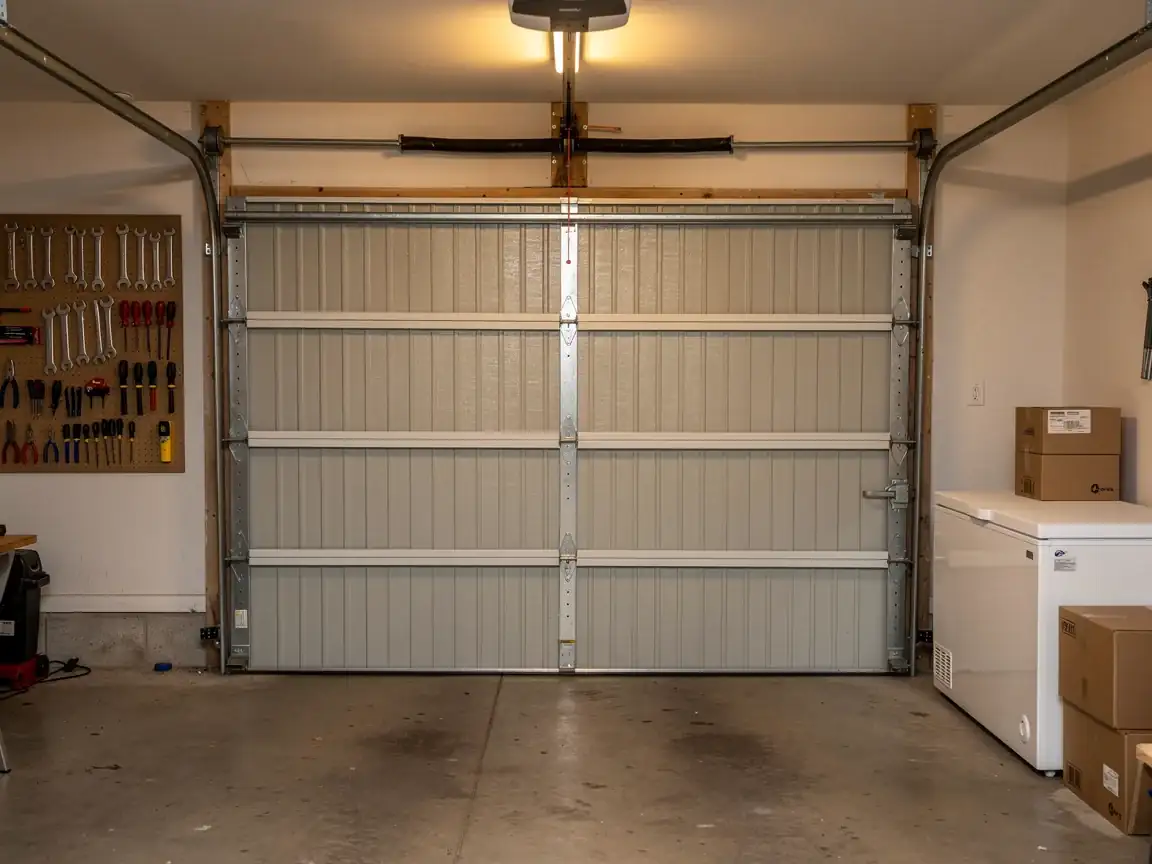
A door that's sat unused through a Michigan winter doesn't fail the same way a door in a mild climate does. This area sits in a cold, severe climate band, and that means grease stiffens, metal contracts, and a spring already near the end of its cycle count is more likely to let go on the first truly cold morning than in September. On older steel doors with no insulation layer, condensation inside an attached garage can rust a track or a hinge from the inside over years, so a jammed roller sometimes isn't just a roller - it's a track that's corroded enough to bind. We also run into openers original to a door's installation that are long past any part availability, which limits a repair to the door hardware itself rather than a drop-in opener fix. None of this is unique to one house; it's what happens to hardware this age in this climate, and it's why we check the whole assembly before touching the one part you called about.
How We Fix It
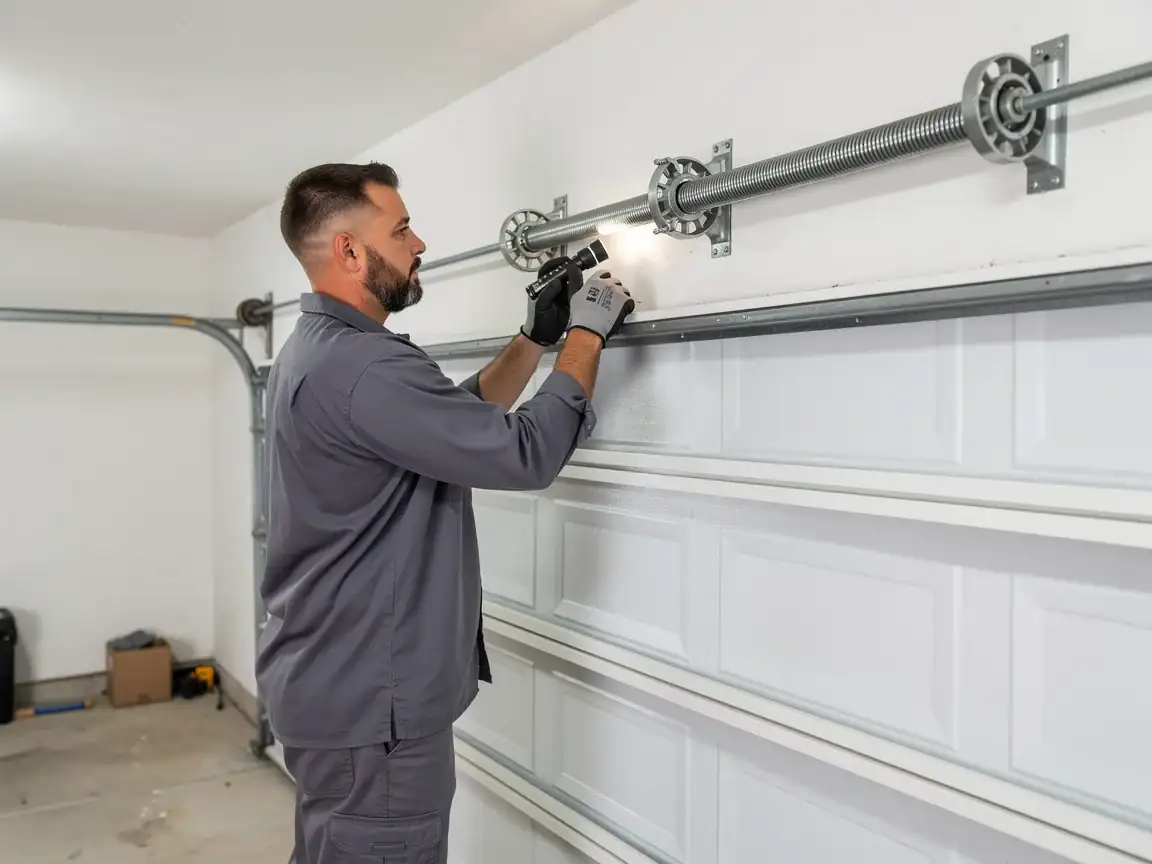
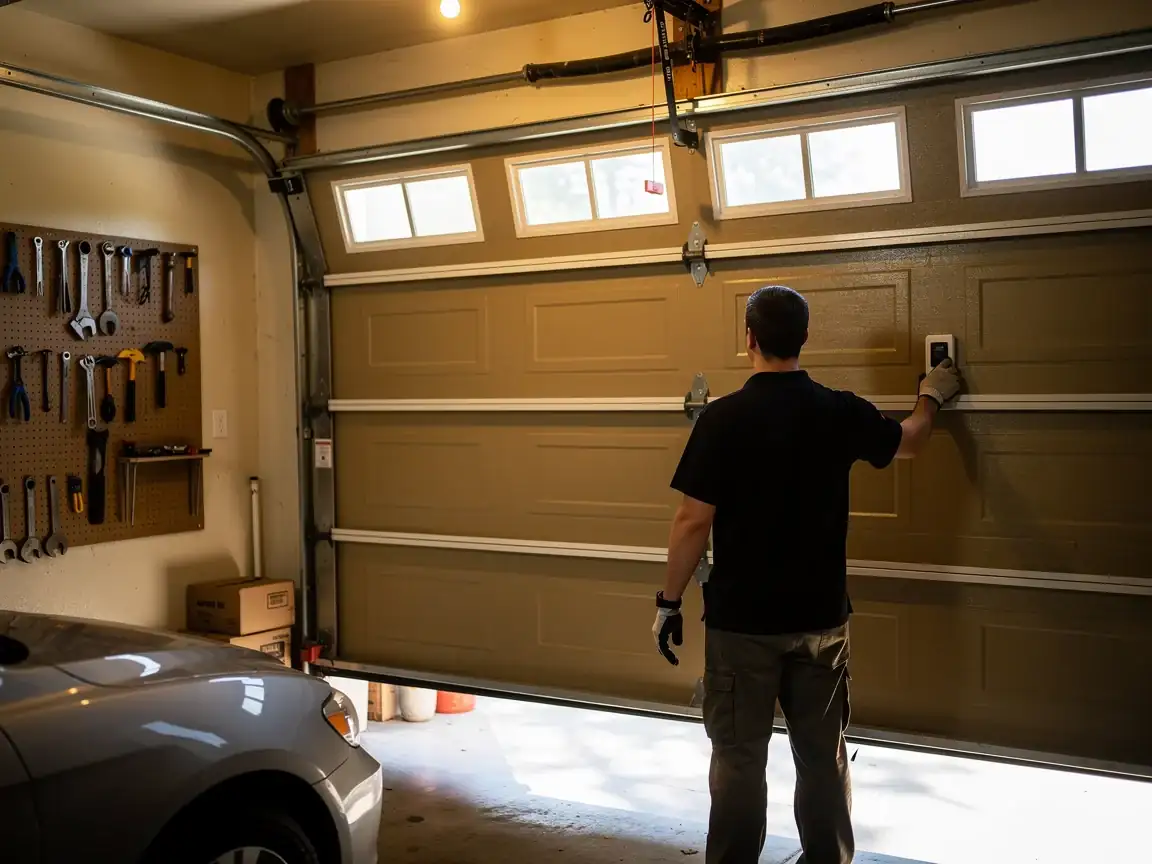
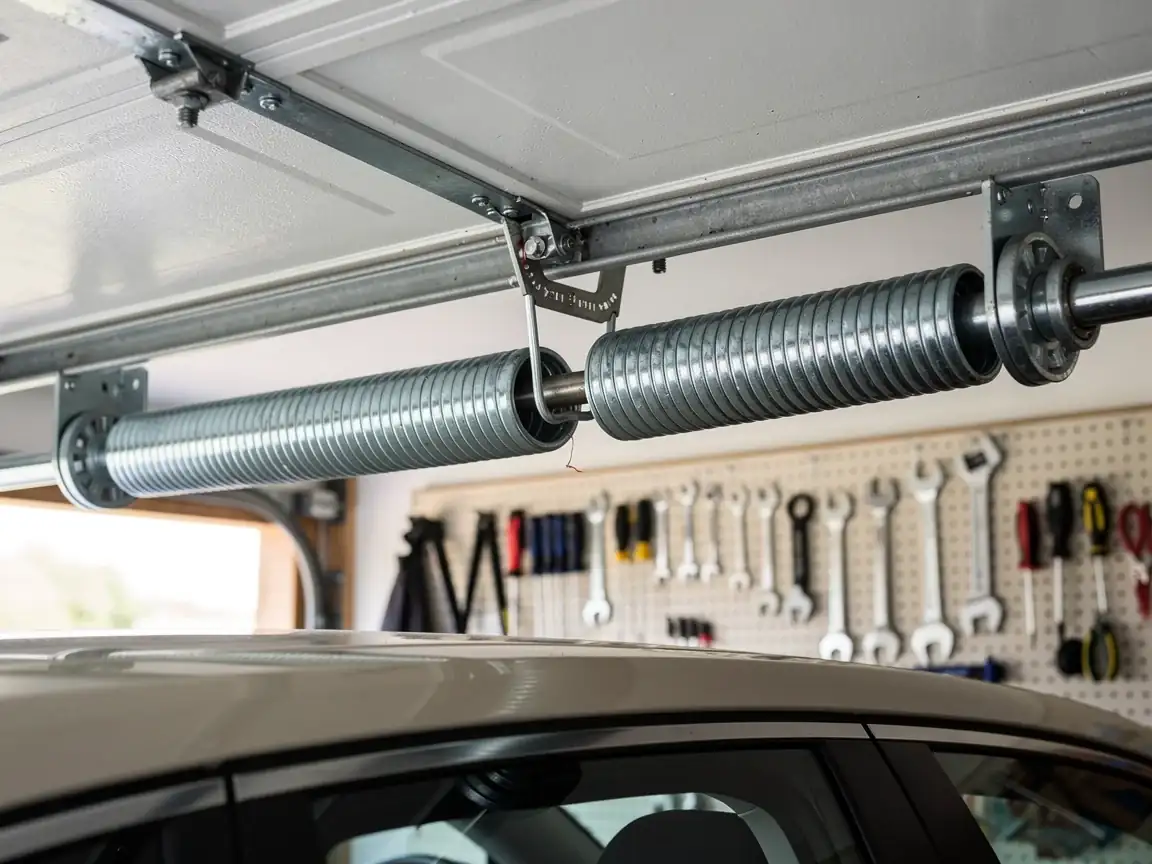
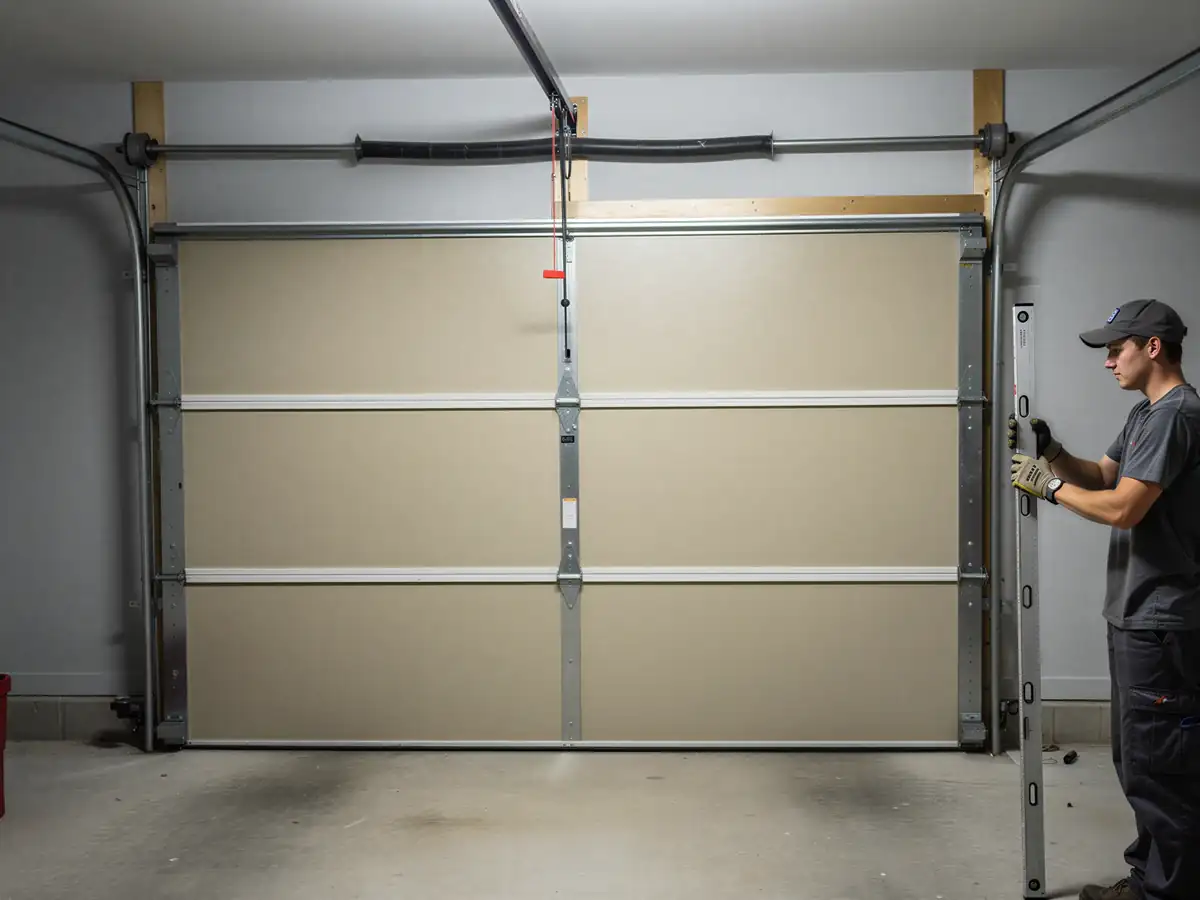
First we rule out the opener before we touch the spring or cable - a door that won't move isn't always a broken spring, and we're not going to sell you spring work if the problem is a stripped gear in the opener head. If it is the spring, we match the wind and wire gauge to what the door actually needs to lift, not a generic size, because an undersized spring on a 16-by-7 double just fails again in months. Cables get replaced in pairs when one has frayed, since the other side is usually close behind it on a door this age. Track alignment gets checked on every call, not just when it's visibly bent, because a door that looks like a spring failure is sometimes a track pulling away from the jamb instead. We tension-test and cycle the door several times before we leave, not just once, since a repair that looks fine on the first close can bind on the second.
What Is on the Truck
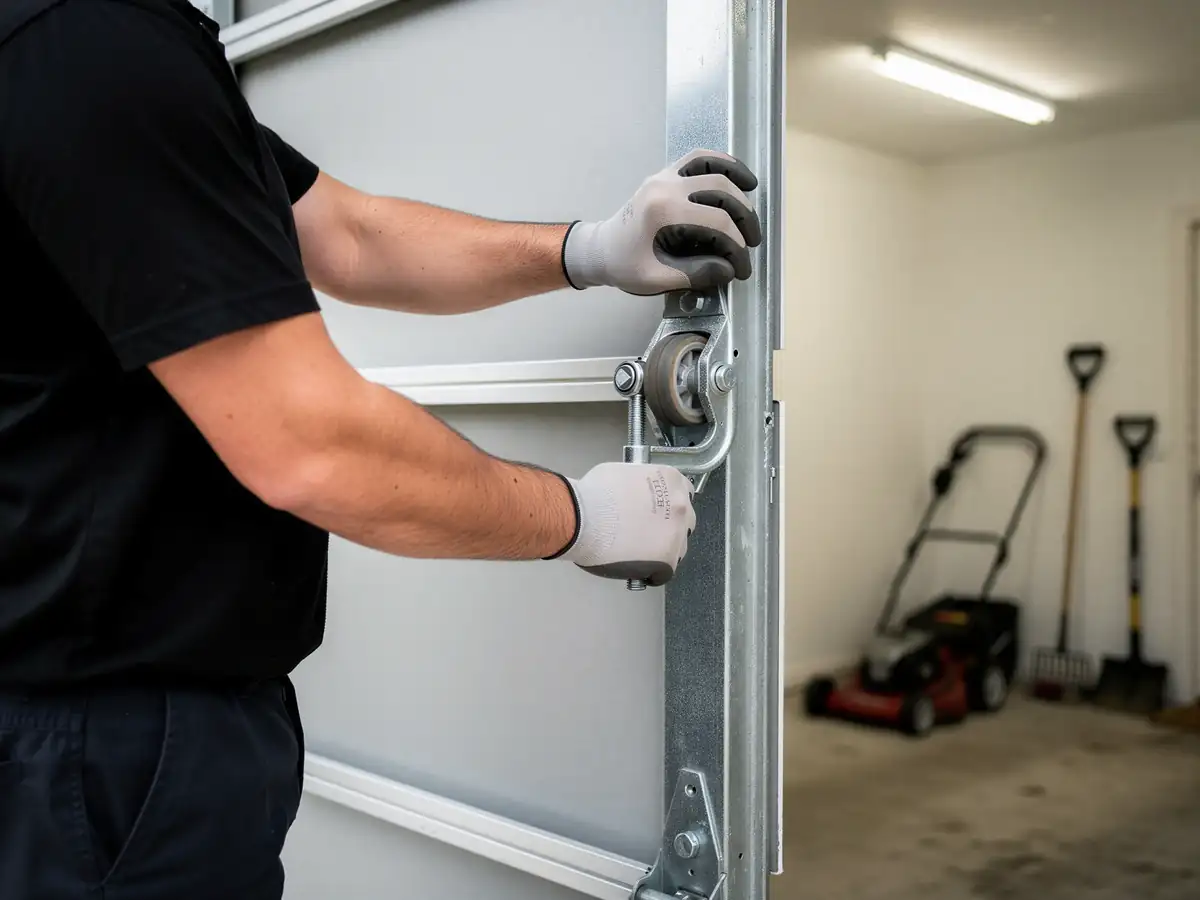
For doors of the 1980-era type common in Mason, the truck carries torsion and extension springs across the common wind and wire sizes, replacement cables, rollers in both nylon and steel, and the hinges and end bearing plates that wear out on steel sectional doors. We also stock track sections and fasteners for the alignment work that comes up on older steel track systems, plus the basic opener drive components - gears, chains, belts - for the handful of opener brands that show up most often on homes this age. What we don't carry is a full stock of obsolete opener circuit boards for discontinued models; if your opener is old enough that the manufacturer's stopped making the board, we'll tell you on site whether a universal replacement opener makes more sense than hunting down a part that may not exist anymore.