What Causes It Around Here
The call we get most out of Haslett is a torsion spring that let go on a cold morning
Or an opener that's been straining against a door that's gone heavy. That's not a coincidence. A lot of Haslett's housing went up around 1981, which puts a big share of these doors and their original hardware at 40-plus years old. Springs are rated for a number of cycles, not a number of years, but houses built in that window were often fitted with openers and spring setups that were standard for their era and are now well past a reasonable service life.
Winter makes it worse
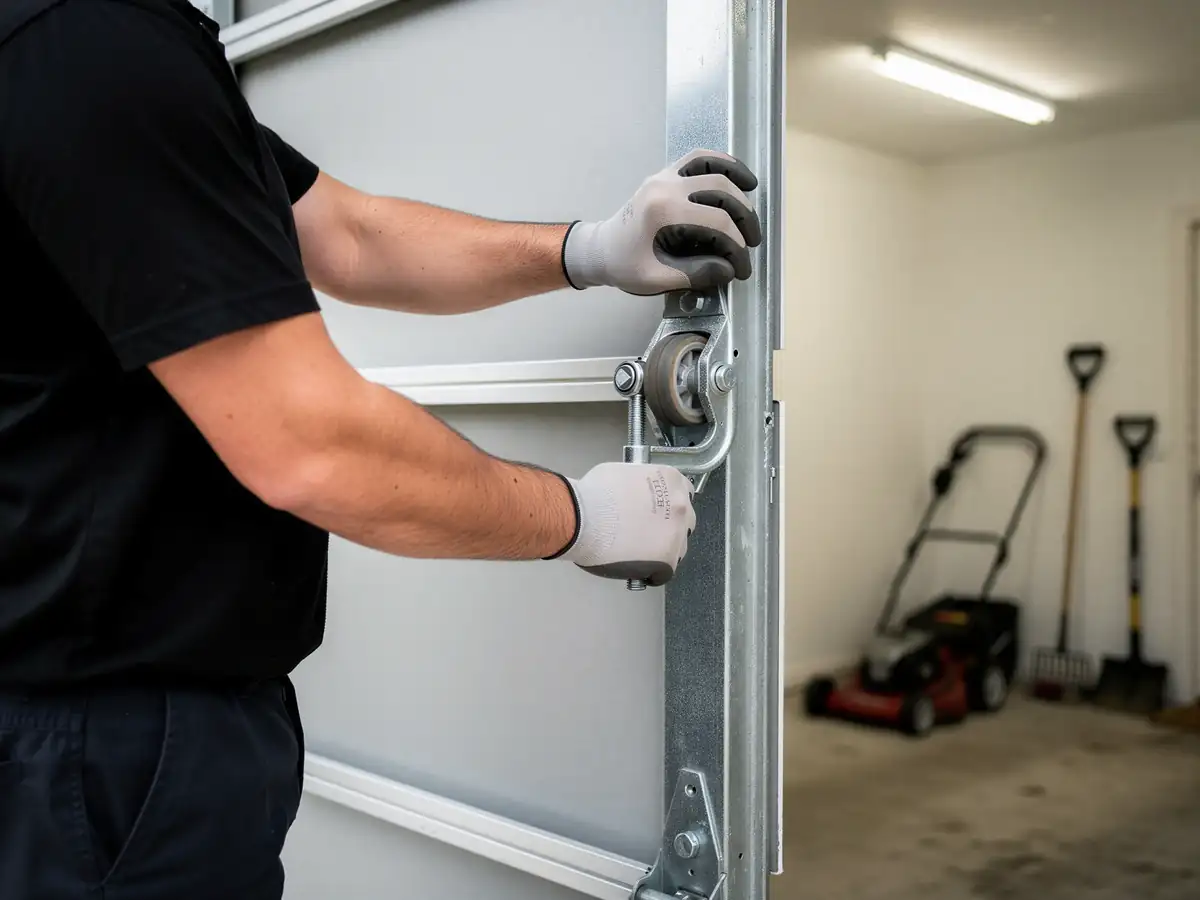
This area sits in a cold climate band with real severe-weather stretches, and steel contracts in the cold - a spring that's already fatigued from decades of cycling is more likely to snap on a sub-freezing morning than a mild one. We also see cables fraying on the same older drum-and-pulley setups, and rollers that have worn their tracks into an uneven path after that many years of use.
Time on the Job
We work out of East Lansing and Haslett sits about 4 miles out, so getting a truck to you isn't the bottleneck - diagnosing what actually failed is where the time goes. On a door from the early 1980s building era, that often means tracking down whether the spring, the cable, or the opener gear is the real point of failure, since all three tend to wear out around the same age on original hardware.
We don't quote a fixed response window here because we haven't verified one for this page, and we'd rather tell you that than make up a number. What we can tell you is that a broken spring or a cable off the drum is usually a same-visit fix once we're looking at the door.
How We Fix It
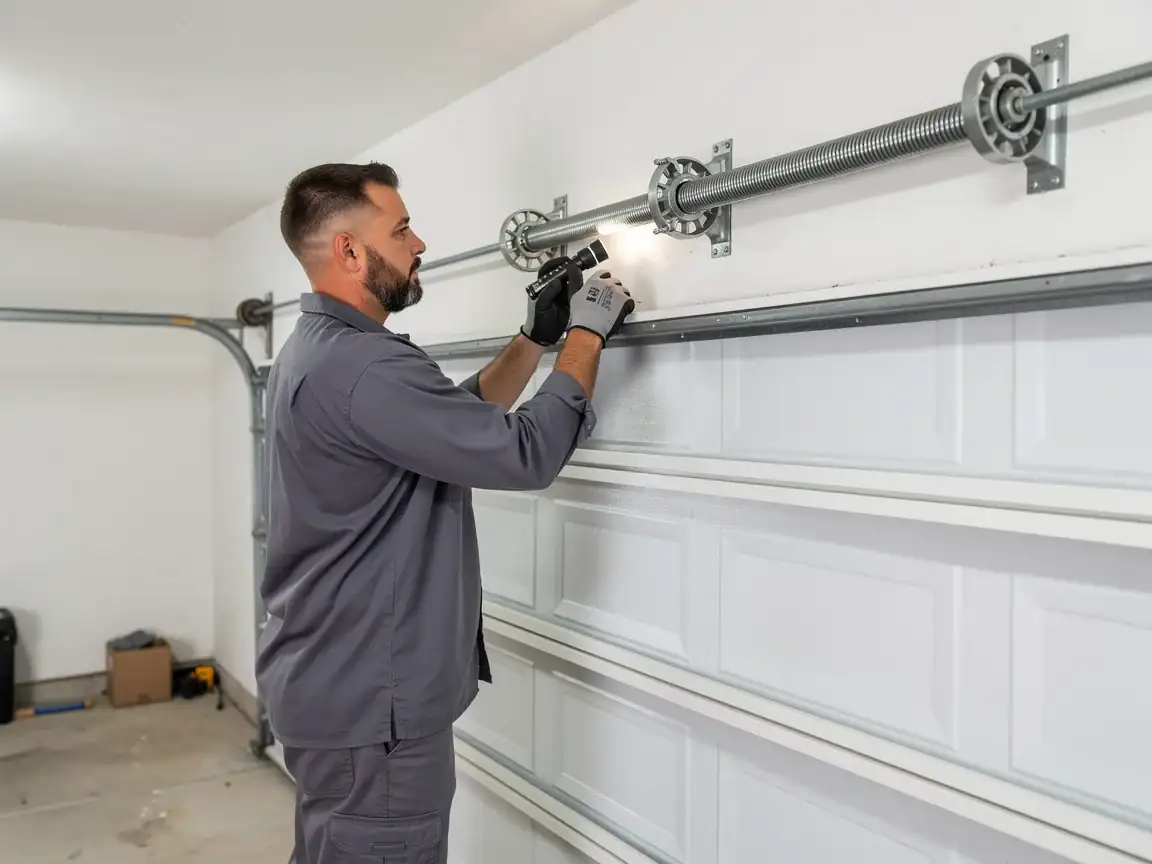
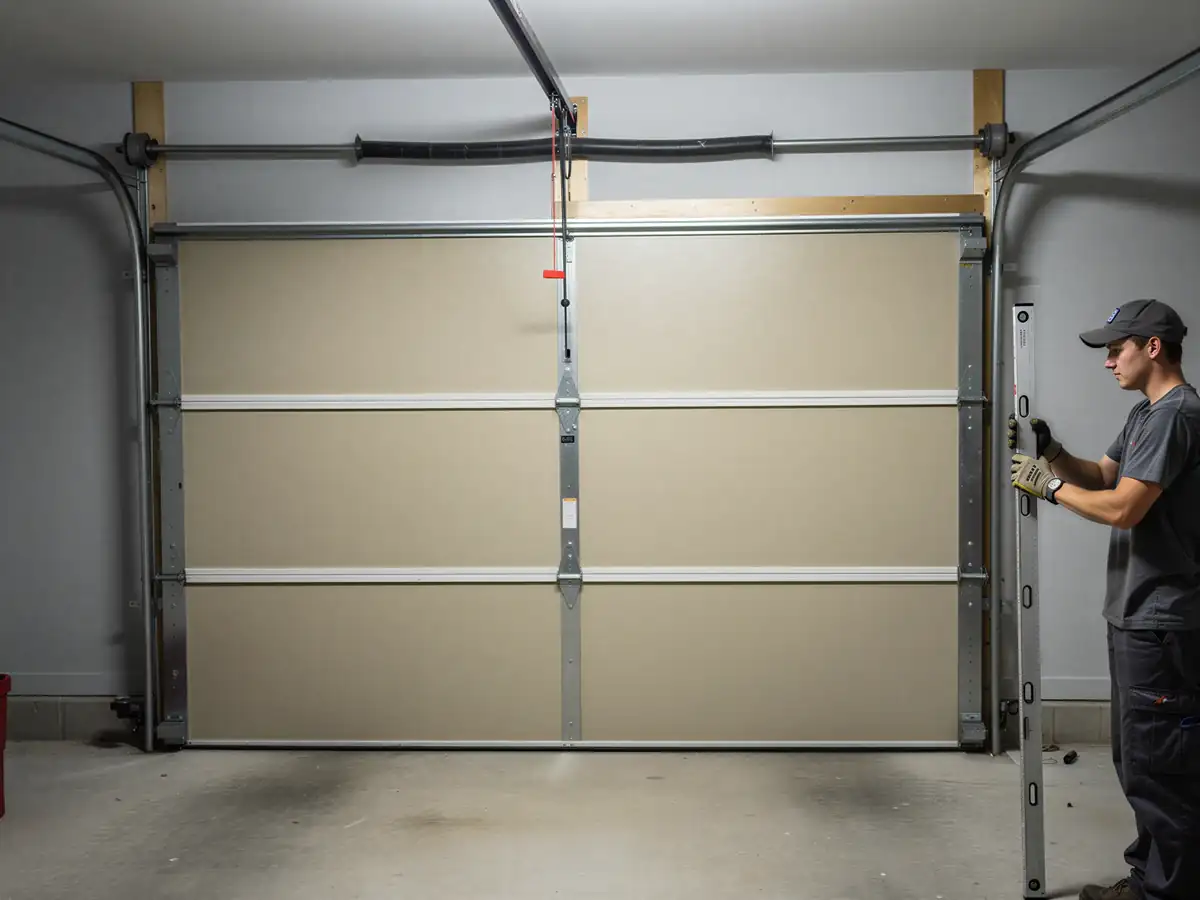
First we isolate the door - unplug the opener, confirm whether the spring, cable, or track is the actual problem, and check the rest of the hardware while we're in there, since on a door this old one failure is rarely alone. If it's a torsion spring, we replace it with hardware sized to the door's actual weight, not whatever was cheapest when the house was built.
If the cable's frayed, we replace both cables as a pair rather than just the broken one - the second one is usually close behind on a door this age. If the opener's the issue, we test the gear and the logic board before we touch the door hardware, because a fine spring and a dying opener can look like the same symptom from the kitchen.
What Is on the Truck
We carry torsion springs sized for residential single and double doors, standard cable, rollers, and the hardware that fits the drum-and-pulley systems common on houses from the 1960s through 1980s building stock in this area
We also stock opener parts for the gear and drive systems most common on doors of that vintage.
What we don't carry is every obsolete part
If your door still has its original one-piece panel or a spring size that stopped being made decades ago, that part may need to be ordered, and we'll tell you that up front instead of pretending otherwise.
The DIY Question
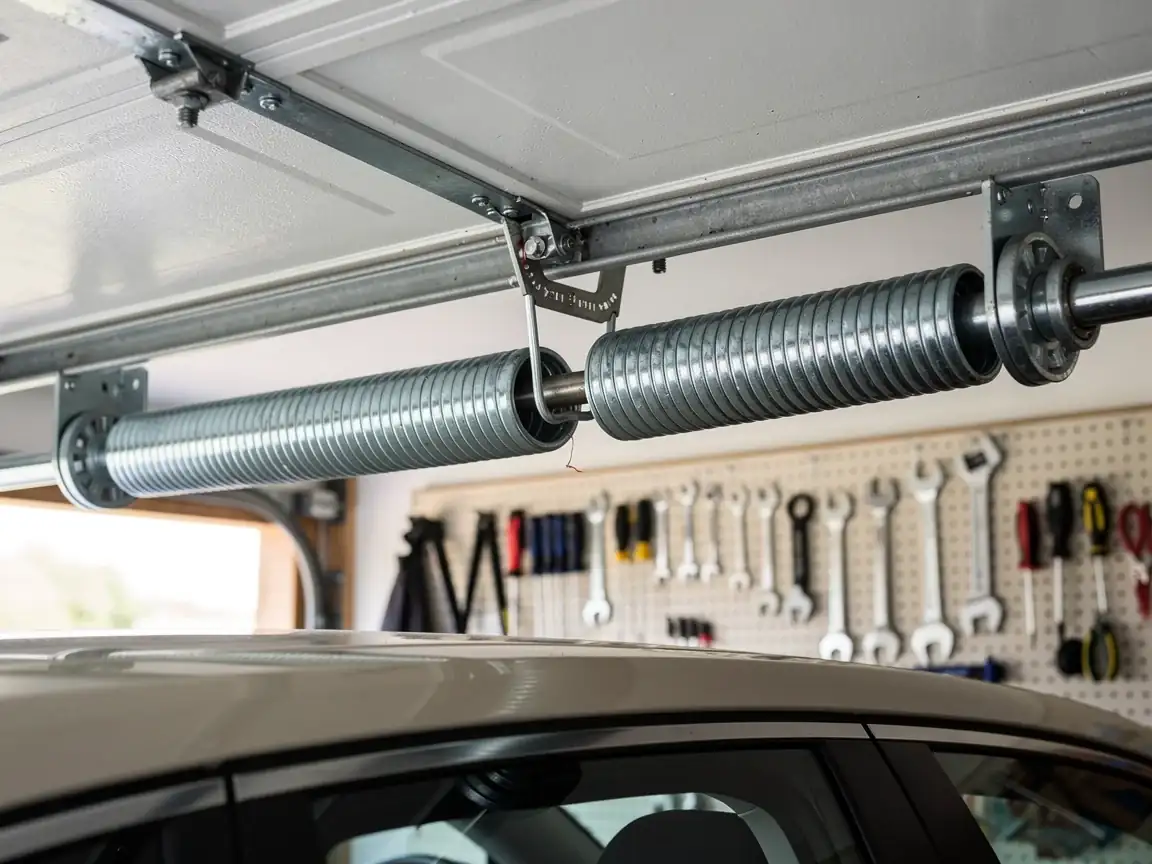
A torsion spring holds enough stored tension to cause a serious injury if it's released wrong, and that doesn't change because the house is in Haslett instead of somewhere else. If the spring's broken, the door won't move safely either way - don't try to force it open or closed, and don't cut or loosen a spring yourself.
What you can safely check first: is the opener plugged in, is the wall switch getting power, and is anything visibly blocking the track. If the door's heavy to lift by hand even with the opener disconnected, that's a spring problem, not an opener problem, and it needs a tech, not a tutorial.
How It Shows Up
Most Haslett calls start one of three ways: the door won't budge and feels dead weight when you try to lift it by hand (spring), the opener runs but the door doesn't move (cable or gear), or the door is loud, jerky, or crooked on one side as it travels (roller or track). On a house built in the early 1980s building era, we also see openers that have simply worn out their gears after enough years of daily cycling - sometimes that shows up as grinding noise before it shows up as total failure.
If you catch the noise before the full failure, that's the cheaper call.