Time on the Job
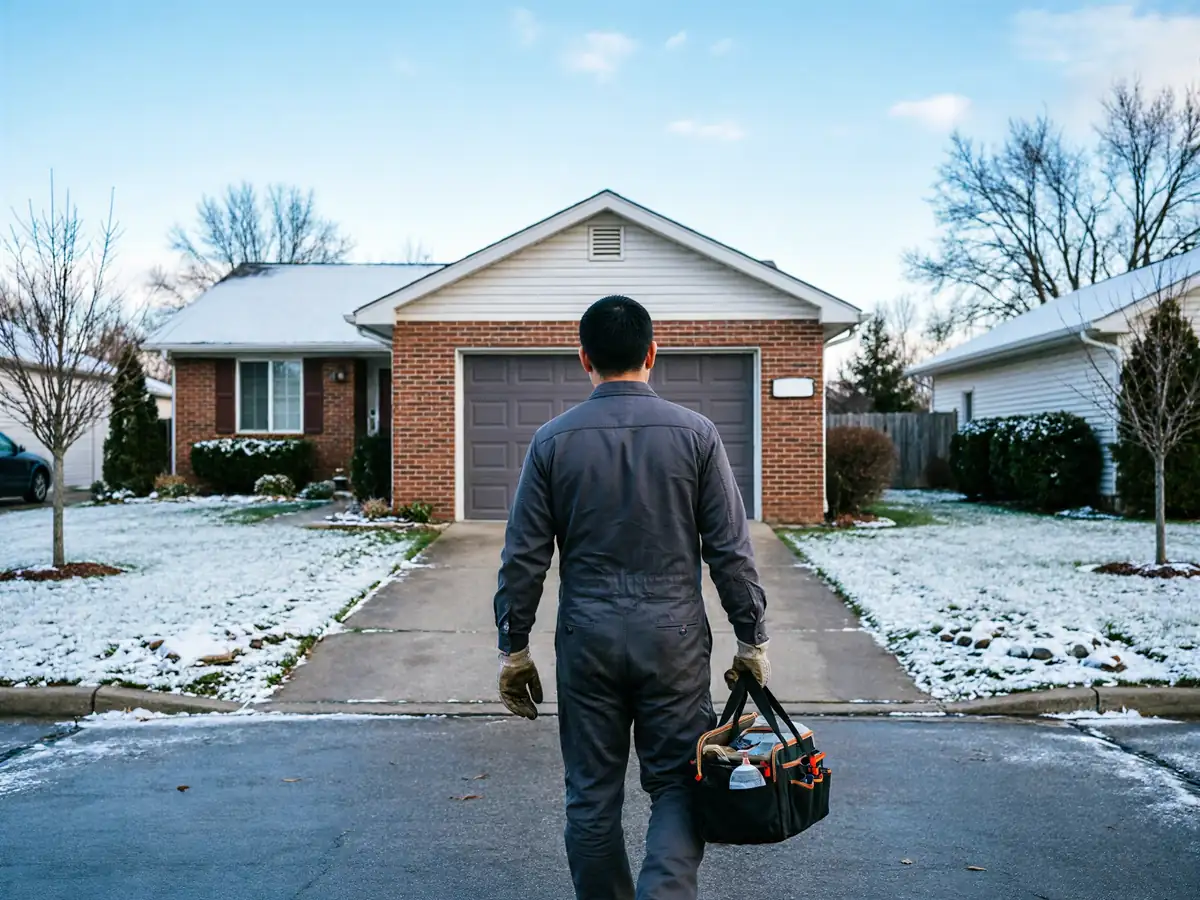
We run out of East Lansing, about 4 miles from Haslett, so a scheduled opener install doesn't turn into a half-day affair waiting on a crew. A straight swap - same mounting points, same door, new opener on the existing rail or a new belt-drive unit - is usually a few hours. If we're adding a opener to a door that's never had one, or replacing hardware that doesn't match current travel and reversal requirements, that runs longer because we're not just hanging a motor, we're bringing the whole system up to where it should be. We don't carry an inventory depot in Haslett itself, so anything outside common stock units comes from what's loaded on the truck that day or gets scheduled for a return trip.
How We Fix It
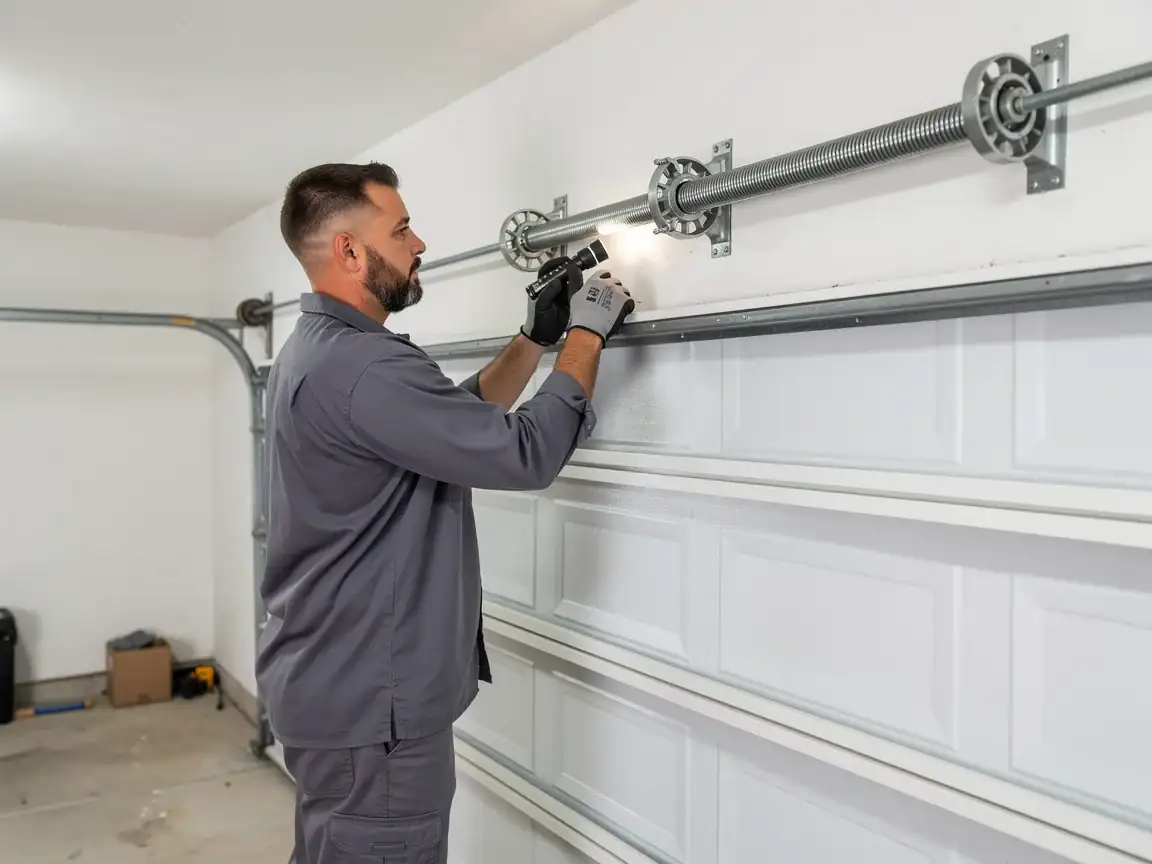
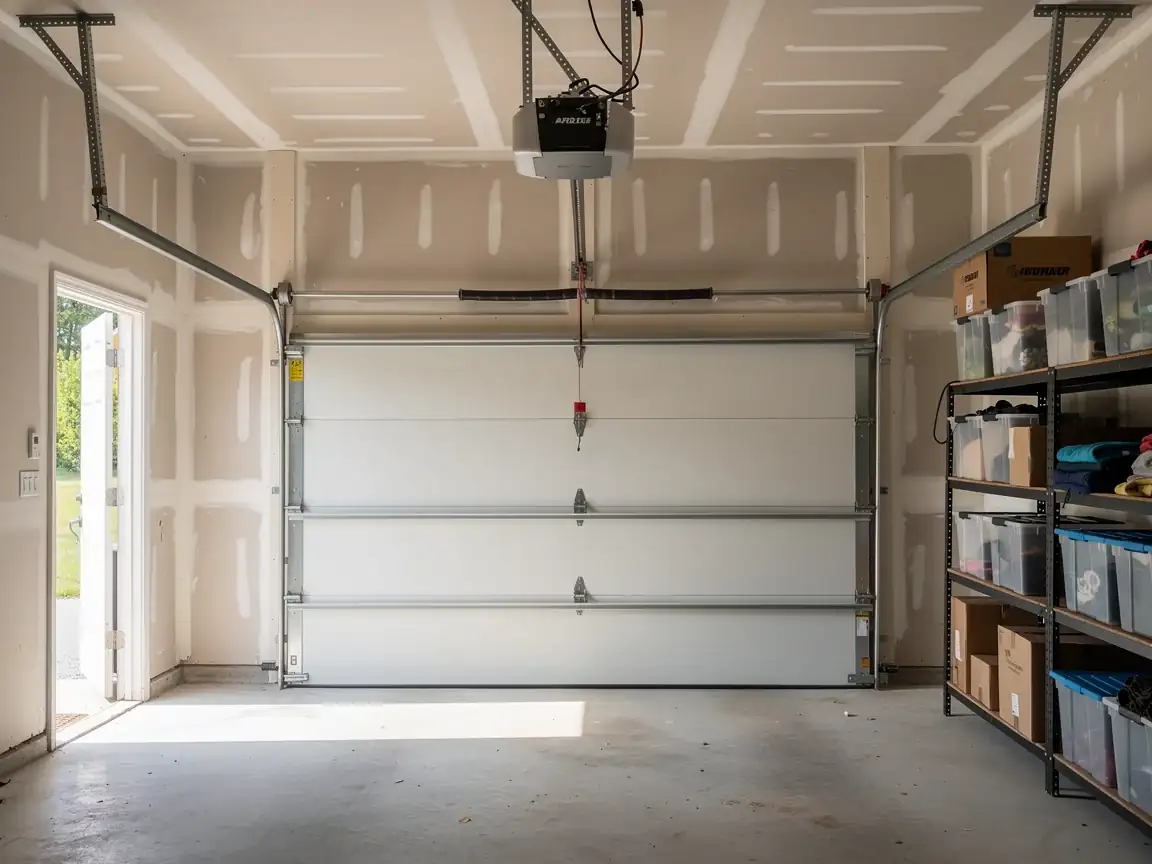
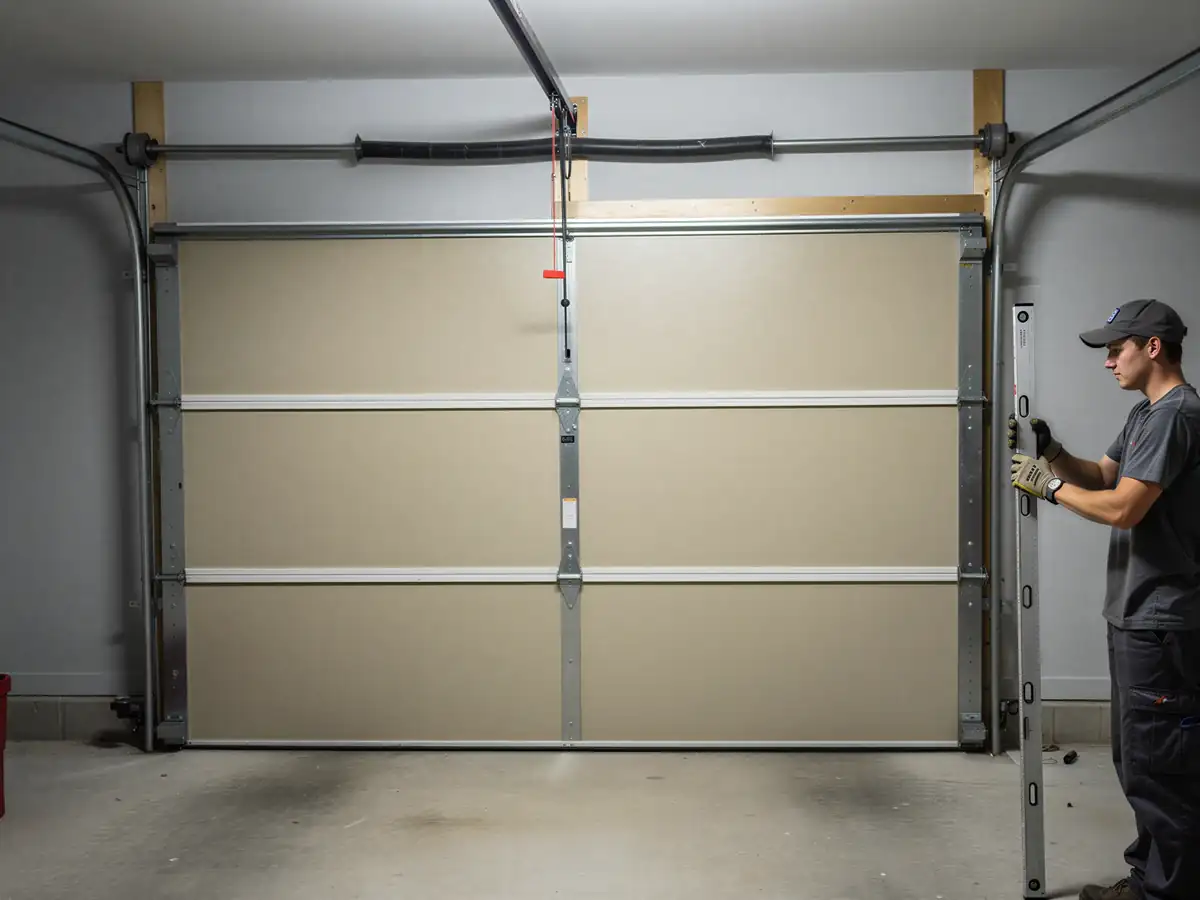
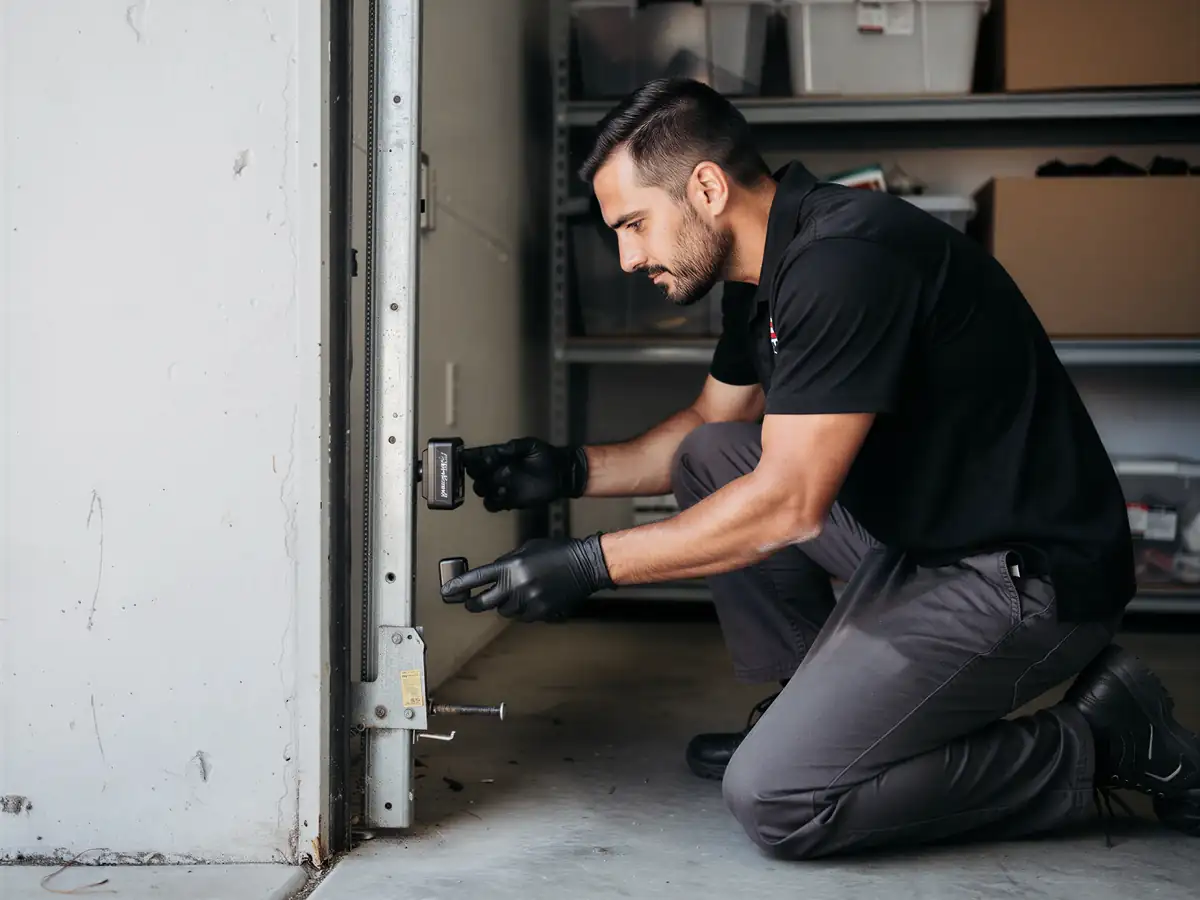
On a straight install we start at the header bracket and the door itself, not the opener box. A 1981-era door and track can be structurally fine but have sag or binding that will burn out a new motor in a year if we ignore it. We set the opener to the door's actual weight and travel, not a factory default, and we test the auto-reverse with real resistance, not just a visual check. For homes where the opener was added after original construction, we check the header framing can actually take the mounting load - some can't, and that's a conversation we have before any hardware goes up, not after.
The DIY Question
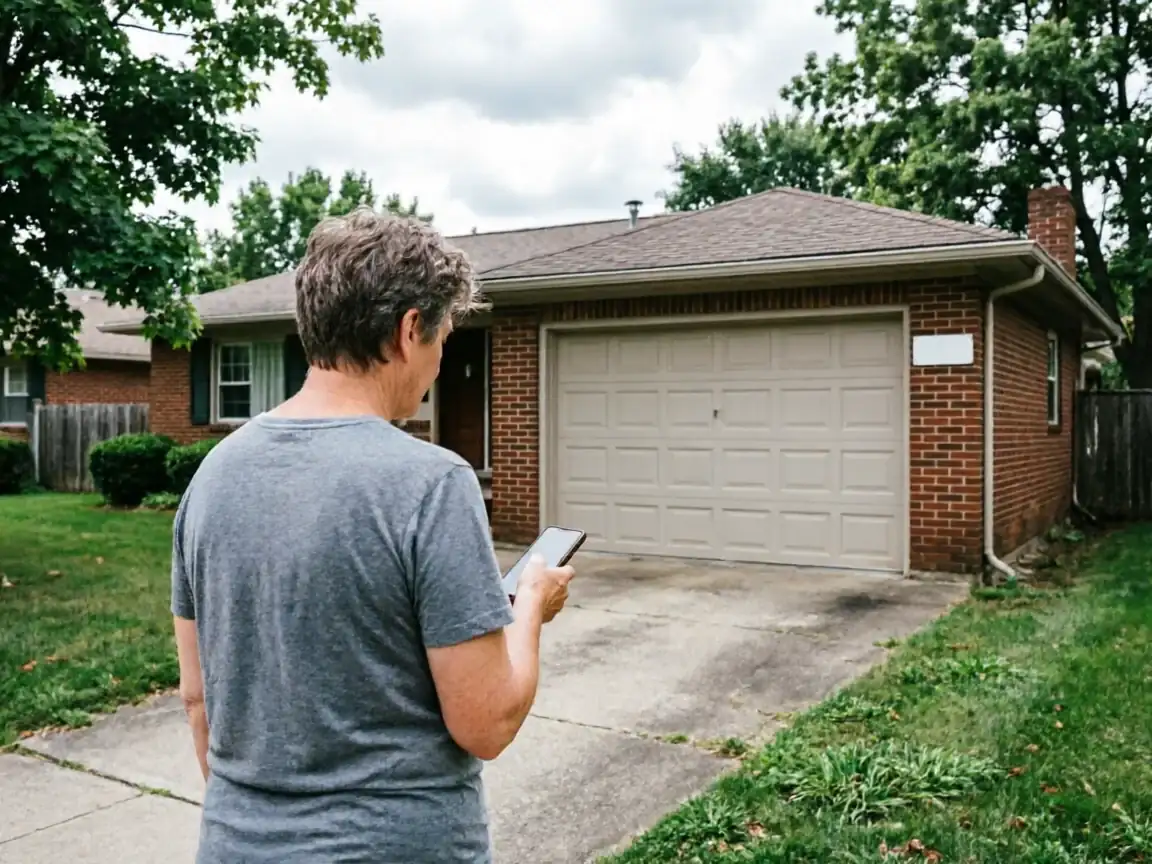
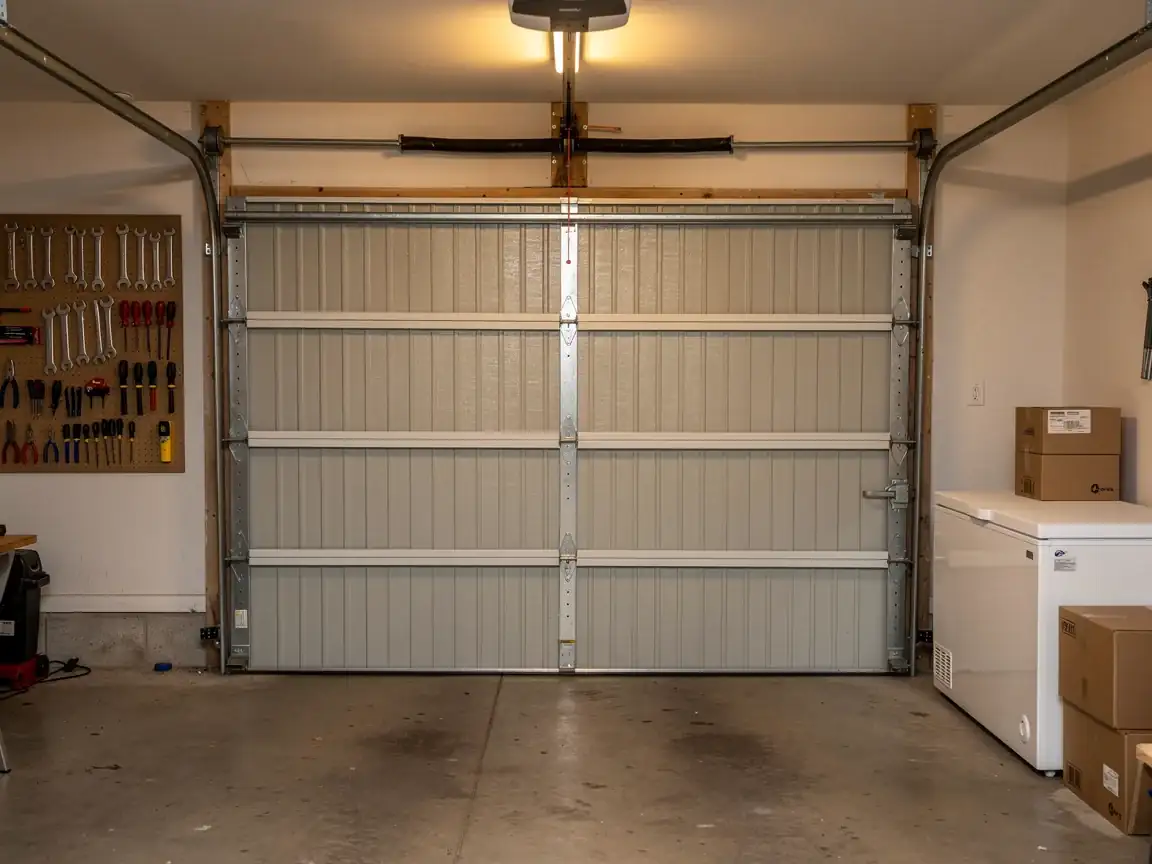
A retail opener kit looks straightforward until you're standing on a ladder trying to square a rail to a door that's 40-plus years old and has settled unevenly in its frame. The part that goes wrong most often in a DIY install isn't the opener itself - it's the safety reversal and the force setting, both of which need to be checked under load, not just by eye. Given the age of a lot of Haslett garage structures, we'd rather spend ten minutes checking your existing hardware before you buy anything than have you find out the header can't hold the bracket after it's already installed.
How It Shows Up
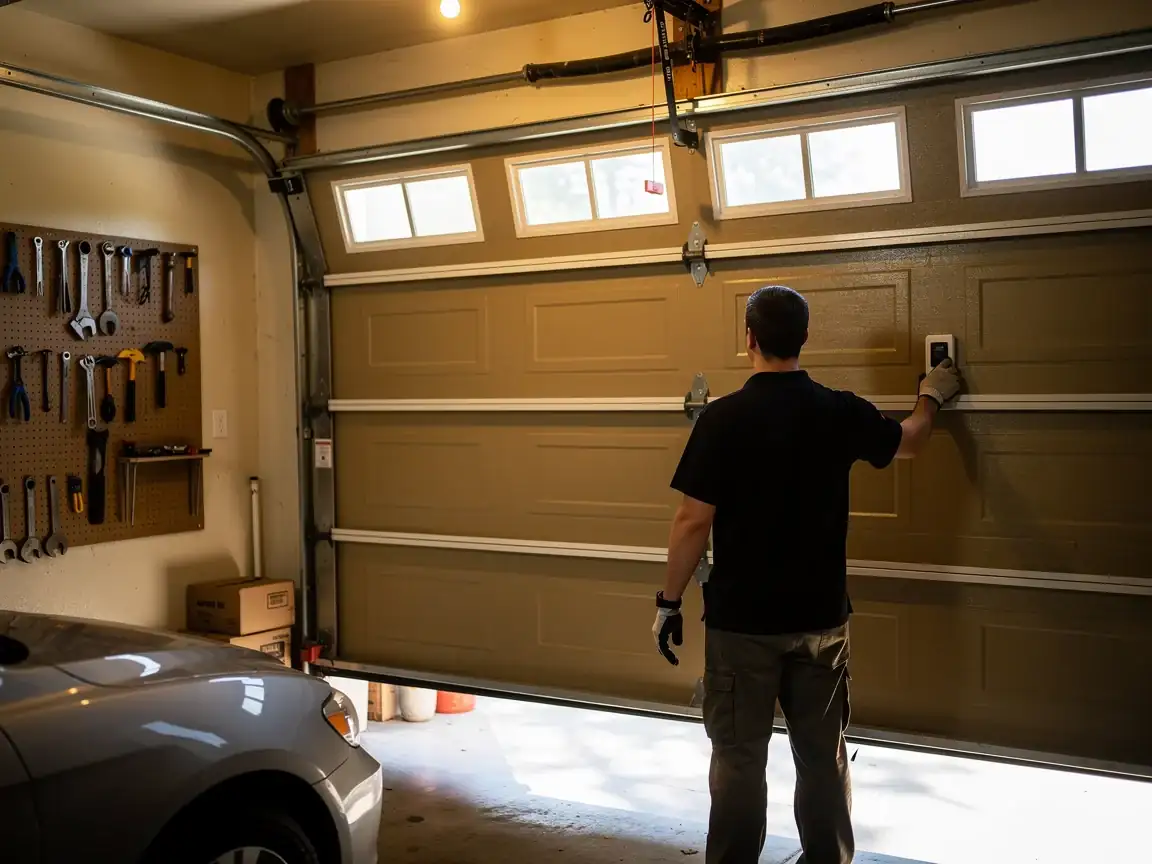
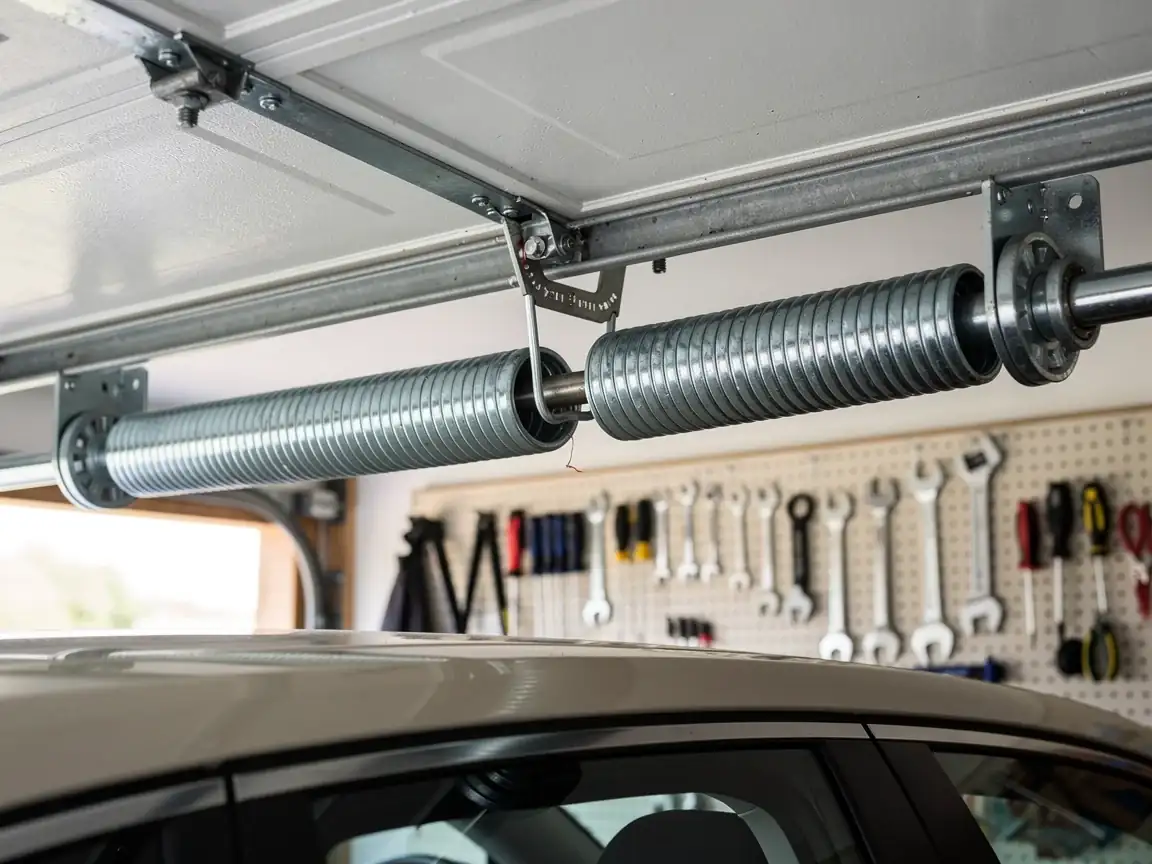
The first sign is usually a door that reverses for no reason, or one that groans and strains partway up before the motor kicks the breaker. On houses from this build era, that's often not a failing motor - it's a travel limit set years ago for a door that's since sagged or had its springs adjusted, leaving the opener fighting a door it was never calibrated for. Cold mornings make it worse: a motor already working near its limit has less margin when the grease in the track stiffens up. If the opener clicks but the door doesn't move, that's almost always the gears inside stripping, not something a reset will fix.