What Causes It Around Here
Haslett's houses cluster around a median build year of 1981
A touch newer than the 1976 median across the wider East Lansing service area. That gap matters more than it sounds like it should. A door and opener installed when a Haslett house was framed in the early '80s is now pushing 40-plus years on original springs, original hinges, and in a lot of cases an original opener that was never swapped for anything with modern safety reversal. Nobody's replaced this stuff because nothing's broken outright - it's just worn slow, the way hardware does when it sits in a garage that isn't heated or cooled.
The climate band here runs cold and severe, which is the other half of the story
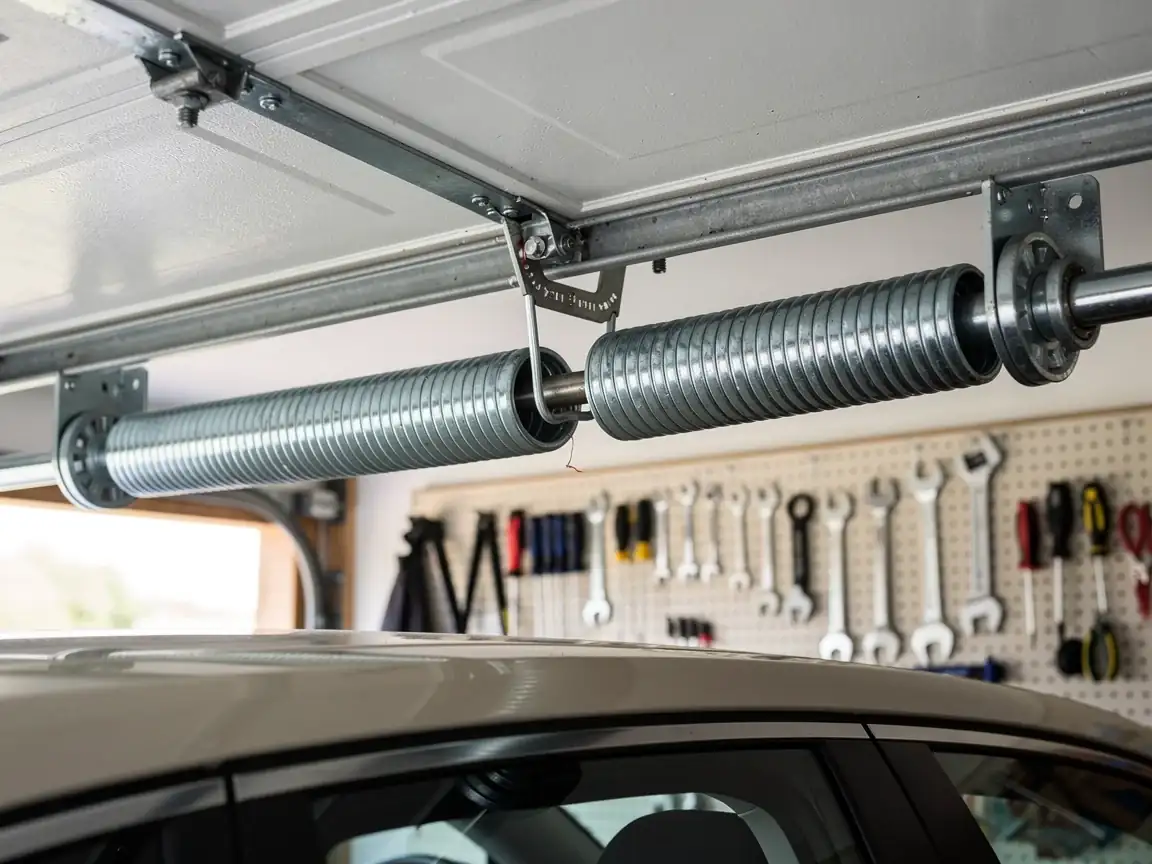
Lubricant that was fine in 1981 has gone stiff and gritty decades ago, rollers have flat spots from sitting in sub-zero garages overnight, and torsion springs that cycle through big temperature swings lose tension faster than the same spring would in a mild climate. Combine 40-year-old steel with 40 winters of that kind of cycling and you get the slow failures - a spring that's down to half its rated cycles, a track that's shifted a quarter inch out of plumb - nobody notices until the door won't open smooth anymore.
Time on the Job
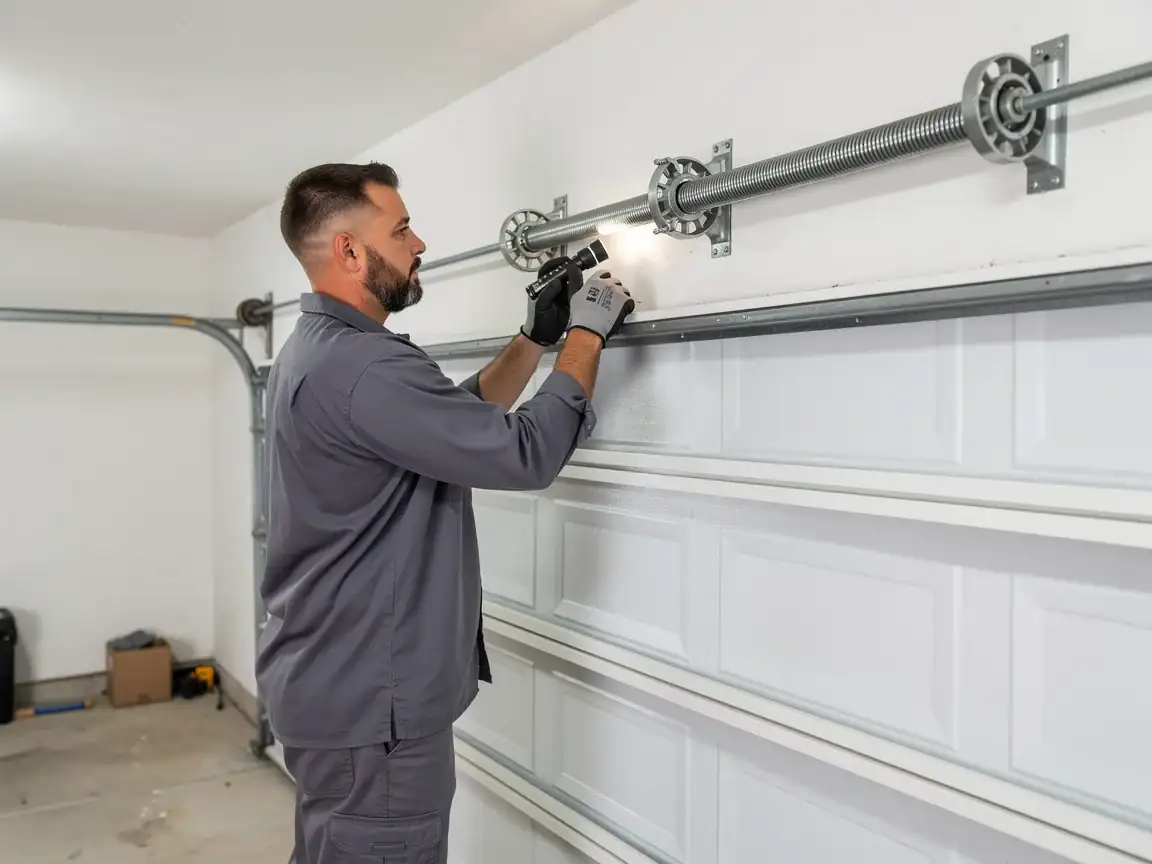
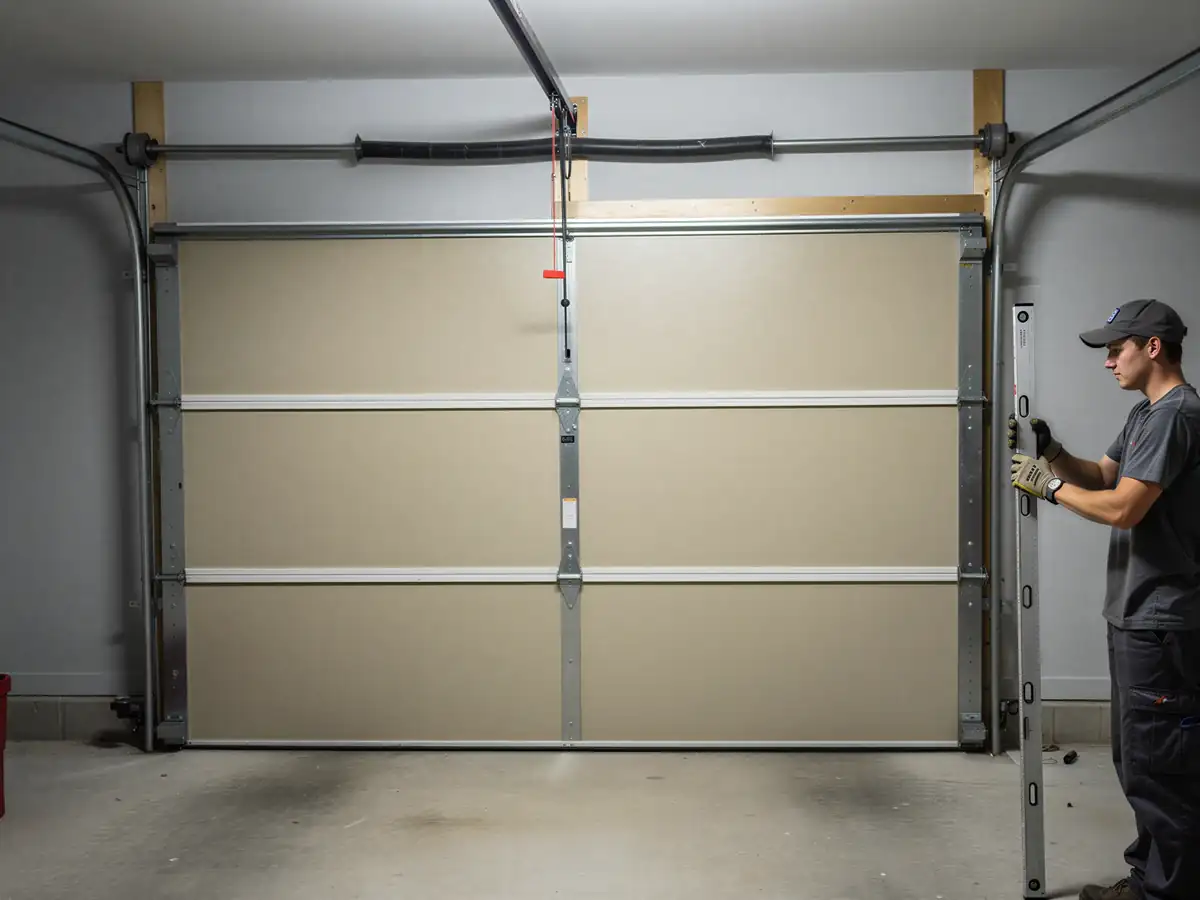
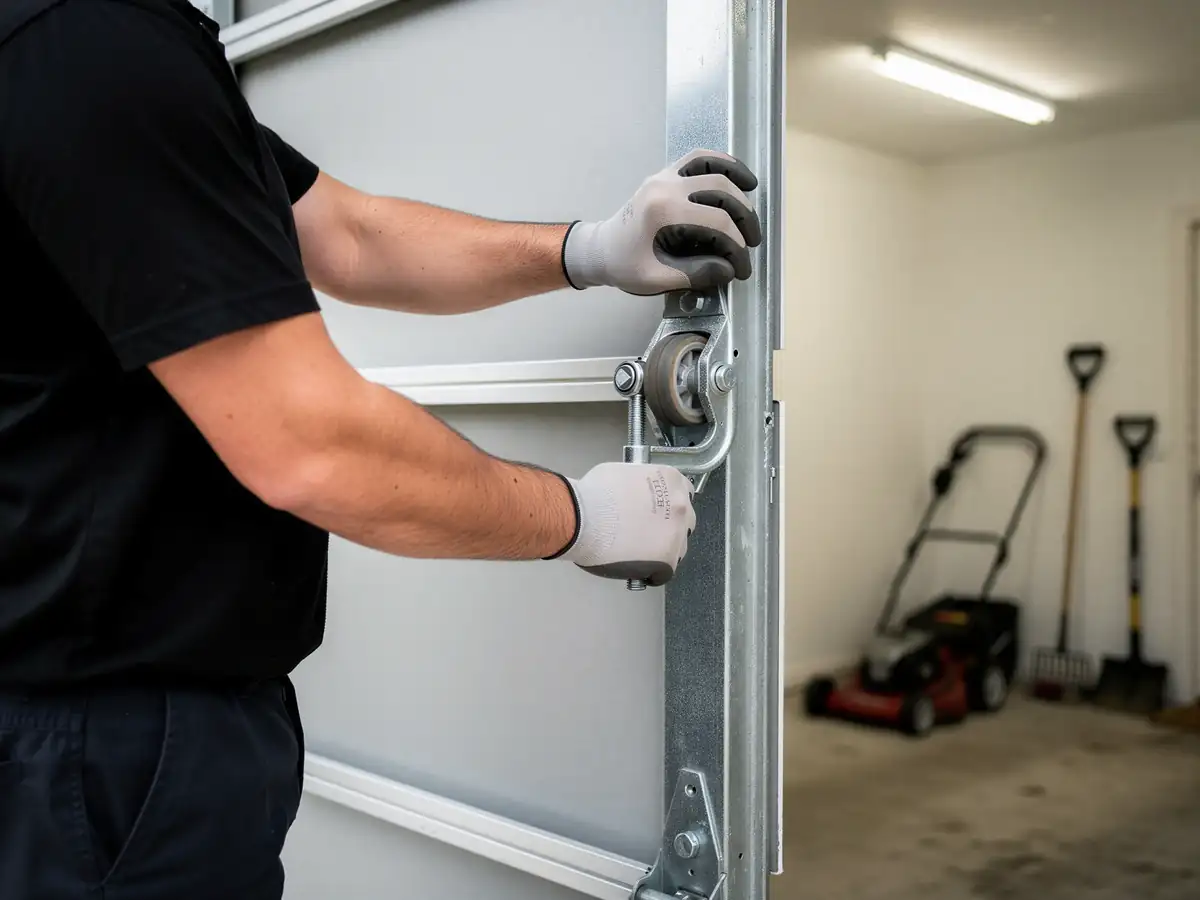
A straightforward maintenance visit on a door this age is mostly inspection and adjustment: checking spring tension, lubricating rollers and hinges, tightening the track bolts that have backed out over the years, and testing the opener's force and reversal settings against what they should be. On a door that still has its original hardware from a 1981 build, we're also looking harder at wear points that newer doors don't have yet - the kind of pitting on a 40-year-old torsion spring that tells you it's near the end, not just needing a wipe-down.
We're coming from East Lansing, about 4 miles west, so there's no separate dispatch delay built into a Haslett job versus one closer to the shop - it's a short drive either way. We don't promise a specific arrival window here; that's a scheduling conversation, not a blanket claim.
How We Fix It
Maintenance on a house this age usually splits into two piles: things we adjust in place, and things we flag for replacement because adjusting them further isn't honest work. Hinges and rollers get cleaned and lubricated if they're still round and not grooved out. A torsion spring that's lost measurable tension gets noted - we don't push a spring past what it's got left just to avoid the conversation about replacing it.
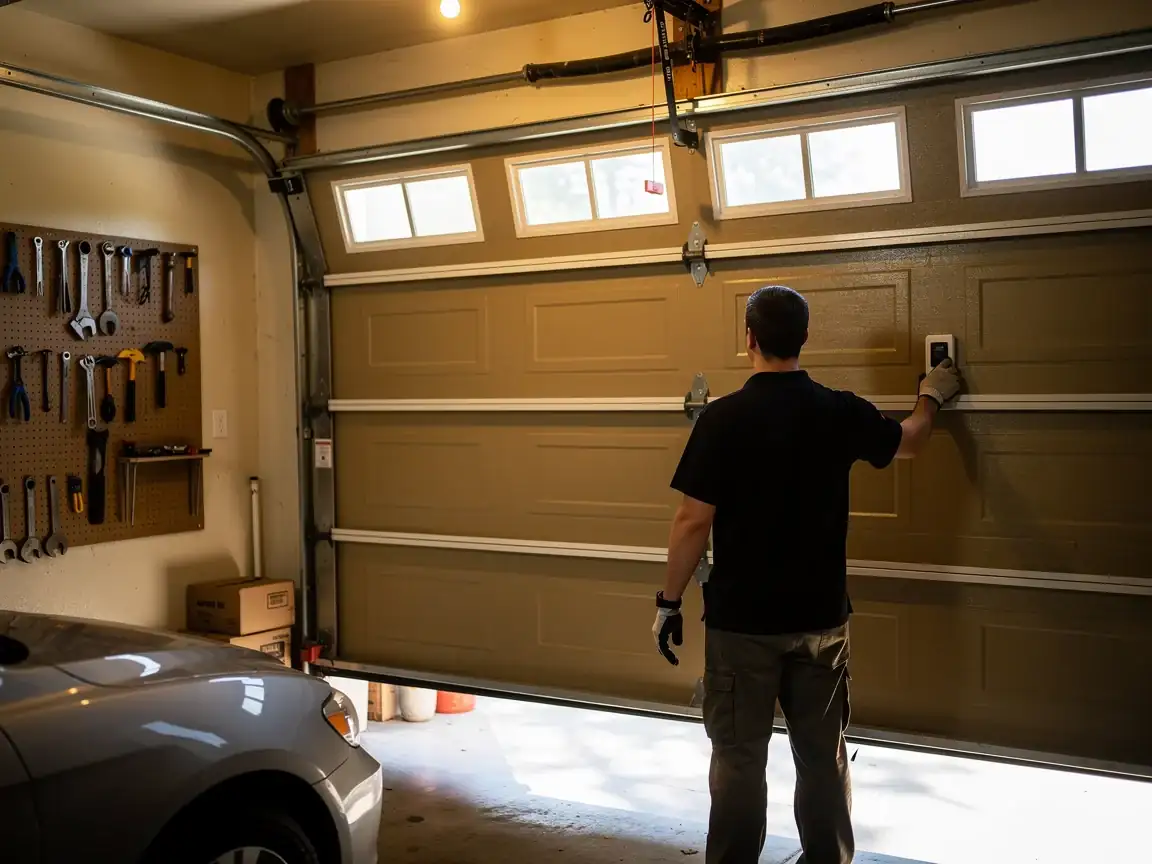
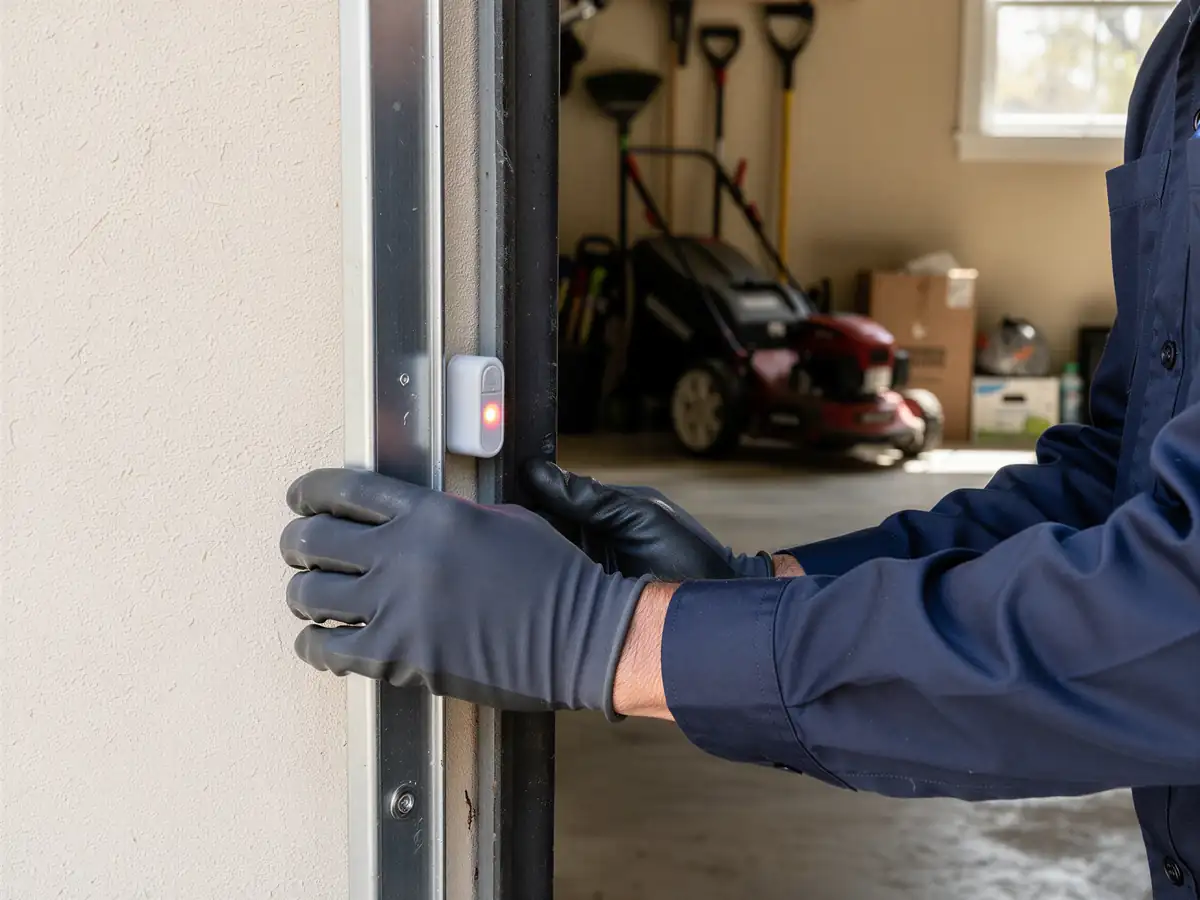
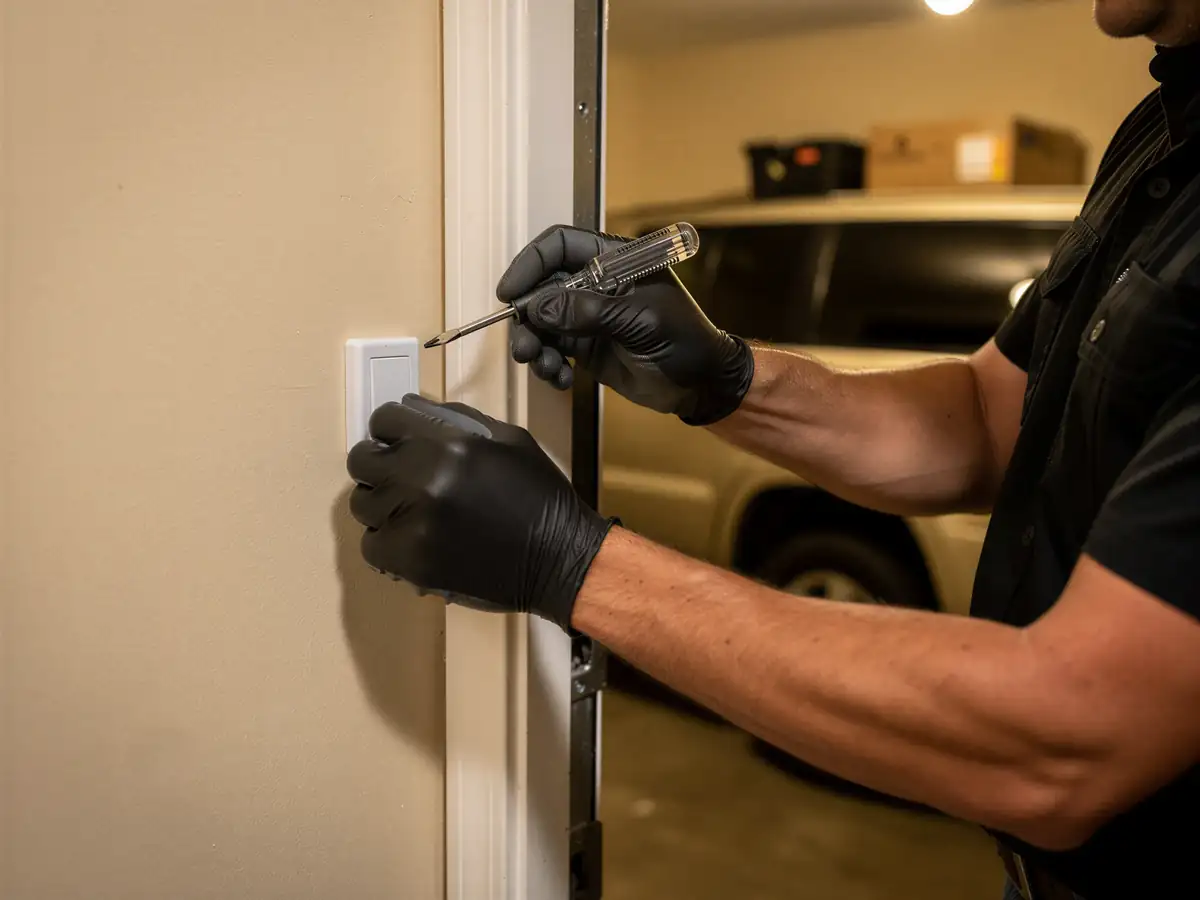
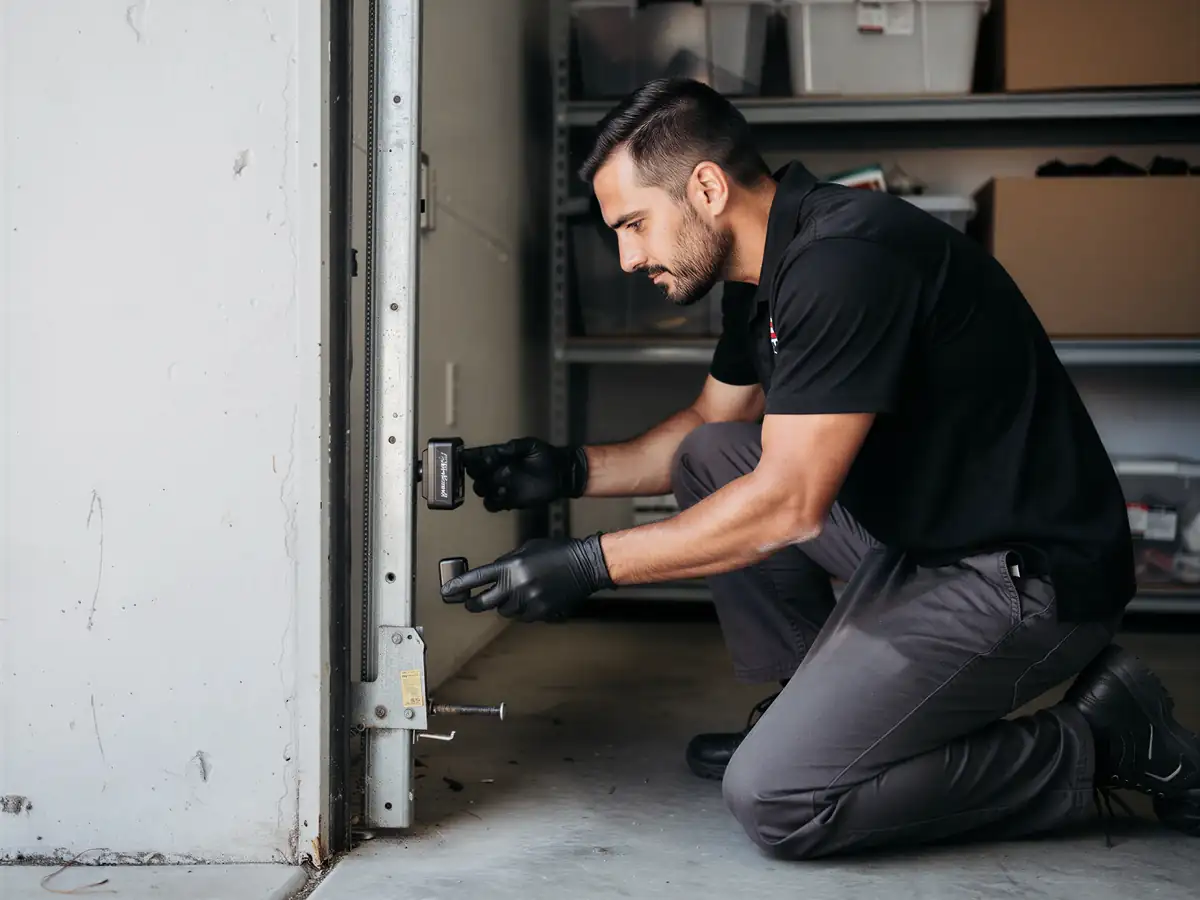
On opener systems that are original to an early-1980s build, a lot of what we're doing is confirming the safety reversal and photo-eye sensors actually work, since a lot of these were installed before current safety-sensor standards were common practice. If a door's travel limits are off because the track has crept out of alignment over 40 winters of expansion and contraction, we reset that too. The honest limitation: if the spring, opener, and track are all near end of life at once, a maintenance visit turns into a replacement quote, and we'll tell you that straight instead of patching three things that'll fail again in six months.
What Is on the Truck
For a standard Haslett maintenance call we carry the parts that wear out fastest on doors from this era
Rollers in steel and nylon, hinges, lubricant rated for cold-weather use, cable, and a range of torsion springs sized for the single and double doors common in houses built in the late '70s and early '80s. What we don't carry is a guess - if a door needs a less common part, that's a lead-time conversation, not something we fake with a wrong-size substitute off the truck.
Opener parts are more limited
Common sensor and wiring replacements are on hand, but a full opener swap on an original 1981 unit is usually a scheduled job rather than a same-visit fix, since the unit itself needs to be sourced to match the household's track and header clearance.
The DIY Question
Lubricating hinges and rollers, checking that the photo-eye sensors aren't knocked out of alignment, and visually checking cables for fraying are all things a Haslett homeowner can reasonably do between professional visits. Adjusting spring tension is not on that list - a torsion spring under load is genuinely dangerous to work on without the right bars and know-how, and that's true whether the spring is 2 years old or 40.
If your door is original to a 1981-era build and you've never had it serviced, the honest move is a professional inspection before you touch anything beyond the basics. At that age, what looks like a simple fix - a door that's gotten noisy or slow - is just as likely to be a spring near failure as it is a dry hinge, and you can't always tell which from the outside.
How It Shows Up
On houses built around 1981, the symptom we hear most is a door that's gotten noticeably louder or slower over a year or two, not a sudden break. That's consistent with gradual wear on original hardware rather than a single part failing outright. A door that used to open smooth and now jerks partway up usually means a spring that's lost tension unevenly, which happens more in a cold climate than a mild one.
A door that reverses on its own partway down, or won't close at all, often points to an opener's safety sensors - more likely to be an issue on units original to an early-1980s install than on anything installed in the last decade. And a door that's started rubbing one side of the track usually means 40 years of minor shifts have finally added up to a real misalignment, not something that happened overnight.